Coleoptera (Beetles): Identification, Biology & Major Families
Beetles make up the largest order of insects. Here is how to tell one from a look-alike, how beetles grow, and which families you are most likely to meet in the garden and the house.
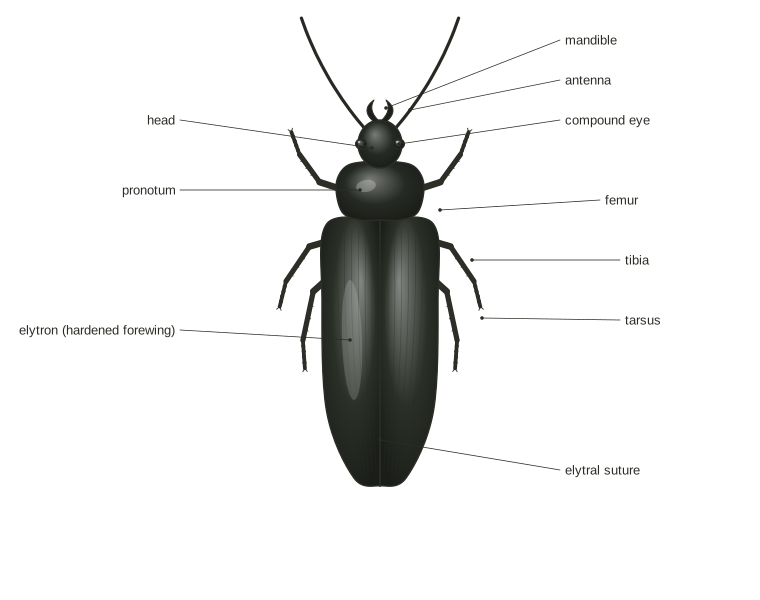
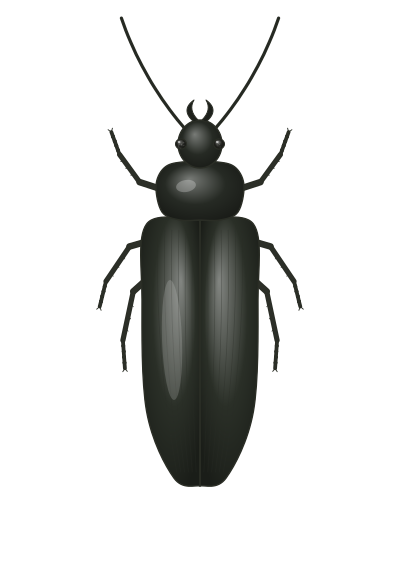
Beetles are insects in the order Coleoptera. You can spot most of them by their hard front wings, the elytra, which cover the back like a shell and meet in a straight line down the middle. Every beetle has chewing mouthparts, and every beetle passes through four life stages: egg, larva, pupa and adult.
That simple plan has produced more named species than any other insect order. Beetles live in soil, water, wood, dung, flowers, stored grain and the back of your closet. A few dozen of them matter to homeowners. Most never come indoors at all.
What makes a beetle
The name Coleoptera comes from Greek words meaning “sheath wing,” a nod to the hardened front wings. Three traits together separate beetles from other insects.
- Elytra that meet in a straight line. The front wings are thickened and hardened into covers. At rest they close over the abdomen and their inner edges meet edge to edge along the midline. They do not overlap.
- Chewing mouthparts. Adults and larvae both have mandibles (jaws) that move side to side. Even weevils, with their long snouts, carry small chewing jaws at the tip.
- Complete metamorphosis. Beetles hatch as larvae that look nothing like the adult, then rebuild their bodies inside a pupa. See complete metamorphosis for how this works across insect orders.
The membranous hind wings do the flying. They fold up underneath the elytra when not in use, which is why a beetle seems to sprout wings from nowhere when it takes off. Some beetles have lost the ability to fly, and some (rove beetles are the familiar case) have short elytra that leave much of the abdomen exposed.
Beetle or look-alike?
People often call any hard, shiny insect a beetle. These are the groups most often confused with them.
| Insect | Wings at rest | Mouthparts | Growth |
|---|---|---|---|
| Beetle | Hard elytra meet in a straight line | Chewing jaws | Egg, larva, pupa, adult |
| True bug (stink bug, bed bug) | Front wings overlap to form an X or triangle near the tip | Slender beak folded under the body | Nymphs resemble adults |
| Cockroach | Leathery wings overlap; body flat with long antennae | Chewing jaws | Nymphs resemble adults |
| Earwig | Very short wing covers; forceps at the tail | Chewing jaws | Nymphs resemble adults |
The quickest field check is the midline. A clean straight seam means beetle. An overlapping X or a membranous wing tip means a true bug; see Hemiptera for that order.
Beetle anatomy
The general insect body plan (head, thorax, abdomen) is covered on our external anatomy page. In beetles, a few parts carry most of the identification value.
Head and mouthparts. The head bears the mandibles, the jointed palps that taste food, and the compound eyes. In weevils the front of the head stretches into a snout (rostrum) with the tiny jaws at the tip. In lady beetles and many wood-boring beetles the head is tucked under the pronotum and hard to see from above.
Antennae. Antenna shape is one of the most useful family clues.
- Lamellate (ending in flat plates that can fan open): scarabs, including June beetles and Japanese beetles.
- Clubbed: carpet beetles, lady beetles, flour beetles, the drugstore beetle.
- Serrate (saw-toothed): click beetles, the cigarette beetle, many metallic wood borers.
- Elbowed and clubbed: most weevils.
- Very long and slender: longhorned beetles, often longer than the body.
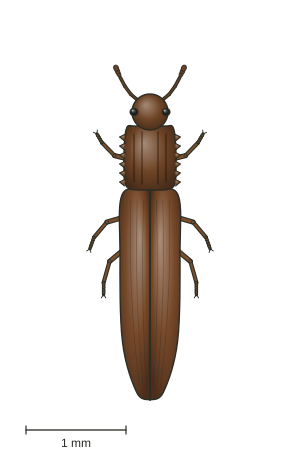
Pronotum. This is the plate covering the first thoracic segment, the “shoulders” behind the head. Its outline helps separate families. The sawtoothed grain beetle has six tooth-like projections along each side. Lady beetles have a pronotum that hides much of the head.
Scutellum. A small triangle often visible between the bases of the elytra. It is tiny in most beetles, unlike the large scutellum of a stink bug.
Elytra. Surface texture matters. Rows of pits (striae), ridges, hairs, scales and color patterns all help with identification.
Legs and feet. Beetle tarsi (feet) have two to five segments, and the count on the front, middle and hind legs is a standard family character in keys. Leg shape follows lifestyle: long running legs in ground beetles, stout spiny digging legs in scarabs.
Adult beetles range from about 0.3 mm to roughly 200 mm (8 inches) long, which spans almost the full size range of insects.
How many beetle species are there
Coleoptera is the largest order of insects, and the largest order of animals of any kind. Two figures get mixed up, so here they are separately.
- Described species. Close to 400,000 beetle species have been formally named, about 40% of all described insects. Sources differ slightly on the exact total because new species are named every year and older names are merged.
- Estimated total. A 2018 review of insect species numbers in the Annual Review of Entomology put the likely number of beetle species on Earth at about 1.5 million. That is an estimate built from sampling and extrapolation, not a count, and other estimates are higher or lower.
In the United States and Canada, about 25,000 beetle species have been described, out of an estimated 28,000 or so. Family counts vary too. Current references accept somewhere between about 166 and a little over 200 families worldwide, and roughly 112 to 130 in North America, depending on the classification used.
Most beetles belong to the suborder Polyphaga, which includes nearly every household and garden beetle on this page. Ground beetles, tiger beetles and many aquatic predators belong to a second large suborder, Adephaga. Two small suborders round out the order.
Life cycle and larval forms
Every beetle starts as an egg, hatches as a larva, molts several times as it grows, then becomes a pupa before the adult emerges. Most beetles pass through three to five larval stages (instars). The larva is the eating and growing stage. The adult is built for mating, dispersal and egg laying, although many adults also feed.
Beetle pupae are usually exarate: the legs, antennae and wing pads stand free of the body rather than being glued down, like a pale, soft model of the adult. Many species pupate in soil cells, wood chambers or inside the food they grew up in.
Life cycles range from a few weeks to several years. The red flour beetle can go from egg to adult in about 40 to 90 days in a warm kitchen. Powderpost beetles usually take about a year inside wood, and sometimes several. The varied carpet beetle can take one to three years indoors, with larvae feeding for many months.
The main larval forms
Beetle larvae come in several body plans. Entomologists use the names below, and gardeners have their own.
| Larval form | What it looks like | Examples |
|---|---|---|
| Campodeiform | Long, flattened, active, with well-developed legs | Ground beetle and lady beetle larvae; firefly larvae |
| Scarabaeiform (grubs) | Soft, white, C-shaped, with a brown head and legs | White grubs of Japanese beetles and June beetles |
| Elateriform (wireworms) | Long, hard, cylindrical, shiny, with tiny legs | Click beetle larvae |
| Legless grubs | Plump, white, no legs | Weevil larvae inside seeds and grain |
| Borers | Pale, often flattened behind the head, living in tunnels | Metallic wood borer, longhorned beetle and powderpost beetle larvae |
| Hairy larvae | Small, bristly, banded or tufted | Carpet beetle and larder beetle larvae |
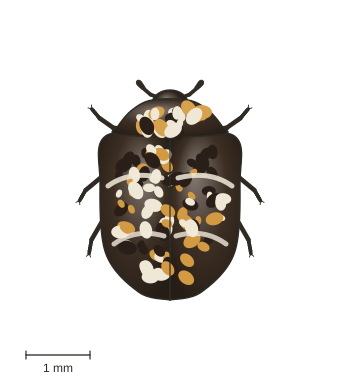
Varied carpet beetle adult

Carpet beetle larva
The difference between larva and adult explains a lot of household confusion. People find a tiny round beetle on a windowsill and a hairy “worm” under the couch and do not connect them. They are the same insect at two life stages.
Habitats and diets
Beetles occupy almost every land and freshwater habitat. A short tour of their diets shows how widely they have spread.
- Predators. Ground beetles, tiger beetles, lady beetles, many rove beetles and firefly larvae hunt other small animals.
- Plant feeders. Leaf beetles, weevils, scarabs and many others eat leaves, roots, seeds, pollen or fruit.
- Wood feeders. Larvae of metallic wood borers, longhorned beetles, bark beetles and powderpost beetles tunnel through living, dying or seasoned wood.
- Fungus feeders. Ambrosia beetles, a group within the weevil family, farm fungi inside their tunnels and eat the fungus rather than the wood.
- Scavengers and recyclers. Dung beetles, carrion beetles, darkling beetles and dermestids break down dung, carcasses and dead plant matter.
- Stored-product feeders. A handful of species have moved from natural seeds, nests and carcasses into flour, grain, spices, tobacco, wool and leather.
Many beetles also live in ponds and streams as both larvae and adults.
Major beetle families
This table covers the families readers ask about most. Placements follow current classification. Two changes trip people up: the former family Anobiidae (drugstore, cigarette and deathwatch beetles) is now placed within Ptinidae, and the true powderpost beetles, once the family Lyctidae, are now the subfamily Lyctinae within Bostrichidae.
| Family | Common name | How to spot it | Examples and notes |
|---|---|---|---|
| Carabidae | Ground beetles (includes tiger beetles) | Shiny, dark, somewhat flattened; long legs; fast runners; mostly active at night | Mostly predators; Calosoma “caterpillar hunters” |
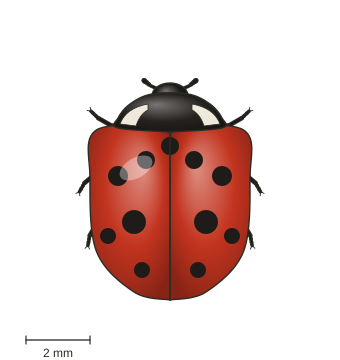
| Coccinellidae | Lady beetles | Round to oval, dome-shaped, flat underneath; head mostly hidden; short clubbed antennae | Most eat aphids, scales and mealybugs; multicolored Asian lady beetle |
| Curculionidae | Weevils, bark and ambrosia beetles | Snout with jaws at the tip; elbowed antennae; bark beetles are small and cylindrical | Rice weevil, granary weevil, bark beetles |
| Scarabaeidae | Scarab beetles | Stout body; antennae end in flat plates; spiny, digging legs | Japanese beetle, June beetles; larvae are white grubs |
| Cerambycidae | Longhorned beetles | Long body; antennae often as long as the body or longer | Larvae bore in trees and timber |
| Buprestidae | Metallic wood borers | Bullet-shaped, often metallic; larvae are flat-headed borers | Emerald ash borer |
| Chrysomelidae | Leaf beetles | Often oval and brightly colored or striped | Colorado potato beetle, flea beetles, cucumber beetles |
| Elateridae | Click beetles | Long and narrow; can snap the body to flip upright with a click | Larvae are wireworms |
| Tenebrionidae | Darkling beetles | Usually dark, hard, slow-moving; most common in dry climates | Red and confused flour beetles; mealworms |
| Dermestidae | Skin beetles, carpet beetles | Small, oval, often covered in patterned scales or hairs; clubbed antennae | Varied carpet beetle, black carpet beetle, larder beetle |
| Ptinidae (includes former Anobiidae) | Deathwatch, drugstore and spider beetles | Small (1 to 9 mm, usually under 5 mm); many are cylindrical or rounded | Drugstore beetle, cigarette beetle, furniture beetle |
| Bostrichidae (includes Lyctinae) | Branch borers and powderpost beetles | Lyctines are small, flat and narrow, reddish brown to black | Southern lyctus beetle |
| Silvanidae | Silvanid flat bark beetles | Very flat, slender, reddish brown; some have a toothed pronotum edge | Sawtoothed and merchant grain beetles |
| Lampyridae | Fireflies | Soft, flexible wing covers; pronotum covers the head; light organs near the tail | Larvae prey on snails, slugs and worms |
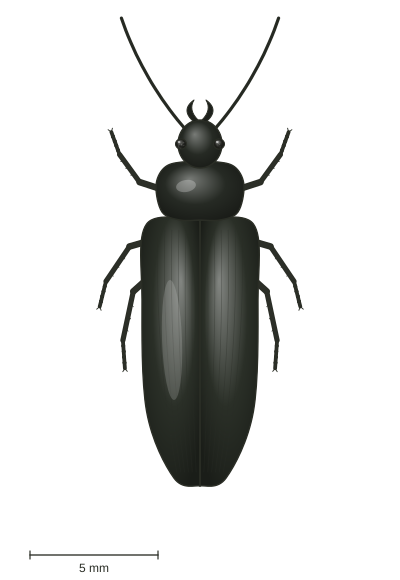
Notes on the Ptinidae change
Most older guides, and many current extension fact sheets, still list the drugstore and cigarette beetles under Anobiidae. Beetle specialists now treat the anobiids as several subfamilies inside Ptinidae, alongside the spider beetles. Both names refer to the same insects. If a pest guide says “anobiid,” it means a ptinid in the current system.
Notes on powderpost beetles
“Powderpost beetle” is used loosely for wood-boring beetles in two families. The true powderpost beetles (subfamily Lyctinae of Bostrichidae) attack the starchy sapwood of hardwoods. The other bostrichids are sometimes called false powderpost beetles. Anobiids in Ptinidae, such as the furniture beetle and deathwatch beetles, also reduce wood to powder and are often grouped under the same common name.
Beneficial beetles
Several beetle families do steady pest control in gardens and fields without anyone noticing.
Lady beetles. Both adults and larvae eat aphids, mealybugs, scale insects and other soft-bodied insects, and the larvae eat more than the adults. A lady beetle larva looks like a tiny, spiny alligator, mostly black with orange or white patches, and feeds for about two to three weeks before pupating on a leaf. North America has more than 480 lady beetle species.
Ground beetles. Many species hunt at night on the soil surface and eat caterpillars, cutworms, grubs, fly maggots, slugs and other beetles. Some also eat fallen weed seeds. Their larvae are usually predators too, hunting in soil and leaf litter.
Fireflies. Firefly larvae, sometimes called glow-worms, hunt earthworms, snails, slugs and soft-bodied insects in moist soil and leaf litter. About 2,000 firefly species are known worldwide, with at least 170 in North America.
Rove beetles and others. Many rove beetles are predators in soil, compost and decaying matter. Dung beetles, carrion beetles and many darkling beetles recycle dung, carcasses and dead plant material back into the soil.
Garden and crop pests
Plant-feeding beetles include some of the most familiar garden pests. Damage comes from adults, larvae, or both, depending on the species. Our garden pests section covers control in more detail.
- Japanese beetle (Scarabaeidae). An invasive scarab first found in New Jersey in 1916. Adults are about 8 to 13 mm (1/3 to 1/2 inch), metallic green with coppery wing covers and white hair tufts along the sides. They feed on more than 300 plant species and skeletonize leaves, leaving only the veins. The C-shaped grubs chew grass roots and can kill patches of lawn.
- Colorado potato beetle (Chrysomelidae). Oval adults about 10 mm (3/8 inch) long with 10 black stripes on yellowish wing covers. Adults and the reddish, black-spotted larvae strip potato, eggplant and related plants.
- Wireworms (Elateridae). The hard, shiny larvae of click beetles bore into seeds, roots and potato tubers.
- Emerald ash borer (Buprestidae). An Asian metallic wood borer first detected in southeast Michigan in 2002. Larvae feed under the bark in S-shaped galleries and kill ash trees; adults leave D-shaped exit holes.
- Bark beetles (Curculionidae). Small cylindrical beetles that breed under bark, often in stressed or dying trees.
- Cucumber beetles and flea beetles (Chrysomelidae). Small leaf beetles that chew holes in leaves of vegetables and ornamentals.
Beetles in and around the home
Most beetles found indoors fall into four groups: fabric and animal-product feeders, pantry beetles, wood borers, and outdoor beetles that wander in or come inside to overwinter. Where you find the beetle is often the fastest clue. Our beetles in the house identification guide walks through the options with photos and look-alikes, and tiny black bugs covers many small dark beetles that people do not at first take for beetles.
| Where you found it | Likely beetle | What to check next |
|---|---|---|
| Windowsills in spring, small round mottled beetles | Adult carpet beetles | Wool rugs, closets, stored clothes, lint under furniture |
| Bristly little “worms” under furniture or in closets | Carpet beetle larvae | Carpet beetles |
| Kitchen cupboards, near flour, spices or pet food | Drugstore, cigarette or flour beetles; sawtoothed grain beetle; weevils | Pantry pests |
| Fine powder under small round holes in wood | Powderpost beetles | Powderpost beetles |
| Many lady beetles on walls in fall or spring | Multicolored Asian lady beetle | Seal gaps before fall |
| Large dark beetles near doors at night | Ground beetles drawn to lights | Usually accidental; reduce exterior lighting |
Carpet beetles and other dermestids
Carpet beetles are the most common fabric pests in many US homes. The adults are small, about 1.5 to 3 mm (1/16 to 1/8 inch), oval, and black or mottled with white, brown, yellow or orange scales. Adults feed on flower pollen and do not damage fabric. They often show up on windowsills in spring as they try to reach flowers outdoors.
The larvae do the damage. They are small, slow, and covered in bristles, and they eat keratin, the protein in wool, fur, feathers, silk, felt and leather. They also feed on lint, pet hair, dead insects and some dry foods such as cereals and pet food. Look for irregular holes, thin spots in rugs, and shed larval skins. The varied carpet beetle and the black carpet beetle are among the most common species in US homes. The black carpet beetle larva is shiny, carrot-shaped and trails a tail of long brown hairs. The larder beetle, a larger relative, feeds on dried meats, pet food and dead animals.
Because carpet beetles are small, leave shed skins, and turn up around beds and upholstered furniture, they are sometimes mistaken for bed bugs. Our carpet beetle vs bed bug comparison shows how to tell them apart. For the full story on prevention and treatment, see the carpet beetles hub.
Pantry beetles
Several small, reddish-brown beetles infest stored food. Most are about 2 to 3 mm (roughly 1/8 inch) long, so a close look at the antennae, pronotum and snout is the best way to separate them. Detailed identification and cleanup steps are on the pantry pests hub.
- Drugstore beetle (Stegobium paniceum, Ptinidae). Small, cylindrical, brown, with rows of fine pits along the elytra and antennae ending in a three-segment club. It eats an unusually wide range of dry products: flour, bread, spices, dry mixes, pet food, even dried herbs and medicines. Adults fly and come to light.
- Cigarette beetle (Lasioderma serricorne, Ptinidae). Very similar but more rounded, with smooth elytra and saw-toothed antennae. Common in spices such as paprika and chili powder, dry pet food and tobacco.
- Red and confused flour beetles (Tribolium species, Tenebrionidae). Flattened, reddish brown, about 3 mm (1/8 inch). They cannot attack whole, sound grain, but feed on flour, cereal, crackers, dried fruit and other processed or broken food. The red flour beetle’s antennae end in an abrupt three-segment club and it can fly; the confused flour beetle has a gradual club.
- Sawtoothed grain beetle (Oryzaephilus surinamensis, Silvanidae). Slender, very flat, 2.5 to 3 mm, with saw-like teeth along each side of the pronotum. It feeds on cereals, dried fruit, nuts, pasta, candy and pet food. It does not fly and is not drawn to light. The merchant grain beetle is a close relative with larger eyes.
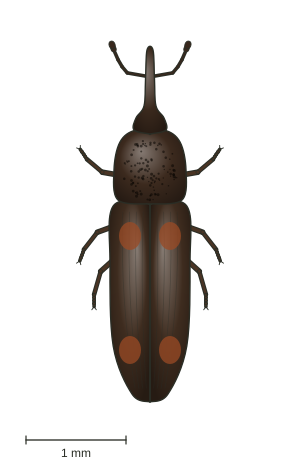
- Rice and granary weevils (Sitophilus species, Curculionidae). Small snout beetles whose legless larvae develop inside whole kernels of rice, wheat, corn and other grain. The rice weevil has four faint reddish or yellowish spots on the elytra and can fly; the granary weevil cannot.

Drugstore beetle
Sawtoothed grain beetle
The same rule applies to every pantry beetle: killing the adults you see does not fix the problem. The infested package, often something old at the back of a shelf, keeps producing new beetles until it is found and thrown out. Move dry goods into tightly sealed containers once the source is gone.
Wood-boring beetles indoors
Powderpost beetles are the wood borers most often found in homes. The true powderpost beetles (Lyctinae) are small, 2 to 7 mm, flat and narrow, reddish brown to black. Their larvae feed on the starch in the sapwood of hardwoods such as oak, ash, hickory and maple, usually wood less than about five years old. They cannot digest the cellulose itself, which is why they need starch.
Signs include tiny round exit holes, roughly 1 to 3 mm (1/32 to 1/8 inch) across, and a fine, flour-like powder sifting out of them onto floors or shelves. The life cycle usually takes about a year but can stretch to several, and beetles can reinfest the same piece of wood for generations. Many infestations start in lumber or furniture before it reaches the house. See the powderpost beetles page for how to confirm active infestation and what treatment involves.

Anobiid beetles in Ptinidae, such as the furniture beetle and deathwatch beetles, also bore in seasoned wood, so a confirmed identification matters before choosing a treatment.
Seasonal invaders and accidental visitors
Some beetles enter houses for shelter, not food.
- Multicolored Asian lady beetle. Adults gather in large numbers on buildings in fall to overwinter, and they become a nuisance indoors in fall and again in spring. Sealing cracks around windows, siding and vents before fall is the main prevention.
- Ground beetles. Some species are drawn to lights at night and wander in through doors. They do not feed or breed on anything in the house.
- Click beetles and others. Occasional strays from the yard.
If you are unsure which group your beetle belongs to, start with the beetles in the house guide, and compare small dark specimens on the tiny black bugs page.
Where beetles fit among the insect orders
Beetles share complete metamorphosis with flies, moths and butterflies, bees, wasps and ants, fleas and lacewings. For a side-by-side overview of all the major groups, return to the orders of insects.
References
- Order Coleoptera. NC State University, General Entomology.
- Order Coleoptera: Beetles. BugGuide (Iowa State University).
- How Many Species of Insects and Other Terrestrial Arthropods Are There on Earth?. Annual Review of Entomology (Stork, 2018).
- Family Ptinidae: Death-watch and Spider Beetles. BugGuide (Iowa State University).
- Southern Lyctus Beetle, Lyctus planicollis. University of Florida IFAS, Featured Creatures.
- Sawtoothed grain beetles, Oryzaephilus spp. (Silvanidae). University of Florida IFAS.
- Lady beetles. University of Minnesota Extension.
- Dermestid Beetles. Utah State University Extension.
- Stored Product Pests in the Home. University of Kentucky Entomology.
See also
- The orders of insects
- Complete metamorphosis
- Beetles in the house: identification
- Carpet beetles
- Pantry pests
- Hemiptera: true bugs
This page was last updated on October 7, 2026. We research our guides from university extension services, government agencies, museums and peer-reviewed literature. Read the editorial policy or report an error.