Garden Pests: Identifying the Insects on Your Plants
Where the damage is, and what it looks like, will point you to the insect behind it.
The fastest way to identify a garden pest is to start with where the damage is and what it looks like. Holes, notches and missing leaf tissue point to chewing insects such as caterpillars and beetles. Yellow speckling, curled leaves and sticky residue point to sap-sucking insects such as aphids, scales, whiteflies and stink bugs. Then look closely, especially under leaves, for the insect itself.
This guide is organized by where you are seeing trouble: vegetables, lawns, trees and shrubs, flowers and ornamentals, and houseplants. Each section lists the most common insect pests in US gardens, how to spot them, and the damage they leave. It ends with a practical integrated pest management (IPM) approach.
Chewing damage vs sucking damage
Insects feed with very different mouthparts, and the damage reflects it.
| Damage type | What you see | Usual culprits |
|---|---|---|
| Chewing | Holes, ragged edges, skeletonized leaves (only veins left), stripped stems, cut seedlings, droppings | Caterpillars, beetles and their larvae, sawfly larvae, grasshoppers |
| Sucking | Yellow or pale speckling (stippling), curled or distorted leaves, wilting, sticky honeydew, black sooty mold | Aphids, scales, mealybugs, whiteflies, stink bugs, squash bugs, chinch bugs, thrips |
| Below ground | Wilting or browning with no visible insect on top; turf that lifts like a carpet | White grubs, root-feeding larvae |
Honeydew is a sugary liquid excreted by many sap feeders. It makes leaves and surfaces below the plant sticky, draws ants, and grows a black film called sooty mold. If leaves are sticky, look above them for aphids, soft scales, mealybugs or whiteflies.
Vegetable garden pests
Vegetable gardens draw the widest range of pests because many crops are tender and grown close together.
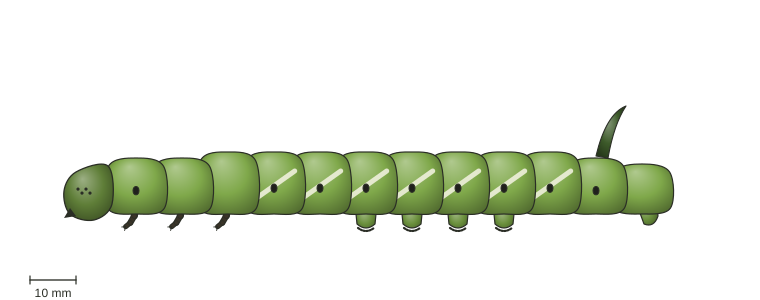
Hornworms are big green caterpillars, 75 to 100 mm (3 to 4 inches) long, with a horn at the rear. They strip leaves from tomatoes, peppers, eggplant and potatoes and leave large dark green droppings. Leave any hornworm carrying small white cocoons: those belong to a parasitic wasp that will attack more hornworms.
Imported cabbageworms and cabbage loopers are green caterpillars that chew large holes in cabbage, broccoli, kale and their relatives. The cabbageworm is velvety; the looper arches its back as it walks. The caterpillar identification guide covers how to tell them apart.
Colorado potato beetles are oval, about 10 mm (3/8 inch) long, with yellowish wing covers marked by ten black stripes. Their larvae are brick red to pink with black heads and two rows of dark spots on each side. Adults and larvae chew potato, eggplant and tomatillo leaves and can strip plants bare. Look for clusters of yellow-orange eggs under leaves.
Flea beetles are tiny, 1.5 to 3 mm (1/16 to 1/8 inch), shiny beetles that jump like fleas when disturbed. They chew small pits and round holes, a pattern called shothole damage, in radish, broccoli, eggplant, tomato and potato leaves. Seedlings in spring are the most vulnerable; once plants have four or five leaves, they usually outgrow the damage.
Squash bugs are flattened, dark gray-brown bugs about 16 mm (5/8 inch) long. Their bronze, oval eggs sit in clusters on leaf undersides. Nymphs and adults suck sap from squash and pumpkins, leaving yellow spots that turn brown and causing wilting. Crushing egg clusters and trapping adults under boards overnight are practical home-garden controls.
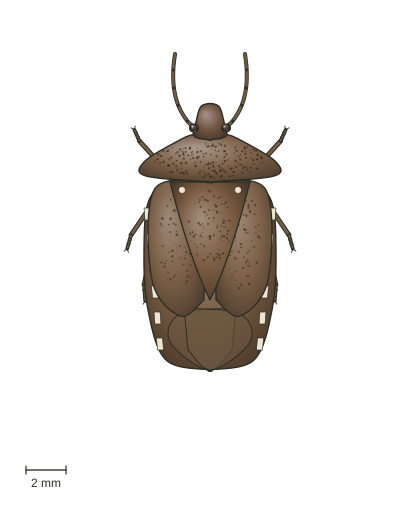
Stink bugs are shield-shaped sap feeders. The invasive brown marmorated stink bug, native to Asia, is mottled brown with light and dark bands on its antennae and along the edge of the abdomen. Its feeding leaves sunken, discolored, misshapen spots on tomatoes, peppers, beans, sweet corn and fruit. In fall it often moves into homes to overwinter, where it does not breed, bite or damage the house. The Hemiptera page covers stink bugs and their relatives.
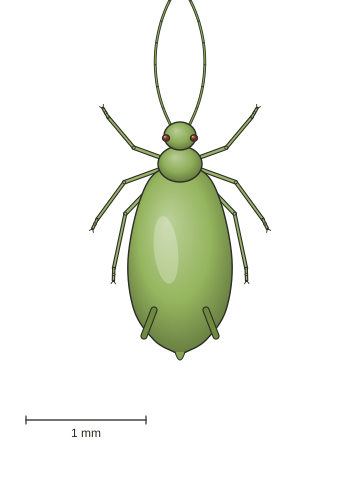
Aphids cluster on new growth and leaf undersides of almost every vegetable. They are soft, pear-shaped and often green, but can be yellow, red, brown or black. Look for the pair of small tubes (cornicles) at the rear. Heavy colonies curl leaves, stunt shoots and coat plants in honeydew.
Lawn pests
Lawn damage often shows up as irregular brown or yellow patches. The trick is to check the soil and the base of the grass, not just the blades.
White grubs are the larvae of Japanese beetles, June beetles, May beetles, masked chafers and green June beetles. They are plump, C-shaped and whitish, with a brown head and three pairs of legs. Grubs eat grass roots, so turf yellows, browns and in heavy infestations can be rolled back like a carpet. Skunks, raccoons and birds digging in the lawn are another clue. To check, cut three sides of a square of sod 30 cm (1 foot) on a side, fold it back and count the grubs. University of Georgia Extension suggests that control may be warranted at roughly 5 to 10 grubs per square foot in turf that is not irrigated, or more than 20 in well-watered turf.
Chinch bugs are small, about 5 mm (3/16 inch), black bugs with whitish wings marked by a black triangle. The southern chinch bug feeds mainly on St. Augustinegrass in the South. It sucks sap from the base of the grass, producing yellow then dead patches that spread outward, usually in drought- or heat-stressed turf in July and August.
Fall armyworms are striped caterpillars, green, brown or black, up to about 50 mm (2 inches) long, with a pale upside-down Y on the face. They move across lawns in large numbers, often in late summer and fall, chewing grass blades down. Sprinkling soapy water on a suspect patch drives them to the surface.
The Coleoptera page covers grubs, their adult beetles and other lawn and garden beetles.
Tree and shrub pests
Trees tolerate a surprising amount of leaf loss. Most defoliation that looks alarming in summer is cosmetic for healthy, established trees.
Japanese beetles are about 10 mm (3/8 inch) long, metallic green with coppery wing covers and five tufts of white hair along each side of the abdomen. Adults feed on more than 400 kinds of plants, with roses, flowering cherry and zinnias among the favorites, eating the tissue between leaf veins so the leaves look like lace. They are active for six to eight weeks starting in late June or early July in much of their range. Knocking beetles into a bucket of soapy water in the cool early morning works for small plantings. Japanese beetle traps are not a good fix for a home yard: extension research shows they do not reduce grub numbers and can increase leaf damage nearby.
Tent caterpillars and fall webworms build silk nests in trees. Eastern tent caterpillars make thick tents in branch forks in spring, mostly on wild cherry and apple. Fall webworms make loose webs that enclose the ends of branches in late summer. Pruning out webs within reach is usually all that is needed.
Bagworms are caterpillars that live inside spindle-shaped bags of silk and plant bits, 25 to 50 mm (1 to 2 inches) long by late summer. They are most damaging on arborvitae, juniper and other needled evergreens, which cannot regrow lost needles. Picking off and destroying bags in fall, winter or early spring, before the eggs inside hatch, is the most direct control.
Scale insects look like small bumps or crusts on bark, twigs and leaves. Armored scales have a hard, removable cover and do not make honeydew. Soft scales are larger and rounder and do make honeydew. Heavy infestations cause yellowing, leaf drop and dieback. The mobile young (crawlers) are the stage most sprays can reach.
Spongy moth caterpillars, hairy with paired blue and red dots, can strip oaks and many other trees in outbreak years across the Northeast and beyond.
Flower and ornamental pests
Flower beds share many pests with the vegetable garden, plus a few specialists.
Aphids are the most common pest on roses, milkweed, nasturtiums and many annuals.
Japanese beetles skeletonize roses, zinnias and other flowers.
Thrips are slender insects under 1.3 mm (1/20 inch) long with fringed wings. They rasp at petals and leaves, leaving silvery or flecked patches, distorted buds, streaked “color break” in petals and tiny black specks of excrement. Shake a flower over white paper to see them.
Whiteflies look like tiny white moths and rise in a cloud when you brush the plant. Their flat, scale-like young sit under leaves. They suck sap and produce honeydew.
Sawfly larvae look like caterpillars and feed in groups on roses, columbine, hollyhock and hibiscus, often skeletonizing leaves quickly. They have six or more pairs of prolegs, and Bt products for caterpillars do not control them.
Houseplant pests
Indoor plants have no rain, wind or natural enemies to keep small pests in check, so a few species build up quietly. Most arrive on new plants.
Spider mites are among the most common indoor problems, especially in warm, dry winter air. Look for pale stippling and fine webbing.
Mealybugs look like small tufts of white cotton tucked into leaf axils and under leaves. They suck sap, make honeydew, and are hard to kill because of their waxy coat. Light infestations can be spot-treated with a cotton swab dipped in rubbing alcohol.
Scale insects appear as small brown or tan bumps along stems and leaf veins. Brown soft scale is a frequent houseplant pest.
Fungus gnats are small, dark, delicate flies that hover around pots and windows. Their larvae live in moist potting mix and feed mostly on fungi and decaying material. The adults are a nuisance rather than a threat, and a gnat problem usually signals overwatering. Letting the top of the soil dry between waterings is the main fix.
Whiteflies and aphids also move indoors on plants brought in from outside.
Isolate new plants for a few weeks and inspect leaf undersides before setting them next to others. Rinsing foliage in the sink or shower removes many mites and aphids.
An integrated pest management approach
Integrated pest management (IPM) is the approach recommended by the EPA and university extension services. It puts identification and prevention first and saves pesticides for when they are needed. Here is how it works in a home garden.
1. Monitor and identify
Walk the garden once or twice a week. Check leaf undersides, new growth and the soil surface. Name the insect before acting: many insects on plants are harmless or helpful, and the wrong identification leads to the wrong treatment.
2. Decide what you can tolerate
A few holes in leaves rarely hurt yields or plant health. Set a personal threshold, such as acting when a vegetable crop is losing a large share of its leaves, and leave minor damage alone. Mature trees recover from most leaf-feeding.
3. Encourage natural enemies
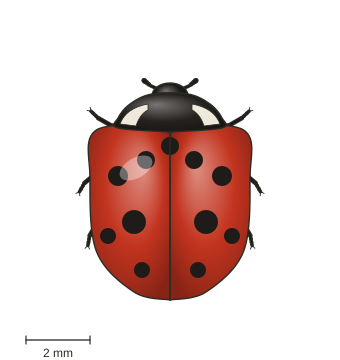
Lady beetles and their larvae, lacewing larvae, syrphid fly larvae, minute pirate bugs and tiny parasitic wasps eat or parasitize aphids, mites and caterpillars. Parasitized aphids turn into swollen, tan “mummies.” Broad-spectrum insecticides kill these allies and can trigger spider mite outbreaks. Flowering plants that bloom at different times provide them with nectar and pollen. Controlling ants that tend aphids and scales also helps natural enemies work.
4. Use mechanical and cultural controls
- Knock aphids and mites off with a strong spray of water.
- Handpick hornworms, beetles and squash bugs; drop them in soapy water.
- Prune out tents, webs and heavily infested shoots.
- Use floating row covers over young vegetables, removing them before crops that need bees start to flower.
- Water and fertilize sensibly. Excess nitrogen pushes soft growth that aphids favor, and drought stress invites mites.
- Clear crop debris in fall to remove overwintering sites.
5. Treat last, and treat narrowly
If damage keeps climbing, choose the most targeted option that fits the pest. Insecticidal soaps and horticultural oils work on contact against soft-bodied pests such as aphids, mites, whiteflies and young scales, and need thorough coverage of leaf undersides. Bt products target young caterpillars. Avoid spraying plants in bloom where bees are working.
Always read and follow the product label. Confirm that the plant and the pest are both listed, respect the harvest interval on food crops, and do not apply soaps or oils to drought-stressed plants or in very hot weather. For large trees, severe infestations, or anything that calls for equipment or restricted products, a licensed professional or your county extension office is the right next step.
Quick reference: match the damage to the pest
| What you see | Where | Likely pest |
|---|---|---|
| Large holes, stripped stems, dark droppings | Tomato, pepper | Hornworm |
| Ragged holes in heads and leaves | Cabbage family | Imported cabbageworm, cabbage looper |
| Tiny round holes, insects that jump | Seedlings, eggplant, radish | Flea beetles |
| Lace-like leaves, metallic green beetles | Roses, lindens, many shrubs | Japanese beetle |
| Brown patches, turf lifts like carpet | Lawn | White grubs |
| Yellow patches spreading in hot, sunny turf | St. Augustinegrass lawn | Chinch bugs |
| Sticky leaves, black film | Almost anything | Aphids, soft scales, whiteflies, mealybugs |
| Pale stippling, fine webbing | Beans, ornamentals, houseplants | Spider mites (not insects) |
| Silvery slime trails, irregular holes | Hostas, lettuce, seedlings | Slugs and snails (not insects) |
| Small dark flies around potted plants | Houseplants | Fungus gnats |
References
- Integrated Pest Management (IPM) Principles. US Environmental Protection Agency.
- Aphids (Pest Notes). University of California IPM.
- Spider Mites (Pest Notes). University of California IPM.
- Snails and Slugs (Pest Notes). University of California IPM.
- Japanese Beetle (ENT-46). Ohio State University Extension.
- White Grubs. University of Georgia Extension.
- Diagnosing Houseplant Problems Caused by Insect Pests. Iowa State University Extension.
- Scales (Pest Notes). University of California IPM.
See also
- Caterpillar identification
- Hemiptera: true bugs, aphids and scales
- Coleoptera: beetles
- Insect mouthparts
- When to call a professional
This page was last updated on October 7, 2026. We research our guides from university extension services, government agencies, museums and peer-reviewed literature. Read the editorial policy or report an error.