Small Flying Bugs in the House: How to Identify Them
Watch where the bugs gather. Fruit, houseplants, drains, windows and lights each point to a different culprit.
Small flying bugs in the house are most often fruit flies, fungus gnats or drain flies. Phorid flies and pantry moths are the next most likely, with house flies, cluster flies, swarming termites or ants, mosquitoes and lady beetles turning up in certain seasons. The best clue is where they gather, because most of these insects stay close to the place they breed. Use the clues below to build a shortlist rather than a final answer.
Where are they gathering?
This one question sorts most cases.
- Around the fruit bowl, trash, recycling or a spill: fruit flies.
- Around houseplants, or on the window next to them: fungus gnats.
- On the bathroom or kitchen wall near a sink, tub or floor drain: drain flies. Phorid flies are also possible.
- Running across counters near drains or garbage, more hopping than flying: phorid flies.
- Fluttering through the kitchen or pantry, often in the evening: pantry moths such as the Indian meal moth.
- Low in a dark closet, near wool clothing or rugs, avoiding light: clothes moths.
- On sunny windows in fall, winter or early spring, slow and sluggish: cluster flies or lady beetles.
- Many winged insects at once at a window or light, with shed wings left behind: termite or ant swarmers.
- Slender, long-legged flies that bite: mosquitoes.
Next, look at shape and flight. Flies have one pair of wings, moths have scaly wings and fuzzy bodies, and beetles have hard wing covers that meet in a line down the back.
Quick comparison table
| Insect | Size | Look for | Where | Concern |
|---|---|---|---|---|
| Fruit fly | 2–4 mm | Tan, usually red eyes | Fruit, trash, spills | Nuisance |
| Fungus gnat | about 3 mm | Black, slender, long legs | Houseplants, windows | Nuisance; minor root damage |
| Drain fly | 2–5 mm | Fuzzy, moth-like, hops | Sinks, tubs, floor drains | Nuisance |
| Phorid fly | 2–4 mm | Humped back, runs | Drains, garbage, leaks | Nuisance; can signal leaks |
| House fly | about 6 mm | Gray, four dark stripes on thorax | Kitchens, doors, windows | Can carry germs |
| Cluster fly | about 8 mm | Larger, sluggish, dark gray | Sunny windows, attics | Nuisance |
| Indian meal moth | 13–16 mm | Copper outer wings | Kitchen, pantry | Infests dry food |
| Clothes moth | about 6 mm | Small, golden or brownish | Closets, wool items | Larvae damage fabric |
| Termite swarmer | small; wings longer than body | Equal wings, straight antennae | Windows, near slab | Sign of infestation |
| Ant swarmer | varies | Elbowed antennae, pinched waist | Windows, lights | Sign of a nest |
| Mosquito | small, slender | Long legs, long beak | Bedrooms at night | Bites; some carry disease |
| Asian lady beetle | about 7 mm | Orange to red, W mark behind head | Sunny walls and windows, fall | Odor, stains, can nip |
The likely candidates
Fruit flies
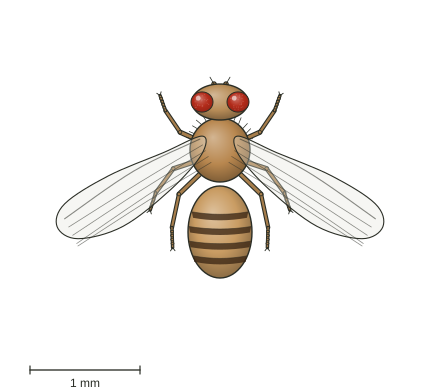
About 3 mm (1/8 inch), stout, tan to orange-brown, usually with red eyes. They breed in overripe or fermenting fruit and vegetables, spilled juice, wet trash and recycling, and damp mops. Dark-eyed fruit flies are more often linked to drains.
What it means: a harmless nuisance; they do not bite. Remove overripe produce, rinse recycling, clean under trash liners, and use a vinegar trap (cider vinegar with a drop of dish soap) to catch adults while you find the source.
Fungus gnats
About 3 mm (1/8 inch), with delicate black bodies, long legs and long antennae. They fly weakly in short bursts and often collect at windows near houseplants. Larvae live in the top few inches of moist potting mix.
What it means: adults are harmless and do not bite. Larvae can damage plant roots, but they are minor houseplant pests. Let the top 2.5 to 5 cm (1 to 2 inches) of soil dry between waterings and use yellow sticky cards to catch adults.
Drain flies
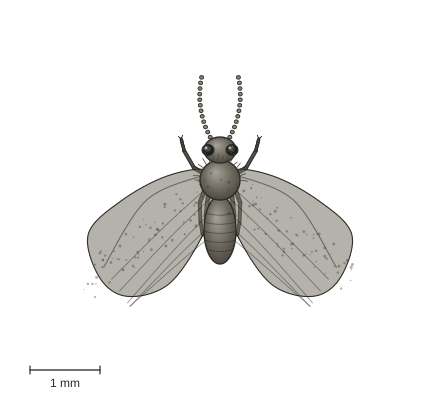
Tiny, 2 to 5 mm, gray to black and fuzzy, with wings held roof-like or flat so they look like miniature moths. They rest on walls near plumbing and fly in short hops of a few feet. Larvae live in the slimy film inside drains.
What it means: a nuisance that does not bite. Tape a clear plastic cup or a strip of clear tape over the drain overnight to confirm the source, then scrub the drain with a stiff brush. See bugs in the bathroom.
Phorid flies
About 2 to 4 mm, tan to black, with a humped back. They tend to run in short bursts rather than fly. They breed in moist decaying material: drains, garbage, dead animals, and soil soaked by sewer leaks.
What it means: a nuisance, but a persistent phorid problem can point to a hidden plumbing leak or something decaying in a wall or crawl space, and may need a plumber or professional to find.
House flies and cluster flies
House flies are about 6 mm (1/4 inch), gray, with four dark stripes on the thorax. They breed outdoors in garbage and manure and wander in through doors and torn screens.
Cluster flies look like large, slow house flies, about 8 mm (1/3 inch), dark gray. In late fall they gather on sunny walls and crawl into attics and wall voids to spend the winter, then appear at windows on warm days. Their young develop as parasites of earthworms outdoors, so they do not breed indoors.
What it means: house flies can carry germs from filth to food. Cluster flies are a nuisance only. Seal gaps on south and west walls before fall and vacuum up any that appear. See the flies guide.
Pantry moths

The Indian meal moth is the usual kitchen moth. Adults are about 13 to 16 mm (1/2 to 5/8 inch), with forewings pale tan near the body and reddish copper on the outer part. Larvae are whitish caterpillars that leave silk webbing in cereals, flour, nuts, dried fruit, birdseed and pet food. Pantry moths fly in a more direct path than clothes moths.
What it means: a stored-food pest. Find and discard infested packages, vacuum shelves, and store dry food in sealed containers. See the pantry pests guide.
Clothes moths
Clothes moths are smaller than pantry moths, about 6 mm (1/4 inch) long at rest. The webbing clothes moth is golden with reddish golden hairs on the head; the casemaking clothes moth is browner, with faint dark spots. They are weak fliers, are not drawn to lights, and tend to flutter about near the infested item rather than fly steadily around the house.
What it means: the larvae damage wool, fur, feathers and other animal fibers, usually in hidden spots like under collars. Launder or dry clean infested items and vacuum closets and rug edges.
Termite and ant swarmers

Swarmers are winged reproductives that leave a colony to start new ones. Termites usually swarm in spring, when warmth and rain trigger them. They are drawn to light and often pile up at windows and doors, leaving shed wings behind.
Termites have straight antennae, a thick waist and two pairs of wings of equal size. Ants have elbowed antennae, a pinched waist and front wings longer than the hind wings.
What it means: termite swarmers emerging indoors almost always mean the house is infested and needs a professional inspection. The swarmers themselves do not damage wood and can be vacuumed up. Winged ants indoors suggest a nest nearby. See termite vs flying ant and signs of termites.
Mosquitoes
Slender flies with long legs and a long, needle-like beak. Depending on the species, mosquitoes can bite by day or by night.
What it means: a biting pest, and some species can transmit disease. Repair screens, use air conditioning where available, and once a week empty or scrub anything that holds water indoors and out, such as flowerpot saucers, buckets and birdbaths. See the mosquitoes guide.
Lady beetles in fall
The multicolored Asian lady beetle is about 7 mm long, orange to red with up to 18 black spots (some have none), and has a black W-shaped mark on the white area behind the head. In early fall, on warm afternoons after cold nights, it gathers on sunny south and southwest walls and moves into attics and wall voids. On warm winter days some find their way into living spaces.
What it means: a seasonal nuisance. They can give off a foul-smelling yellow fluid that stains, and occasionally nip skin. Seal gaps before fall and vacuum them up, emptying the vacuum promptly. See beetles in the house.
Still not sure?
Work through the insect identification tool for a step-by-step check.
To confirm, catch one. A strip of clear tape or a sticky card will hold a small fly, or seal it in a small bag or a vial of rubbing alcohol. Note where the insects gather and when, and bring the specimen to your county or state extension office. If you suspect termite swarmers, save several along with any shed wings, since a confirmed termite identification calls for a professional inspection.
References
- Indoor Flies and Their Control. Texas A&M AgriLife Extension.
- Fungus Gnats as Houseplant and Indoor Pests. Colorado State University Extension.
- Drain Flies (ENT-41). Ohio State University Extension.
- Cluster Flies. Montana State University Extension.
- Clothes Moths. UC Statewide IPM Program.
- Termite Control: Answers for Homeowners (ENTFACT-604). University of Kentucky Entomology.
- Insect and Mite Pests in the Kitchen and Pantry (EC3049). Nebraska Extension.
- Preventing Mosquito Bites. Centers for Disease Control and Prevention.
- Multicolored Asian Lady Beetle. Penn State Extension.
See also
- Flies in the house
- Termite vs flying ant
- Pantry pests
- Bugs in the bathroom
- Mosquitoes
- Diptera: true flies
This page was last updated on October 7, 2026. We research our guides from university extension services, government agencies, museums and peer-reviewed literature. Read the editorial policy or report an error.