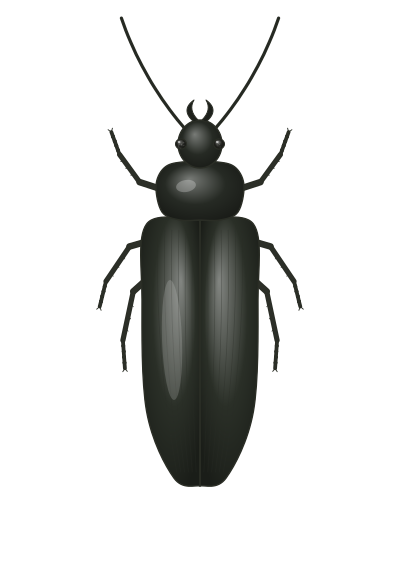
Bugs in the Kitchen: Identifying Common Kitchen Pests
Kitchen pests sort themselves by location. Start with where you saw the bug, then check the tell-tale features.
Bugs in the kitchen are usually one of four groups: pantry pests living in stored food, ants or German cockroaches on counters and around the sink, small flies breeding in fruit or drains, or moisture-loving insects under the sink. Where you see them is the best first clue, because each group needs a different fix. Treat the descriptions below as a way to narrow the field; only a close look at a specimen can confirm a species.
Narrow it down
- Inside food packages or on pantry shelves: beetles, weevils or small moths and their larvae.
- On counters, in trails, around the sink: ants (in lines) or cockroaches (running for cover, mostly at night).
- Flying around the fruit bowl, trash or drain: fruit flies, drain flies or phorid flies.
- Under the sink, behind the fridge or dishwasher: cockroaches or silverfish.
Then check size (a ruler helps), whether it flies, and what time of day you see it. Cockroaches seen in daylight often signal a large population.
Quick comparison table
| Insect | Size | Look for | Where | Concern |
|---|---|---|---|---|
| Pantry beetles | 2.5–4 mm | Small brown beetles, some flat, some humped | Flour, cereal, spices, pet food | Contaminate food |
| Rice or granary weevil | about 3 mm | Long snout | Whole grains, popcorn, beans | Contaminate food |
| Indian meal moth | about 13–16 mm | Two-tone wings, copper outer half; webbing in food | Pantry, flying in kitchen | Contaminates food |
| Ants | 1.5–5 mm | Pinched waist, elbowed antennae, trails | Counters, sink, floor edges | Nuisance in food |
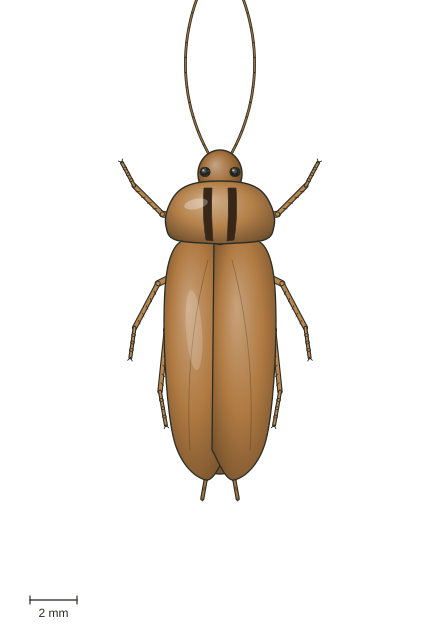
| German cockroach | 13–16 mm adult | Two dark stripes behind head | Cracks near sink, stove, fridge | Health pest, allergens |
| Fruit fly | about 3 mm | Tan body, usually red eyes | Ripe fruit, trash, spills | Nuisance |
| Drain fly | 2–5 mm | Fuzzy, moth-like wings | Sink drains, disposals | Nuisance |
| Phorid fly | about 3 mm | Humped back, runs more than flies | Drains, garbage, leaks | Nuisance; can signal a hidden leak |
| Silverfish | 8–19 mm | Silvery, carrot-shaped, three tails | Under sink, damp cabinets | Nibbles paper, starch |
In stored food
Pantry beetles
The common pantry beetles are all small and brown, about 2.5 to 4 mm (1/10 to 1/8 inch or a bit more):
- Drugstore and cigarette beetles: oval, humped, head tucked under. They fly and collect at windows. Common in spices, flour and dry pet food.
- Sawtoothed grain beetle: very flat and slender, with six small teeth on each side of the thorax. Does not fly. Common in cereals, dried fruit and nuts.
- Red and confused flour beetles: flat, elongated, reddish brown. Found in flour and baking mixes.
What they mean: they contaminate food but do not bite or harm people. Infestations usually start in a forgotten, partly used package. See tiny brown bugs for close-up features.
Weevils
Rice and granary weevils are about 3 mm long with a distinct snout. Their larvae grow hidden inside whole kernels, so popcorn, rice, dried beans and birdseed can look normal until adults emerge. A rice weevil has four pale spots on its back; a granary weevil is plain.
Indian meal moths

This is the small moth fluttering around the kitchen in the evening. Adults are about 13 to 16 mm (1/2 to 5/8 inch) long, with forewings pale tan near the body and reddish copper on the outer half to two-thirds. The larvae are whitish caterpillars with a brown head, up to about 13 mm, and they leave silk webbing and droppings in cereals, flour, nuts, dried fruit, pet food, birdseed and spices.
What it means: a pantry pest, not a clothes moth. Check every dry food package, including sealed ones.
Fixing a pantry infestation
Find and throw out infested packages in a sealed bag in the outdoor trash. Vacuum shelves, corners and cracks, and wipe them with soapy water. Store dry goods in glass, metal or heavy plastic containers with tight lids. Freezing suspect items for several days kills insects inside. Spraying insecticide on food shelves is not recommended. The pantry pests guide has more detail.
On counters and around sinks
Ants
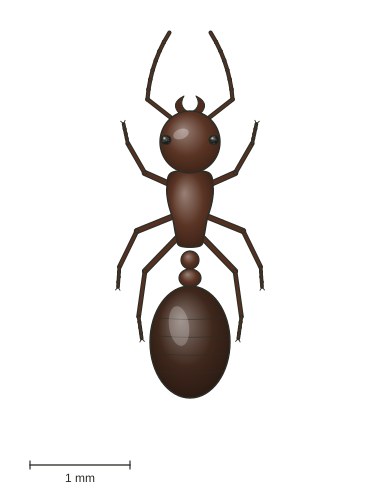
Ants on a counter usually travel in a visible trail between food and a nest in a wall, under the floor or outside. Common kitchen species include odorous house ants (dark brown to black, about 3 mm, strong smell when crushed), pavement ants (dark brown to black, about 3 to 5 mm) and pharaoh ants (tiny, about 1.5 mm, yellowish to orange).
What it means: a nuisance that gets into sweets, grease and pet food. Wipe up the trail with soapy water, store food tightly, and use slow-acting baits so workers carry the toxicant back to the colony. Sprays on the counter kill only the ants you see. See ant control and the ants guide.
German cockroaches
The German cockroach is the main kitchen cockroach in the US. Adults are light brown, about 13 to 16 mm (1/2 to 5/8 inch), with two dark stripes on the shield behind the head. Nymphs are smaller, wingless and darker, with a pale stripe down the back. They hide in warm, tight cracks near food and water: under sinks, behind stoves and refrigerators, in cabinet hinges and inside appliances. Droppings look like coarse ground pepper.
What it means: a health pest. Cockroaches contaminate food, and their droppings and cast skins can trigger allergies and asthma. Baits placed in cracks are usually the main tool, together with sanitation and sealing gaps. Foggers rarely reach where they hide. See cockroach control and cockroach nymph identification.
Flying around fruit and drains
The breeding site is the answer here. Insecticide sprays alone rarely fix small-fly problems.
Fruit flies
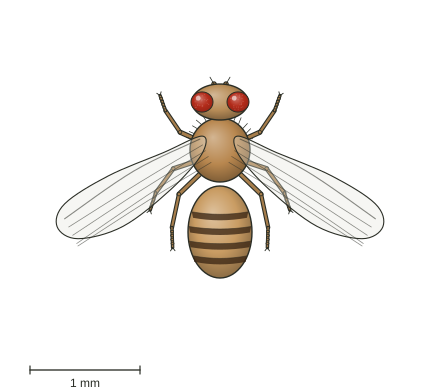
About 3 mm (1/8 inch), stout, tan to orange-brown, usually with red eyes. They hover around ripe fruit, recycling bins, trash, spilled juice and damp mops. Remove overripe produce, rinse recycling, clean under the trash liner, and use a cider vinegar trap to monitor.
Drain flies
Tiny, 2 to 5 mm, gray to black and fuzzy, with wings held roof-like over the body so they look like miniature moths. They rest on walls near sinks and fly in short hops. Larvae live in the slimy film inside drains and garbage disposals. Scrub the drain with a stiff brush and flush with hot water; bleach does little to the film.
Phorid flies
About 3 mm, tan to dark brown with a humped back. They tend to run in quick bursts across counters rather than fly. They breed in moist decaying matter: drains, garbage, and soil soaked by a leaking sewer line. A phorid problem that keeps coming back can point to a hidden plumbing leak.
A strip of clear tape over a drain overnight will show whether flies are coming up from it. The small flying bugs guide covers more look-alikes.
Under the sink and appliances
Cockroaches
Dark, warm, damp spaces under sinks and behind dishwashers and refrigerators are prime cockroach habitat. In apartments and kitchens this is usually the German cockroach. Larger American and Oriental cockroaches may come up through floor drains or from basements and crawl spaces. Look for droppings, egg cases and shed skins with a flashlight. More in the cockroach guide.
Silverfish
Silvery gray, flattened and carrot-shaped, about 8 to 19 mm (1/3 to 3/4 inch), with long antennae and three long tails at the rear. They prefer damp, cool spots such as under the sink and in laundry rooms, and they nibble starchy foods, paper and glue. Harmless to people. Fix leaks and lower humidity. See the silverfish guide.
Still not sure?
Use the insect identification tool to work through the clues step by step.
To confirm, collect a specimen. Stick it to clear tape on an index card or seal it in a small bag or vial, note where and when you found it, and bring it to your county or state extension office. For cockroaches and pharaoh ants above all, a firm identification before treatment saves time and money.
References
- Insect and Mite Pests in the Kitchen and Pantry (EC3049). Nebraska Extension.
- Stored Product Pests in the Pantry (ENTFACT-612). University of Kentucky Entomology.
- Indian Meal Moth. University of Maryland Extension.
- Indoor Flies and Their Control. Texas A&M AgriLife Extension.
- Cockroach Biology and Management (E-359). Texas A&M AgriLife Extension.
- Cockroaches (Pest Notes). UC Statewide IPM Program.
- Ants (Pest Notes). UC Statewide IPM Program.
- Silverfish and Firebrats (ENT-64). Ohio State University Extension.
See also
This page was last updated on October 7, 2026. We research our guides from university extension services, government agencies, museums and peer-reviewed literature. Read the editorial policy or report an error.