Cockroach Control: Baits, Sanitation and Prevention
German cockroaches and large outdoor roaches need different strategies. Baits and cleanup handle the first; sealing and moisture control handle the second.
Quick answer
German cockroaches breed indoors and are best controlled with well-placed baits, thorough cleaning, removal of hiding places and sticky-trap monitoring, switching bait types if roaches stop feeding. Large roaches such as American and oriental cockroaches usually come in from outdoors, so sealing entry points, fixing moisture problems and reducing outdoor harborage matter most. Sprays and foggers are rarely the best first step.
Cockroach control depends on which cockroach you have. German cockroaches live and breed indoors, so control centers on baits placed where they hide, deep cleaning, sealing their harborage and tracking results with sticky traps. Large roaches such as American and oriental cockroaches mostly live outdoors or in drains and come in by accident, so keeping them out through sealing, drainage and moisture control does most of the work.
Here is how each strategy works. This page does not give product rates. Read and follow the label on any product you use.
Identify the cockroach first
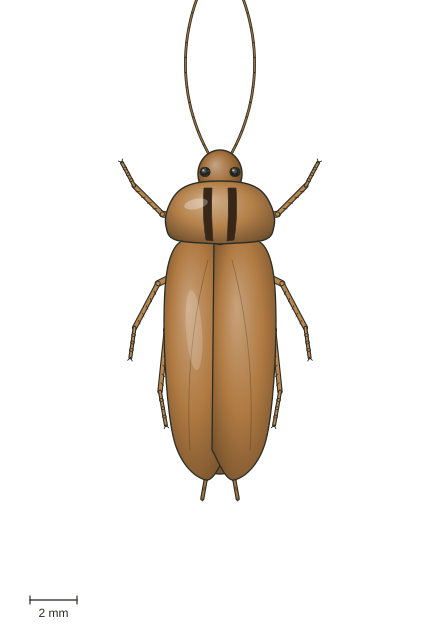
The German cockroach is the small, light brown species about 13 mm (1/2 inch) long with two dark stripes behind the head. It is the one that builds large populations in kitchens and bathrooms. University of Kentucky Entomology notes that a single female and her offspring can produce thousands of roaches in less than a year.
The American cockroach is much larger, about 38 mm (1 1/2 inches), and reddish brown. The oriental cockroach is about 25 mm (1 inch) and shiny dark brown to black. Both favor basements, drains, crawl spaces and other damp places. Brownbanded cockroaches resemble German cockroaches in size but hide higher in rooms, behind pictures and inside furniture.
Small, wingless roaches are often nymphs. Our guide to cockroach nymphs shows how to tell German nymphs from young large roaches. The cockroaches hub covers each species in more detail.
Monitor with sticky traps
UC IPM calls sticky traps the best way to detect cockroaches and track their numbers. They show you where to focus and whether treatment is working.
- Place traps flat against walls and in corners: under sinks, beside the stove, near the refrigerator, behind the toilet and next to trash cans.
- Number each trap and write down its location.
- Check traps daily at first, then weekly, and record counts.
- Traps that catch the most roaches, especially small nymphs, point to the nearest harborage.
Keep traps where small children and pets cannot reach them. A flashlight inspection of cabinet hinges, appliance edges and under-sink plumbing adds detail. Look for roaches, shed skins, egg cases and peppery fecal spotting.
German cockroach strategy
Sanitation
Rutgers notes that German cockroach numbers track closely with sanitation. Cleaning does not kill roaches, but it removes the competing food that keeps them from eating bait.
- Clean grease and crumbs from floors, inside cabinets, and behind and under the stove, refrigerator and dishwasher.
- Do not leave dirty dishes, pet food or open food out overnight.
- Store food in sealed containers and keep trash in lidded bins, emptied daily.
- Vacuum roaches, droppings and shed skins with a HEPA-filter vacuum. These materials carry allergens that can trigger asthma.
Removing harborage
German cockroaches spend most of their time packed into tight, warm cracks near food and water. Take away those spaces:
- Caulk gaps along countertops, backsplashes, baseboards and cabinet edges.
- Seal holes where pipes and wires pass through walls, under sinks and behind appliances.
- Fix leaks and dry out wet areas under sinks.
- Remove cardboard boxes, paper bags and stacked paper, which roaches use as shelter.
Baits
Baits are the main chemical tool for German cockroaches. UC IPM and Rutgers both rate them as more effective than sprays. Roaches eat the bait where they forage, return to hiding and die there, so baits reach insects that a spray never touches. They have little odor, and UK Entomology notes they usually do not require emptying cabinets.
Placement matters more than quantity in any one spot:
- Put many small placements close to where roaches hide, such as cabinet hinges and corners, under the sink and along appliance edges.
- Bait stations work best flush against edges where roaches travel.
- Do not spray insecticides or strong cleaners on or near bait. That can stop roaches from feeding.
- Expect a slow decline. UK Entomology says roaches usually die a day or more after feeding, with a noticeable drop within a few weeks.
Follow the label for where and how much to apply, and keep baits away from children and pets.
Bait aversion, resistance and rotation
Some German cockroach populations stop eating certain baits. Researchers at NC State University found that some roaches inherited an aversion to glucose, a sugar used as a feeding stimulant in many baits. Other populations are resistant to particular active ingredients.
If a bait stops working, Rutgers recommends switching to a product with an active ingredient from a different chemical class. Product names differ, so check the active ingredient on the label to be sure you are actually changing something. Practical signs that a bait is failing include untouched placements and steady or rising trap counts after a few weeks.
Insect growth regulators
Insect growth regulators (IGRs) do not kill roaches quickly. They interfere with development and reproduction, so a population declines as nymphs fail to become fertile adults. Rutgers notes that IGRs are best for chronic, heavy infestations and should be paired with faster-acting baits or other products.
Dusts
Boric acid dust is a slow-acting option for dry, hidden spaces such as wall voids, behind appliances and under cabinets. UC IPM notes that it loses effectiveness when wet. Keep it out of food-preparation areas and away from children and pets, and use only products labeled for the site.
Why sprays and foggers fall short
UC IPM notes that sprays give only short-term knockdown, can scatter roaches and that German cockroaches have developed resistance to many common sprays. Rutgers adds that many retail sprays are repellent, which drives roaches away from treated areas. In apartments, sprays can push roaches through pipe chases into neighboring units.
Total release foggers rarely reach roach hiding places and can scatter roaches deeper into wall voids. The EPA warns that fogger propellants are usually flammable. UK Entomology, UC IPM and Rutgers all advise against foggers for cockroaches.
Large outdoor roaches
American, oriental and similar large cockroaches usually enter from outside, from drains, or from sewers and crawl spaces. The aim is to keep them out and make the area around the house less inviting.
Exclusion
- Install door sweeps and repair torn screens.
- Seal gaps around pipes, vents, utility lines and the foundation.
- Keep drain traps filled with water and repair broken pipes. UC IPM notes that American cockroaches can enter through faulty drain traps.
- Cover floor drains in basements with tight-fitting grates.
Moisture and outdoor harborage
- Fix leaks and improve ventilation in crawl spaces and basements.
- Trim shrubs, ivy and dense ground cover away from the foundation.
- Move woodpiles, lumber and debris away from the house.
- UC IPM suggests a gravel strip of about 15 to 30 cm (6 to 12 inches) around the foundation to keep the area drier.
Perimeter and outdoor baits
When large roaches keep coming in, UC IPM notes that baits placed in outdoor harborage such as water meter boxes, valve boxes, around planters and near woodpiles can help. Treating harborage sites with insecticide may be needed when numbers are high. A narrow perimeter treatment is sometimes used by professionals, but it should support exclusion and moisture control, not replace them. Follow the label for any outdoor product and avoid treating areas where runoff could reach drains or waterways.
Measure progress
Keep checking sticky traps after treatment. Rutgers recommends follow-up inspections and retreatment every few weeks until no cockroaches are seen for at least a month. If roaches persist, UC IPM suggests looking for other entry points, removing more food and water, moving bait closer to harborage or switching baits. Continue monitoring after control to catch any return early.
Keep them from coming back
German cockroaches rarely walk in from outdoors. They usually arrive as hitchhikers. UC IPM recommends inspecting deliveries, boxes, used appliances and stored items for roaches and egg cases before bringing them inside or into the kitchen. Once a home is clear, a few habits keep it that way:
- Leave a handful of sticky traps in place under sinks and behind appliances, and check them monthly.
- Keep up the nightly cleanup of food, dishes and pet bowls.
- Recaulk gaps that open up around counters and plumbing.
- In apartments, report roaches to management promptly so neighboring units can be inspected.
When to bring in a professional
Many single-family homes with a small German cockroach problem can be cleared with steady sanitation, sealing and baiting. Professional help is the better choice when:
- You live in an apartment or other multi-unit building, where roaches move through shared walls and plumbing and unit-by-unit treatment often fails. Building management usually needs to coordinate treatment.
- Trap counts stay high after a month or more of consistent baiting and cleaning, which may signal bait aversion or resistance.
- Roaches are in a food business, child care setting or health care setting.
- Someone in the home has asthma or allergies triggered by cockroaches and the problem needs to end quickly.
A good technician inspects thoroughly at each visit and puts product into cracks and hiding spots rather than spraying baseboards. UK Entomology notes that a properly treated single-family home should not need a full year of service to eliminate German cockroaches. Ask what products and methods will be used, how progress will be measured, and what you need to do between visits.
For more on choosing a company, see when to call a pest control professional.
References
- Cockroaches: Pest Notes. University of California Statewide IPM Program.
- Cockroach Control (ENTFACT-614). University of Kentucky Entomology.
- German Cockroach Control (FS1322). Rutgers New Jersey Agricultural Experiment Station.
- NC State entomologists study insecticide-resistant, bait-averse German cockroaches. NC State University College of Agriculture and Life Sciences.
- Safety Precautions for Total Release Foggers. US Environmental Protection Agency.
- Introduction to Pesticide Labels. US Environmental Protection Agency.
See also
- Cockroaches
- Cockroach nymphs
- Bugs in the kitchen
- Pest control basics
- When to call a pest control professional
This page was last updated on October 7, 2026. We research our guides from university extension services, government agencies, museums and peer-reviewed literature. Read the editorial policy or report an error.