Termite vs Flying Ant: How to Tell Swarmers Apart
Three features separate them in seconds: the antennae, the waist and the wings. Here is how to check each one, even on a dead insect from a windowsill.
| Termite swarmerReticulitermes spp. | Winged antFormicidae |
|---|---|
 |  |
Quick answer
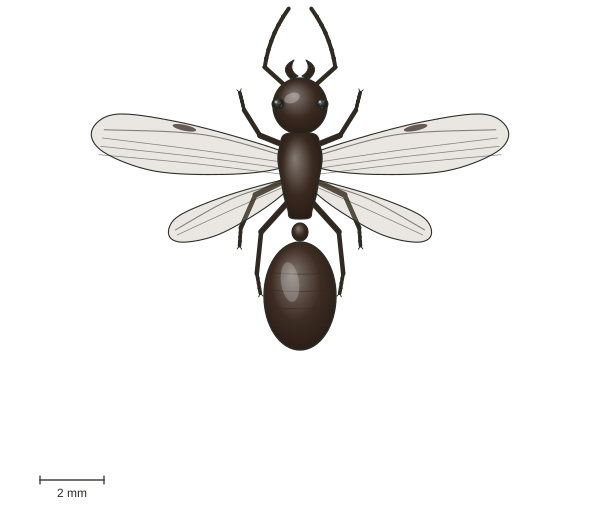
Termite swarmers have straight, bead-like antennae, a thick waist with no pinch, and four wings of equal length that reach well past the body. Winged ants have elbowed antennae, a narrow pinched waist, and front wings longer than the hind wings. Termite swarmers emerging indoors usually point to an active infestation, so save a few and arrange an inspection.
| Feature | Termite swarmer | Winged ant |
|---|---|---|
| Size | About 10 mm (3/8 inch) with wings | Varies widely by species |
| Body shape | Straight sides, tube-like | Three clear sections |
| Color | Dark brown to black | Black, brown or reddish |
| Antennae | Straight, bead-like | Bent at an elbow |
| Wings | Four equal wings, about twice body length | Front wings longer than hind wings |
| Wing color | Pale, see-through, whitish | Clear to brown-tinted |
| Waist | Broad, no pinch | Narrow, pinched |
| Behavior after flight | Sheds wings quickly, drawn to light | Also sheds wings after mating |
| Where found | Windowsills, lights, near foundations | Windows, near slab or nest sites |
| Signs left behind | Piles of equal wings, mud tubes | Coarse sawdust (carpenter ants) |
| Concern | Workers eat structural wood | Mostly nuisance; carpenter ants hollow wood |
Bottom line: Look at the waist and the antennae. A thick waist with straight antennae means termite; a pinched waist with elbowed antennae means ant.
Termite swarmers and winged ants are both reproductives: young kings, queens and males that leave the nest in a mass flight to mate and start new colonies. They show up in the same places, often in the same months, and both drop their wings soon after landing. That is why they get confused. The body underneath is very different, and you can check it with a phone camera.
The three checks that settle it
Antennae: straight or elbowed
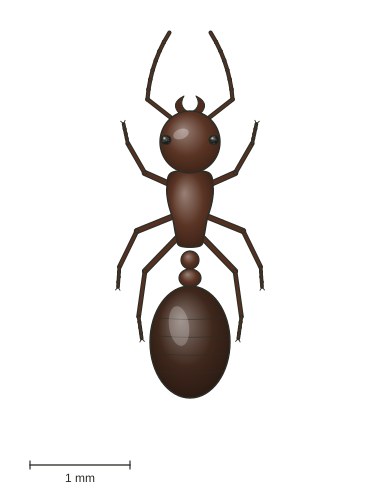
Termite antennae are straight and look like a short string of beads. Ant antennae have a long first segment followed by a sharp bend, so they look like a bent arm. This works even on a dead insect, as long as the antennae are intact.
Phone tip: set the insect on a sheet of white paper, use the camera’s 2x or 3x zoom rather than moving closer, and tap to focus on the head. If you have a 10x hand lens, hold it right against the phone lens.
Waist: thick or pinched
This is the most reliable feature, and it survives on insects that have lost their wings and antennae. A termite’s body has nearly straight sides from the thorax to the tip of the abdomen. An ant has a narrow stalk between the thorax and the abdomen, so the body looks pinched into separate pieces. Look from the side if the top view is unclear.
Wings: equal or unequal
Termite swarmers have four wings of the same size and shape. They lie flat over the back and reach well beyond the abdomen, about twice the body length. In ants, the front pair is clearly longer than the hind pair, and the wings reach to about the end of the body.
Wings are the least dependable of the three checks on a live insect, because the wings stack on top of each other at rest and you cannot easily see that there are two pairs. They are most useful once shed. A pile of identical, pale, rounded wings on a windowsill points strongly to termites.
Features that mislead
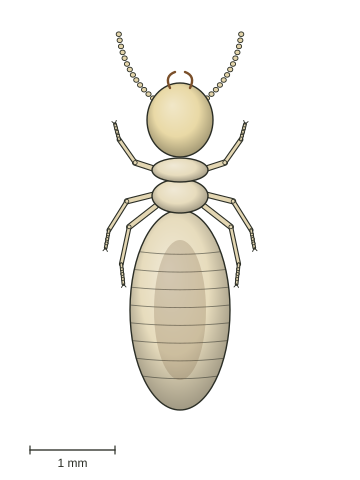
Color. Many people expect termites to be white. The workers are creamy white, but swarmers are dark brown to black, the same range as many ants. Color alone will not separate them.
Size. Subterranean termite swarmers are about 10 mm (3/8 inch) including wings. Ant swarmers range from small to large depending on species, and carpenter ant queens can reach about 25 mm (1 inch). A very large winged insect is more likely an ant, but size is a weak clue.
Missing wings. Both groups shed their wings, so a wingless insect on the floor could be either. Fall back on the waist and antennae.
When and where swarms happen
Native subterranean termites (Reticulitermes) usually swarm in spring, with some fall flights. Swarms tend to happen in daylight on warm days, often after rain. Exact timing shifts with region and weather: in the Deep South, flights can start in late winter, while northern areas see them later in spring. Formosan termites, found in parts of the southern US, swarm around dusk and fly toward lights.
Ants also swarm in warm weather, with timing that varies by species and local weather. Ants and termites can fly in the same weeks, so the calendar will not tell you which one you have.
Indoors, termite swarmers head for light. Expect them at windows, glass doors and light fixtures, often in a bathroom, kitchen or basement. Swarmers indoors usually dry out and die within a day or so, leaving bodies and wings on sills.
Termite worker
Ant worker
What a termite swarm indoors means
Termite swarmers emerging inside the house almost always mean a colony is feeding in or under the structure. The exception is a few insects that clearly flew in through an open door or window. Swarmers outdoors, from a stump or woodpile, do not by themselves mean the house is infested, but swarms next to the foundation or from an attached porch or patio are a warning.
The swarmers do not damage wood. The workers do, and they stay hidden. That makes the swarm, or a pile of shed wings, one of the few visible signs of a problem that can go unnoticed for years. Check for other evidence too, such as pencil-width mud tubes on foundation walls, piers or joists. Our guide to signs of termites shows what to look for.
Carpenter ants vs termites
Carpenter ants are the ants most often blamed for wood damage. They are large, black or red and black, and they nest in moist or decaying wood. Unlike termites, they do not eat wood. They tunnel through it and push out coarse, sawdust-like debris, leaving galleries that are smooth and clean. Termite galleries in wood are usually lined or packed with soil-like material.
Many winged carpenter ants indoors in late winter or spring suggest a nest inside the building. One or two winged queens do not; they may have mated outdoors and wandered in. Leaks, condensation and poor ventilation often lead to carpenter ant nests, so fixing moisture problems is part of the answer. See our ants hub for more.
What to do next
- Identify first. Check the waist and antennae on two or three specimens. Winged termites and winged ants are easy to confuse, so do not skip this step.
- If they are ants, a vacuum is usually enough for a one-time swarm. Ongoing worker activity indoors, or signs of carpenter ants, calls for finding the nest.
- If they are termites, vacuum the swarmers and arrange a professional inspection. Spraying swarmers does nothing about the colony. If you already have a termite service agreement, call that company first, since the agreement may cover retreatment.
- Learn the options before you sign anything. Our overview of termite treatment methods explains how soil treatments and baits work.
For a closer look at antennae, waists and wings across insect groups, see external anatomy of insects.
References
- Subterranean Termites (ENTFACT-604). University of Kentucky Entomology.
- Termite Swarmers: What Do They Mean for You?. NC State Extension.
- Eastern Subterranean Termites. Penn State Extension.
- Pest Notes: Ants. University of California IPM.
- Ants and Termites: How to Tell the Difference. University of Maryland Extension.
- Pest Notes: Termites. University of California IPM.
- Species of Termites in Mississippi. Mississippi State University Extension.
- Carpenter Ants. University of Minnesota Extension.
See also
- Termites: biology and identification
- Signs of termites
- Termite treatment methods
- Ants in the house
- Flying insects indoors
- External anatomy of insects
This page was last updated on October 7, 2026. We research our guides from university extension services, government agencies, museums and peer-reviewed literature. Read the editorial policy or report an error.