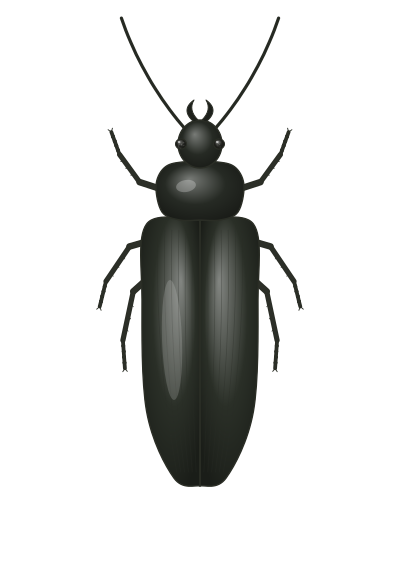
Carpet Beetle vs Bed Bug: How to Tell Them Apart
A small bug in the bed is not always a bed bug. Carpet beetles and their hairy larvae are among the most common mix-ups, and the fix for each is very different.
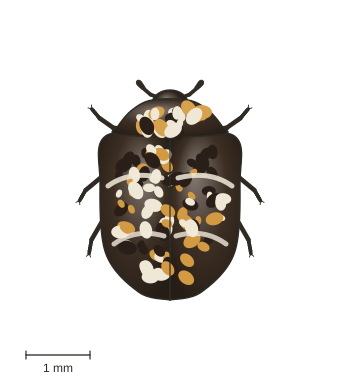
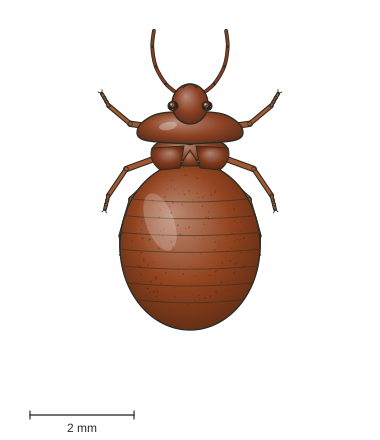
| Carpet beetleAnthrenus verbasci | Bed bugCimex lectularius |
|---|---|
 |  |
Quick answer
Adult carpet beetles are tiny, round beetles with hard wing covers in a mottled pattern of white, brown and yellow, while bed bugs are flat, oval, wingless and an even reddish-brown. Carpet beetle larvae are bristly, striped and caterpillar-like. Carpet beetles do not bite, but larval hairs can irritate skin; bed bugs feed on blood.
| Feature | Carpet beetle | Bed bug |
|---|---|---|
| Size | About 1.5 to 3.5 mm | About 5 to 7 mm |
| Body shape | Round, domed, like a tiny ladybug | Oval and flat, like an apple seed |
| Color | Mottled white, brown and yellow scales | Even reddish-brown; redder after feeding |
| Antennae | Short, clubbed, often tucked away | Thin, four segments, clearly visible |
| Wings | Hard wing covers; adults fly | Wingless; tiny wing pads only |
| Body divisions | Head mostly hidden under thorax | Head, thorax and abdomen easy to see |
| Movement | Slow walker; drawn to windows | Fast crawler; avoids light |
| Young stages | Hairy, striped, tufted larvae | Pale miniatures of adults |
| Where found | Windowsills, closets, rug edges, vents | Mattress seams, bed frames, couches |
| Signs left behind | Bristly shed skins, holes in wool | Dark spots, pale skins, eggs |
| Health or property concern | Damages wool, silk, fur; hairs irritate skin | Bites cause itchy welts |
Bottom line: Look at the shape. A round, patterned beetle that walks slowly is a carpet beetle; a flat, plain reddish-brown bug that hurries into a seam is a bed bug.
Carpet beetles and bed bugs are both small, both turn up around beds and bedrooms, and both get blamed for itchy skin. Up close they look nothing alike. One is a beetle with hard, patterned wing covers. The other is a flat, wingless true bug that feeds on blood. The trickiest part is the carpet beetle larva, which is the stage people most often find on sheets and mattresses.
How to look at the adults
Shape is the fastest clue
An adult varied carpet beetle is round and domed, about 1.5 to 3.5 mm long, and looks like a very small ladybug. A bed bug is longer, about 5 to 7 mm, and shaped like a flat, oval apple seed. Turn the insect on its side if you can: the carpet beetle stays tall and rounded, while an unfed bed bug is thin as paper.
Color and pattern
Carpet beetle wing covers carry an irregular pattern of white, brown and dark yellow scales. Older adults can lose scales and look plain dark brown or black, so a worn specimen can fool you. Bed bugs are an even reddish-brown with no pattern. After a blood meal they swell and turn redder.
Phone tip: tap to focus, then use the zoom rather than moving the lens closer. Side lighting from a flashlight held low across the surface brings out the carpet beetle’s scale pattern.
Head, antennae and wings
On a carpet beetle the head is mostly hidden under the front of the body, and the short, clubbed antennae are easy to miss. On a bed bug you can see a distinct head with thin, four-segmented antennae pointing forward. Bed bugs have only tiny wing pads and cannot fly. Adult carpet beetles have working wings under their wing covers and can fly, which is why adults gather at sunny windows in spring and early summer.
The larva: what people actually find in bed

Carpet beetle larvae look like tiny, bristly caterpillars, slightly longer than the adults. Varied carpet beetle larvae have alternating light and dark brown bands, are wider at the rear than the front, and carry tufts of hair at the tail that they raise when disturbed. They move slowly.
Young bed bugs (nymphs) are the opposite: smooth, pale or yellowish-white, and shaped like small adults. Unfed young nymphs can be hard to see at all.
The larvae feed on wool, silk, fur, feathers, hair, lint and dead insects. A wool blanket, a down comforter, pet hair under the bed or a feather pillow can all support them. When they molt they leave behind brown, bristly shed skins, which look like hollow copies of the larva. Bed bug shed skins are pale, smooth and shaped like the bug.
Skin irritation vs bites
Carpet beetles do not bite. Their larvae carry fine, barbed hairs that can lodge in skin and cause itchy red bumps in sensitive people. A CDC journal report from France described families with repeated itchy bumps, mostly on skin covered by clothing, traced to carpet beetle larvae rather than bed bugs or fleas. The rash cleared after cleaning and washing.
Bed bugs do feed on blood, usually at night, and the bite is painless. Reactions range from itchy welts to nothing at all, and can appear a day or more later. Many people never react.
Neither rash can be identified by looking at it. Bites and hair reactions look alike, and they also resemble mosquito or flea bites. Only the insects or their signs confirm what is going on. For skin reactions that worry you, see a doctor.
Signs that point to each one

Carpet beetles: adults on windowsills; bristly shed skins in closets, drawers, rug edges and vents; small holes or bare patches in wool, felt or other animal-fiber items; tiny fecal pellets about the size of a grain of salt.
Bed bugs: small dark spots (dried droppings) along mattress seams and bed frames; rusty smears on sheets; pale shed skins; tiny white eggs glued in cracks; live bugs hiding near where people sleep or sit. See signs of bed bugs for an inspection walkthrough.
What it means to find one indoors
A few adult carpet beetles at a window are common and not cause for alarm. They feed on pollen outdoors and often come in through gaps or on cut flowers. Larvae and shed skins mean a food source indoors that is worth finding.
A bed bug is different. Even one live bug in a bed or sofa is reason to inspect closely, because bed bugs hide well and populations grow quietly. They travel on luggage, clothing and secondhand furniture, and clean homes get them too.
What to do next
For carpet beetles: track down the source. Check stored woolens, blankets, rugs, closets, pet bedding, air vents and areas with dead insects. Vacuum thoroughly, wash or dry-clean infested items, and store clean woolens in sealed containers. Our carpet beetle control guide covers the full process.
For bed bugs: inspect mattress seams, box spring, bed frame and nearby furniture with a flashlight. Wash and dry bedding on high heat, reduce clutter, and avoid foggers, which do not work on bed bugs. Most infestations need a licensed professional. Renters should tell their landlord. See bed bug treatment for how professional and do-it-yourself methods compare.
Not sure which one you have? Our bugs in bed guide covers other common finds.
References
- Pest Notes: Carpet Beetles. University of California IPM.
- Carpet Beetles (ENTFACT-601). University of Kentucky Entomology.
- Carpet beetles identification guide. Natural History Museum, London.
- Varied Carpet Beetle. Mississippi State University Extension.
- Dermatitis Caused by Carpet Beetle Larvae (Anthrenus sp.), France. CDC, Emerging Infectious Diseases.
- Bed Bugs (ENTFACT-636). University of Kentucky Entomology.
- Pest Notes: Bed Bugs. University of California IPM.
- Bed Bugs: Appearance and Life Cycle. US EPA.
See also
This page was last updated on October 7, 2026. We research our guides from university extension services, government agencies, museums and peer-reviewed literature. Read the editorial policy or report an error.