Termites: Identification, Types, Signs and Prevention
Pale, soft-bodied social insects that eat wood from the inside out, usually out of sight, and announce themselves with mud tubes, shed wings or swarms.
Termites are small, pale, social insects that feed on wood and other cellulose, and in the United States most home damage comes from subterranean termites that live in the soil and travel up into the house through mud tubes. The fastest ways to confirm termites are winged swarmers or piles of shed wings indoors, pencil-width mud tubes on the foundation, or wood with tunnels packed with dried soil. Drywood termites leave a different clue: small piles of hard, six-sided pellets.
This page covers what termites look like, the four groups that matter in US homes, when they swarm, how serious an infestation is, and what lowers the risk. For a full walk-through of evidence, see the signs of termites guide.
What termites are
Termites are closely related to cockroaches, and modern classification places them inside the order Blattodea (see our Blattodea overview). Like cockroaches, they develop through simple metamorphosis: young termites hatch looking like small versions of the adults and molt as they grow, with no pupal stage. Our page on simple and incomplete metamorphosis explains that pattern.
Unlike cockroaches, termites live in permanent colonies with a division of labor. They feed on cellulose, the main structural material in wood, cardboard and paper. That diet makes them important recyclers of dead wood outdoors and a costly problem when the wood is part of a house.
People sometimes call termites “white ants.” They are not ants. Ants belong to a different order (Hymenoptera) and go through complete metamorphosis.
Termite castes: workers, soldiers and swarmers
A termite colony has three main forms. Each one looks different, and knowing which one you are looking at helps with identification.
Workers
Workers make up most of the colony. They are creamy white, wingless, soft-bodied and smaller than the swarmers. Workers chew the wood, build the tunnels and mud tubes, and feed the rest of the colony. You rarely see them unless you break open a mud tube or damaged wood, because they avoid light and dry air.
Soldiers
Soldiers defend the colony. They look like workers but have an enlarged, darker, yellowish to brown head with long, strong jaws. Eastern subterranean soldiers have a long, rectangular head. Formosan soldiers have a teardrop-shaped head and can release a drop of white, sticky fluid from an opening on the front of the head. Soldiers cannot feed themselves and depend on workers. Species identification often relies on soldiers, so an inspector will look for them.
Swarmers and reproductives
Swarmers (also called alates) are the winged males and females that leave a mature colony to mate and start new ones. They are the termites homeowners notice most. Swarmers have darker bodies than workers, two pairs of wings of equal length, straight bead-like antennae and a broad waist. They shed their wings soon after flying, so finding loose wings on a windowsill is a common clue.

A pair that succeeds becomes the founding king and queen of a new colony. Mature colonies can also produce replacement reproductives that never fly. Colonies usually need several years of growth before they release swarmers.
Types of termites in US homes
Many termite species live in the United States, but a handful cause nearly all structural damage. They fall into four practical groups.
| Group | Where it lives | Main clue | Range in the US |
|---|---|---|---|
| Native subterranean | Soil nests; travels to wood | Mud tubes, soil-lined galleries | Nearly nationwide |
| Formosan subterranean | Soil and above-ground nests | Large evening swarms, mud tubes high on walls | Gulf Coast, Southeast, Hawaii, parts of California |
| Drywood | Inside dry, sound wood | Six-sided pellets, kick-out holes | Southern tier and coasts |
| Dampwood | Very wet or decaying wood | Large open galleries in wet wood | Pacific Coast, south Florida, parts of the Southwest |
Subterranean termites
The eastern subterranean termite, Reticulitermes flavipes, is the most widespread termite in the eastern United States and the species most homeowners deal with. Related Reticulitermes species, such as the southeastern subterranean termite (R. virginicus) and the western subterranean termites of the Pacific states, fill out the picture in other regions, along with Heterotermes in the desert Southwest.
Subterranean colonies nest in the soil, where they find the moisture they need. Workers reach wood in contact with the ground directly, or build mud tubes over foundations, piers and pipes to reach wood above it. They feed along the grain and leave galleries lined with dried soil. Eastern subterranean swarmers are dark brown to black and about 10 mm (3/8 inch) long with wings.
Formosan subterranean termite
The Formosan subterranean termite, Coptotermes formosanus, is an introduced species that builds much larger colonies than native termites. Texas A&M AgriLife reports that a colony may exceed a million insects. It is established across much of the Gulf Coast and Southeast, including Louisiana, Florida, Texas, Mississippi, Alabama, Georgia, Tennessee and the Carolinas, along with Hawaii and parts of California, and it has spread on infested timbers such as recycled railroad ties.
Formosan termites cause the same kind of damage as native subterranean termites, only faster. They also regularly build nests of chewed wood, soil and saliva above ground inside walls, which adds to how much damage a colony can do. Swarmers are yellowish brown and about 13 mm (1/2 inch) long, with hairy wings, and they fly in large numbers on warm evenings and gather around lights.
Drywood termites
Drywood termites (mainly Incisitermes and Cryptotermes in the US) live entirely inside the wood they eat. They need no soil contact and build no mud tubes. Colonies are small, often a few dozen to a few thousand termites, and they grow slowly, taking years to produce swarmers. They infest framing, trim, furniture and other sound, dry wood.
The important species for homeowners are the western drywood termite (Incisitermes minor) in the Southwest and California, the southeastern drywood termite (I. snyderi) along the Gulf and Southeast coasts, and the West Indian drywood termite (Cryptotermes brevis), which is concentrated in Florida and along the Gulf Coast. Drywood termites push their fecal pellets out of the wood through tiny “kick-out” holes, and those piles of hard, six-sided pellets are usually the first thing people notice.
Dampwood termites
Dampwood termites are among the largest US termites, about 13 to 16 mm (1/2 to 5/8 inch) long. Zootermopsis species live along the Pacific Coast and Neotermes species in south Florida and parts of the Southwest. They need very moist or decaying wood, so indoor infestations almost always trace back to a leak, wood in soil contact or wood kept wet by sprinklers or gutters. They are minor structural pests, and fixing the moisture problem usually ends the infestation.
When termites swarm
Swarming is the most visible event in a termite colony’s year, and timing varies by species and region. These are broad patterns, not fixed dates:
- Native subterranean termites usually swarm during the day, most often in late winter and spring and often on a warm day after rain. Along the Gulf Coast swarms can start in late January or February; in northern states they come later in spring. Some species also swarm in fall.
- Formosan termites swarm at dusk or after dark in late spring, roughly late April through June, and are strongly drawn to lights.
- Drywood termites differ by species. Southeastern drywood termites tend to fly at dusk or night from late spring through fall, western drywood termites by day in late summer and fall, and West Indian drywood termites mainly from spring into early summer.
Swarmers that emerge indoors cannot reach soil and die quickly, and they do not damage wood themselves. Their presence matters because it means a colony is nearby, often in or under the house.
Termites vs flying ants
Winged ants swarm at many of the same times and in the same places, and they are the most common termite look-alike. Three features separate them:
- Antennae: termites have straight, bead-like antennae; ants have antennae bent at an elbow.
- Waist: termites have a thick waist with no pinch; ants have a narrow, pinched waist.
- Wings: termite wings are all about the same length and extend well past the body; ant forewings are longer than the hind wings.
Our termite vs flying ant comparison has side-by-side illustrations and a table. Carpenter ants also damage wood, and their damage looks different from termite damage; the ants guide covers them.
Signs of termites
Most termite infestations are found through evidence rather than by seeing termites. The main signs are:
- Mud tubes: earth-colored tubes about the width of a pencil on foundation walls, piers, pipes or wood. These point to subterranean termites.
- Swarmers or shed wings indoors, especially near windows, doors and light fixtures.
- Damaged wood that sounds hollow, has tunnels packed with dried mud, or shows dark areas or blisters under paint or flooring.
- Six-sided pellets in small piles below wood, which point to drywood termites.
- Pinholes plugged with mud in drywall, or sunken lines in paint or wallpaper.
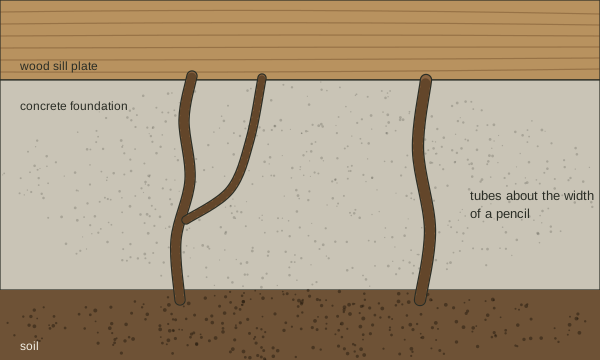
The signs of termites guide shows what each sign looks like, which termite group it points to, and how to tell drywood pellets from carpenter ant sawdust and powderpost beetle powder.
How serious is a termite problem?
Termites are a slow problem but a real one. A typical subterranean infestation takes years to cause structural damage, and the University of Kentucky notes that infestations can stay hidden for years. That slow pace means you have time to get a proper inspection and compare options; it does not mean the problem can be ignored.
Damage is usually hidden, because termites eat wood from the inside and leave the surface layer in place. Formosan termites are the exception in speed: their large colonies can do serious damage much faster than native species. Drywood colonies are small, but several can work in the same house for years before anyone notices pellets.
The concern with termites is structural wood, not health: sills, joists, studs, trim and flooring.
Why termites get into houses
Termites are not attracted to a house as a whole. They follow moisture and wood. Common conditions that raise the risk include:
- Wood touching soil: siding, door frames, deck posts, porch steps or form boards left in the ground give subterranean termites a direct path.
- Moisture near the foundation: leaking gutters and downspouts, poor grading, AC condensate lines, plumbing leaks and sprinklers that wet the walls keep soil damp and attractive.
- Hidden entry points: foundation cracks, gaps around utility lines and pipes, and siding or trim that covers the foundation where mud tubes cannot be seen.
- Wood debris: stumps, firewood stacked against the house, buried scrap lumber and wooden edging or timbers near the foundation.
- Infested wood brought in: drywood termites can arrive in furniture or salvaged lumber, and Formosan termites have spread in reused timbers.
Preventing termites
Prevention is mostly about removing moisture and wood-to-soil contact and keeping the foundation visible so tubes are easy to spot. Extension recommendations include:
- Keep wood off the soil. The University of Kentucky recommends keeping wood siding, door frames and window frames at least 6 inches (15 cm) above the ground; some extension guides suggest more clearance where possible. Pressure-treated wood is not immune.
- Move water away. Keep gutters and downspouts working, add splash blocks or extensions, slope soil away from the foundation, fix leaks and aim sprinklers away from walls.
- Ventilate crawl spaces. Good airflow and a plastic vapor barrier over crawl space soil help keep the area dry.
- Use mulch sparingly. The University of Kentucky notes that a couple of inches (about 5 cm) is usually enough, and mulch should be kept off wood siding and away from door and window frames. The type of mulch matters less than depth; gravel can attract termites too, because it also holds moisture in the soil below.
- Clear wood debris. Never stack firewood against the foundation or in a crawl space, and remove stumps, scrap lumber and old form boards where practical.
- Seal and inspect. Seal foundation cracks and gaps around pipes, and keep shrubs and vines trimmed back so walls stay visible.
- Get periodic inspections. UC IPM suggests a professional inspection every 3 to 5 years, and more often makes sense in Formosan termite areas or where a house has had termites before. A clean inspection lowers the odds of hidden damage but cannot guarantee it.
Termite control options
Termite control is one of the few household pest problems where a licensed professional is usually the right call. Extension specialists consistently note that do-it-yourself products rarely eliminate an established subterranean infestation, because the colony lives underground and an effective soil treatment takes specialized equipment, training and far more product than retail kits supply.
The main approaches are:
- Liquid soil treatments placed in the soil around and under the foundation to create a treated zone that termites contact as they forage. Applied according to the label, they are expected to protect a house for several years.
- Bait systems placed in the ground around the house. Termites feed on a slow-acting bait and share it, which can suppress or eliminate the colony over weeks to months. They need ongoing monitoring.
- Spot and gallery treatments for drywood termites, where insecticide is injected into infested wood, along with removing and replacing damaged pieces.
- Whole-structure heat or fumigation for widespread drywood infestations. Fumigation is done only by certified applicators and leaves no lasting protection once the house is aired out.
- Moisture repair for dampwood termites, which often ends the infestation without insecticide.
Our termite treatment guide explains each method, what a warranty usually covers, and what to ask an inspector. If you are deciding whether to handle a problem yourself, see when to call a professional.
References
- Subterranean Termites (ENTFACT-604). University of Kentucky Entomology.
- Protecting Your Home Against Termites (ENTFACT-605). University of Kentucky Entomology.
- Pest Notes: Termites. University of California Statewide IPM Program.
- Eastern Subterranean Termites. Penn State Extension.
- Species of Termites in Mississippi. Mississippi State University Extension.
- Formosan Termites. Texas A&M AgriLife Extension, Urban Entomology.
- How to Get Rid of Drywood Termites. Cooperative Extension (Pests in the Home).
- Termites (What Is That?). U.S. Army Public Health Center.
- How to Get Rid of Dampwood Termites. Cooperative Extension (Pests in the Home).
See also
- Signs of termites
- Termite vs flying ant
- Termite treatment methods
- When to call a professional
- Powderpost beetles
- Blattodea: cockroaches and termites
This page was last updated on October 7, 2026. We research our guides from university extension services, government agencies, museums and peer-reviewed literature. Read the editorial policy or report an error.