Bugs in the Bathroom: Drain Flies, Silverfish and More
Almost every bug in a bathroom is there for the same reason: moisture. Identify it, then dry things out.
Quick answer
Bugs in the bathroom are most often drain flies, silverfish, springtails, cockroaches coming up from drains, or house centipedes hunting them. Nearly all of them are drawn by moisture, so fixing leaks, cleaning drains and improving ventilation usually solves the problem better than pesticides.
Bugs in the bathroom are most often drain flies, silverfish, springtails, cockroaches that come up through drains, or house centipedes hunting all of the above. The common thread is moisture. Identify the bug to confirm the source, then fix the dampness that drew it in. No single clue makes an identification certain, so check more than one feature before you act.
Narrow it down
- Small fuzzy flies resting on the wall near the sink or tub: drain flies.
- Silvery, wingless, wriggling bugs with three tails, often in the tub or sink: silverfish or firebrats.
- Tiny specks that jump when touched, often on the tub, sill or floor: springtails.
- Large brown or black cockroaches near a floor drain or tub at night: American or Oriental cockroaches.
- Smaller, light brown cockroaches with two stripes behind the head: German cockroaches, usually spilling over from the kitchen.
- A fast, many-legged creature with very long legs, often at night: house centipede.
- Tiny, pale, soft bugs on damp walls, windowsills or stored paper: booklice.
- Small ants trailing to the sink or along tile: ants after water, or nesting in damp wood.
Quick comparison table
| Insect | Size | Look for | Where | Concern |
|---|---|---|---|---|
| Drain fly | 2–5 mm | Fuzzy gray wings, moth-like, weak hops | Sink and tub drains, overflow | Nuisance |
| Silverfish | 8–19 mm | Silvery scales, three tails | Tub, cabinets, damp corners | Nibbles paper and starch |
| Firebrat | 8–19 mm | Duller gray, three tails | Hot, humid spots near heaters | Nibbles paper and starch |
| Springtail | 1–3 mm | Jumps, soft body | Tub, sills, damp floors | Harmless nuisance |
| American cockroach | 38–50 mm | Reddish brown, pale band behind head | Floor drains, under tub | Health pest |
| Oriental cockroach | about 25–32 mm | Shiny black, short wings | Floor drains, damp basements | Health pest |
| Booklouse | under 1.5 mm | Soft, pale, wingless | Damp walls, paper, sills | Nuisance; signals humidity |
| House centipede (not an insect) | 25–38 mm body | 15 pairs of long legs | Basements, drains, tubs | Harmless predator |
| Small ants | 1.5–5 mm | Pinched waist, trails | Sinks, tile edges | Nuisance; can signal wet wood |
Moisture is the common thread
Bathrooms combine standing water, high humidity, organic film in drains and dark gaps behind tile and cabinets. That is ideal habitat for insects that dry out easily. Silverfish prefer humidity of about 75 to 95 percent. Springtails and booklice feed on mold. Drain flies breed in the slime inside pipes. Cockroaches and centipedes follow water and prey.
The fixes overlap, which is good news:
- Ventilate. Run the exhaust fan during and for a while after showers, and make sure it vents outside. A dehumidifier helps in basement bathrooms.
- Fix leaks. Check under the sink, around the toilet base, behind the tub access panel and at tile grout. Replace soft or stained wood.
- Clean drains mechanically. Scrub sink, tub and floor drains and the overflow opening with a long, stiff brush to remove the film where drain flies breed, then flush with hot water.
- Keep traps full. Run water in rarely used sinks, tubs and floor drains so the trap seal blocks sewer insects.
- Seal gaps. Caulk around pipes, tub edges and baseboards to cut off hiding spots.
The likely candidates
Drain flies
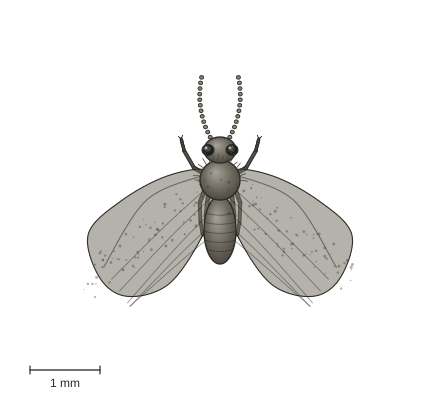
Drain flies (also called moth flies) are 2 to 5 mm (1/16 to 1/5 inch) long, gray to black and fuzzy, with wings longer than the body held roof-like over the back (shown at the top of this page). They rest on walls near plumbing during the day and fly in short, jerky hops. The larvae live in the gelatinous film inside drains, overflows and sewage-damp areas.
What it means: a harmless but annoying nuisance; they do not bite. To confirm, tape a clear plastic cup or a strip of clear tape over the drain overnight and check for trapped flies. Then clean the drain thoroughly. Bleach does not remove the film well, and never mix bleach with other drain cleaners. More in the flies guide.
Silverfish and firebrats
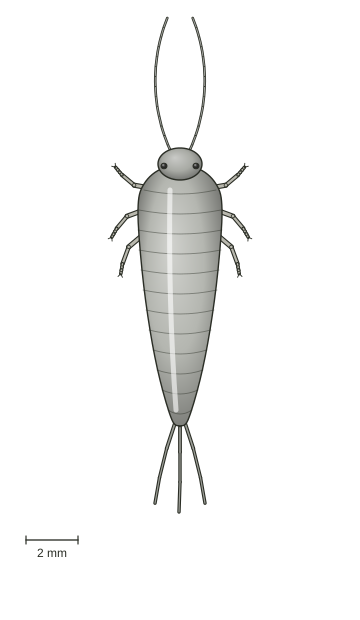
Silverfish are flat, wingless and carrot-shaped, about 8 to 19 mm (1/3 to 3/4 inch) long, covered in silvery scales, with long antennae and three long tail filaments. Firebrats look nearly the same but are a duller gray, and they favor hot, humid spots near water heaters, furnaces and heating pipes. Both are active mostly at night, so they are often first noticed in a tub or sink in the morning.
What it means: generally harmless to people. They feed on starches and proteins such as paper, glue, wallpaper paste and some fabrics. Lower humidity, fix leaks and remove old stacks of paper. Sticky traps help gauge numbers. See the silverfish guide.
Springtails
Tiny, soft-bodied, wingless, usually 1 to 3 mm, and able to flick themselves into the air with a tail-like lever under the body. Colors vary from white and gray to orange, lavender or mottled. They are not insects in the strict modern sense; some scientists class them as insects, others as a separate group of six-legged arthropods.
What it means: harmless. They do not bite, spread disease or damage anything. They often move indoors in hot, dry weather, looking for damp spots like bathrooms and basements. Drying the area is the fix.
Cockroaches from drains
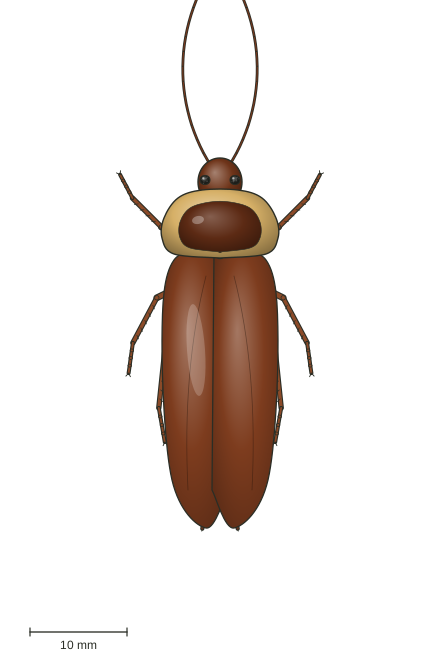
Two large cockroaches are tied to drains and damp lower floors:
- American cockroach: reddish brown, about 38 to 50 mm (1 1/2 to 2 inches), with a pale yellowish band around the shield behind the head. It lives in sewers, storm drains and water meter boxes, and can enter through dry floor drains, faulty traps and gaps around pipes.
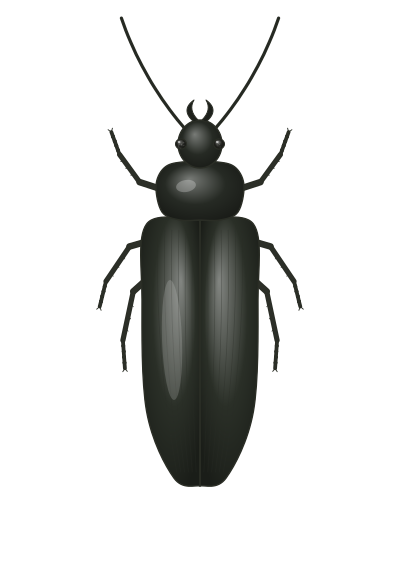
- Oriental cockroach: shiny black to very dark brown, about 25 to 32 mm (1 to 1 1/4 inches). Males have wings covering about half the abdomen; females have only short wing stubs. It prefers cool, damp places such as basements, crawl spaces and drains.
What it means: health pests that can carry germs from sewers and trash, and their residues can aggravate allergies and asthma. Keep traps full, use drain covers, seal pipe openings and fix moisture problems. See the cockroach guide and cockroach control.
Booklice
Booklice are tiny (usually under 1.5 mm), soft, wingless and pale white to light brown. They feed mainly on mold and do best in warm, very humid air, so damp bathrooms, windowsills with condensation and stored papers can all host them.
What it means: a nuisance and a sign the air is too damp. They do not bite people. Keeping humidity below about 50 percent usually ends the problem without pesticide.
House centipedes (not insects)
House centipedes are not insects; they belong to a separate class of arthropods. Adults have a body about 25 to 38 mm (1 to 1 1/2 inches) long, yellowish gray with three dark stripes, and 15 pairs of very long, banded legs. They are fast and active at night, hiding in damp basements, under slabs and in floor drains without water traps.
What it means: harmless to people and mostly beneficial, since they eat silverfish, cockroaches, carpet beetle larvae and spiders. Seeing many of them may mean there is plenty of prey around. Reducing moisture and sealing cracks makes the house less inviting.
Small ants
Odorous house ants, pharaoh ants and other small species come to bathrooms for water, and some nest in wall voids near pipes. Larger carpenter ants sometimes nest in moisture-damaged wood around tubs, showers and sinks. A steady trail into the bathroom is a reason to check for a leak. See the ants guide.
Still not sure?
The insect identification tool can help you work through the clues.
For a definite answer, collect a specimen. Press it onto clear tape and stick it to a card, or seal it in a small bag or vial (rubbing alcohol preserves soft-bodied bugs like drain flies and booklice). Record where you found it and bring it to your county or state extension office for identification.
References
- Drain Flies (ENT-41). Ohio State University Extension.
- Indoor Flies and Their Control. Texas A&M AgriLife Extension.
- Silverfish and Firebrats (ENT-64). Ohio State University Extension.
- Springtails (ENT-52). Ohio State University Extension.
- Cockroaches (Pest Notes). UC Statewide IPM Program.
- Cockroach Elimination in Homes and Apartments (ENTFACT-614). University of Kentucky Entomology.
- House Centipedes. Penn State Extension.
- Ants. University of Minnesota Extension.
- Booklice (Psocids). University of Florida IFAS Extension.
See also
- Silverfish
- Flies in the house
- Cockroaches
- Small flying bugs in the house
- Tiny black bugs in the house
This page was last updated on October 7, 2026. We research our guides from university extension services, government agencies, museums and peer-reviewed literature. Read the editorial policy or report an error.