Cockroach Nymph Identification: Baby Roaches by Species
Baby cockroaches have no wings and often look nothing like the adults. Markings, location and behavior tell the species apart.
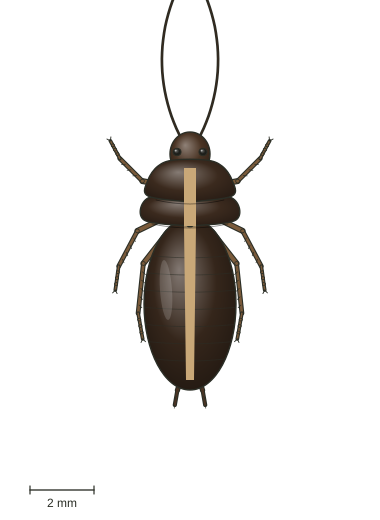
Cockroach nymphs are young cockroaches: wingless, flattened, fast-running insects with long, thread-like antennae and a pair of short appendages (cerci) at the tip of the abdomen. A small dark nymph with a pale stripe down the middle of its back is most likely a German cockroach, the species that most often breeds indoors. Nymph markings vary by species and change as they grow, so treat any identification from a description or photo as a strong lead, not a certainty.
What cockroach nymphs are
Cockroaches develop by simple (gradual) metamorphosis: egg, nymph, adult. There is no larva or pupa. Eggs are laid in a protective case called an ootheca, and the nymphs that hatch look like small versions of the adult, except they have no wings. Our page on simple and incomplete metamorphosis explains this life cycle in more detail.
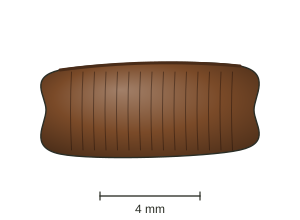
Nymphs grow by molting, shedding their outer skin several times. The number of molts differs by species: German cockroaches usually go through 6 or 7 nymphal stages, while American cockroaches molt 10 or more times over well over a year. In later stages, some species develop small wing pads on the thorax, which become full wings at the final molt.
Why some cockroaches are white
A white or cream-colored cockroach is almost always one that has just molted. The new outer skin is soft and pale, and it darkens within a few hours as it hardens. It is not an albino or a separate species. Seeing one simply means live cockroaches are growing nearby.
How to tell species apart
Size alone is a poor guide, because nymphs of large species start out small. Look at color, markings and where you found them.
German cockroach nymphs
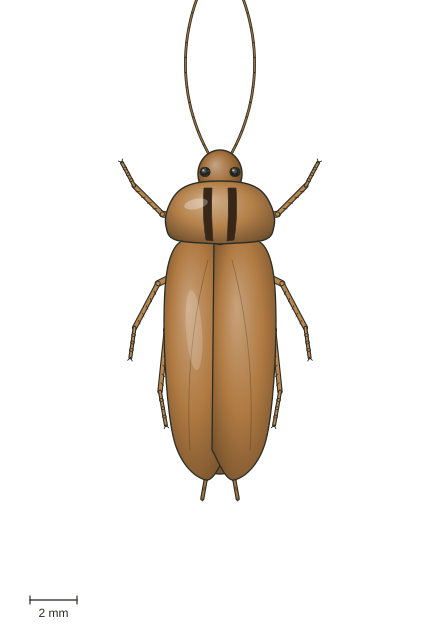
German nymphs are dark brown to nearly black with a pale tan stripe running down the middle of the back, flanked by dark bands. They are wingless and fast. Adults are light brown, about 13 to 16 mm (1/2 to 5/8 inch), with two dark stripes on the shield behind the head.
Where: kitchens and bathrooms, in warm cracks near food and water: under sinks, behind stoves and refrigerators, inside appliances and cabinet hinges. The female carries her egg case until it is about to hatch, and each case holds about 30 to 40 eggs. Nymphs can reach adulthood in roughly two to three months at room temperature, so populations grow quickly.
Brown-banded cockroach nymphs
Brown-banded nymphs have two light tan bands running across the body near the middle, rather than lengthwise stripes. Adults are about 13 mm (1/2 inch) and also show pale crosswise bands on the wings.
Where: drier, warmer parts of the home rather than the kitchen sink. Look high on walls, behind pictures and clocks, under furniture, and inside electronics and lamps. Females glue small egg cases to hidden surfaces, often in clusters.
American cockroach nymphs
American nymphs are wingless and fairly uniform in color. Very young ones are grayish brown; after a few molts they turn shiny reddish brown. Adults are large, about 38 to 50 mm (1 1/2 to 2 inches), reddish brown with a pale band around the shield behind the head.
Where: damp, warm places tied to sewers, drains, basements, crawl spaces and steam or utility areas. They can come up through floor drains and faulty drain traps. Development is slow, often more than a year.
Oriental cockroach nymphs
Oriental nymphs are a fairly uniform reddish brown to black, without bold markings. Adults are shiny black to very dark brown, about 25 to 32 mm (1 to 1 1/4 inches). Adult females have only short wing stubs, so they can be mistaken for large nymphs.
Where: cool, damp spots such as basements, crawl spaces, garages, floor drains and around plumbing leaks. They stay mostly on ground floors.
Smokybrown cockroach nymphs
Young smokybrown nymphs are black with white bands across the body and white tips on the antennae, which makes them easy to spot. Older nymphs turn a more uniform reddish brown. Adults are about 38 mm (1 1/2 inches), dark mahogany brown and can fly.
Where: mainly outdoors in woodpiles, planters, garages and under shingles or siding, sometimes moving into attics and upper parts of buildings.
Quick comparison table
| Insect | Size | Look for | Where | Concern |
|---|---|---|---|---|
| German nymph | adult 13–16 mm | Dark, pale stripe down center of back | Kitchen and bath cracks, appliances | Breeds indoors; health pest |
| Brown-banded nymph | adult about 13 mm | Two light bands across the body | High on walls, furniture, electronics | Breeds indoors |
| American nymph | adult 38–50 mm | Uniform gray-brown, then shiny reddish brown | Drains, basements, sewers | Health pest from outdoors |
| Oriental nymph | adult 25–32 mm | Uniform reddish brown to black | Damp basements, drains | Health pest from outdoors |
| Smokybrown nymph | adult about 38 mm | Black with white bands, white antenna tips | Outdoors, attics, eaves | Mostly outdoor pest |
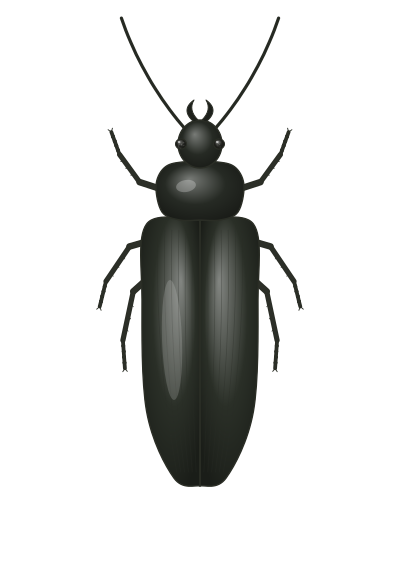
| Small beetle | usually 2–6 mm | Hard shell, seam down back, short antennae | Pantry, windowsills | Depends on species |
| Bed bug | 1–7 mm | Broad oval, reddish brown, slow | Mattress seams, bed frames | Bites |
Cockroach nymph or beetle?
Small brown beetles in the kitchen are often mistaken for baby roaches, and the other way around. Check these features:
- Antennae: cockroach antennae are long and thread-like. Most small pantry beetles have short antennae, often clubbed or saw-toothed.
- Back: a beetle’s hard front wings meet in a straight line down the middle of the back. A cockroach nymph has no wing covers at all, just a series of segments, and an adult cockroach’s leathery wings overlap rather than meeting in a line.
- Tail: cockroaches have a pair of short, pointed cerci at the tip of the abdomen. Beetles do not.
- Body and speed: cockroaches are flat and run fast. The shield behind the head hides the head from above.
If it is a beetle, see beetles in the house.
Cockroach nymph or bed bug?
Both can be small, flat, wingless and brown. The differences:
- Shape: bed bugs are broad and oval, close to the shape of an apple seed. Cockroach nymphs are longer and narrower.
- Antennae and tail: cockroach nymphs have long antennae and cerci at the rear. Bed bugs have short, thin antennae and no tail appendages.
- Movement: cockroach nymphs dart away quickly. Bed bugs crawl slowly.
- Location: bed bugs cluster in mattress seams, bed frames and furniture near where people sleep. Cockroach nymphs hide near food, water and warmth.
Pepper-like droppings can resemble bed bug spotting, so look at where the specks are as well as what they look like. See signs of bed bugs.
What finding nymphs means
Nymphs are usually the most abundant stage in a cockroach population, and they do not reproduce. So several nymphs, especially of different sizes, point to cockroaches breeding nearby rather than a single adult that wandered in.
For German cockroaches this is especially telling. They live almost entirely indoors and usually arrive in grocery bags, beverage cartons or secondhand furniture, or move through shared walls in apartments. Nymphs of different sizes in the kitchen generally mean an established infestation that will keep growing without action. Seeing cockroaches in daylight is another sign of a large population.
For American, Oriental and smokybrown cockroaches, nymphs indoors suggest a breeding site in a drain, basement, crawl space or attic, or right outside the walls.
Next steps: use sticky traps to confirm the species and find hot spots, clean up food and grease, fix leaks, and seal gaps. Gel baits placed in cracks are usually more effective than sprays, and foggers rarely reach hiding places. The cockroach control guide covers these methods, and the cockroach guide covers each species in full. For heavy or recurring infestations, a licensed professional is a reasonable call.
Still not sure?
Use the insect identification tool to check other possibilities.
To confirm, collect a specimen or two. A sticky trap works well, or press the nymph onto clear tape on an index card, or seal it in a small bag or a vial of rubbing alcohol. Note where you found it and how many you have seen, and bring it to your county or state extension office. Knowing the exact species matters, because German cockroaches and the larger outdoor species call for different control strategies.
References
- Cockroaches (Pest Notes). UC Statewide IPM Program.
- Cockroach Biology and Management (E-359). Texas A&M AgriLife Extension.
- German Cockroach, Blattella germanica (EENY-002). University of Florida IFAS Extension.
- German Cockroach. Texas A&M AgriLife Field Guide to Common Texas Insects.
- Cockroaches (G7384). University of Missouri Extension.
- Cockroaches. University of Nebraska-Lincoln Entomology.
- Cockroach Elimination in Homes and Apartments (ENTFACT-614). University of Kentucky Entomology.
- Coleoptera. Texas A&M AgriLife Field Guide to Common Texas Insects.
See also
- Cockroaches
- Cockroach control
- Simple and incomplete metamorphosis
- Blattodea: cockroaches and termites
- Tiny brown bugs in the house
This page was last updated on October 7, 2026. We research our guides from university extension services, government agencies, museums and peer-reviewed literature. Read the editorial policy or report an error.