Pantry Pests: Identifying Beetles, Weevils and Moths in Food
The small moths, beetles and weevils that live in dry food, how to tell them apart, and how to get rid of them without spraying your kitchen.
Quick answer
Pantry pests are insects that breed in dry stored foods such as flour, cereal, rice, spices, nuts and pet food. The most common in US homes are the Indian meal moth, drugstore and cigarette beetles, sawtoothed grain beetles, flour beetles and grain weevils. The fix is to find and throw out every infested package, vacuum and wipe the shelves, and store food in sealed containers. Insecticides are rarely needed.
Pantry pests are small moths, beetles and weevils that breed in dry stored food. If you are finding tiny brown beetles on the counter, small moths fluttering in the kitchen at night, or webbing and larvae in a bag of flour, cereal, rice or dog food, you very likely have one of them.
They are a food problem, not a house problem. They do not bite or damage the structure, and removing the infested food is what ends an infestation.
How pantry pests get into your kitchen
Most pantry pests arrive in food that was already infested at the store, warehouse or farm, usually as eggs or tiny larvae that are hard to see. Some adults can fly in from outdoors.
Once inside, they spread to other packages. University of California IPM notes that insects are less likely to get into packages that still have their original seal, and more likely to infest opened packages or ones that have sat on the shelf a long time. By the time most people notice them, the insects have often moved into several products.
Two features make them hard to get rid of:
- They breed inside the food. All life stages can be in the same product at once, so killing the adults you see does nothing about the larvae inside the bag.
- They chew through packaging. Paper, cardboard and thin plastic bags will not keep them out.
Pantry pests are not limited to the pantry. They also live in pet food, bird seed, spices, dried flower arrangements, pepper wreaths, ornamental corn and potpourri.
Quick identification table
| Pest | Adult size | What it looks like | Common foods |
|---|---|---|---|
| Indian meal moth | 8–10 mm long | Small moth; wings pale gray near the body, coppery reddish brown on the outer part | Cereal, flour, dried fruit, nuts, chocolate, pet food, bird seed |
| Drugstore beetle | About 3 mm | Light brown, cylindrical; head hidden from above; grooved wing covers | Pet food, cereal, dried herbs, spices, drugs |
| Cigarette beetle | About 3 mm | Like drugstore beetle but with smooth wing covers | Spices, dried peppers, pet food, cereal, nuts, tobacco |
| Sawtoothed grain beetle | About 2.5 mm | Slender, flat, brown; six saw teeth on each side of the thorax | Cereal, flour, dried fruit, candy, pet food, bird seed |
| Merchant grain beetle | About 2.5–3 mm | Same as sawtoothed but with larger eyes | Same as sawtoothed |
| Red and confused flour beetles | About 3–5 mm | Shiny reddish brown, flat, oval; head visible from above | Flour, cereal, mixes, dried fruit, nuts, chocolate |
| Rice weevil | About 2.5–4 mm | Snout; dark with four reddish or yellowish spots | Whole grains, rice, popcorn, pasta |
| Granary weevil | About 3–5 mm | Snout; dark, no spots; cannot fly | Whole grains, pasta |
| Maize weevil | About 3–5 mm | Snout; usually darker than rice weevil | Whole grains, corn |
| Bean weevil | About 3–4 mm | No snout; grayish brown, rounded, tip of abdomen exposed | Dried beans, lentils, chickpeas |
| Warehouse beetle | About 3 mm | Oval; brown and yellowish pattern; hairy larvae | Cereal, pet food, spices, dried beans, nuts, candy |
The common pantry pests
Indian meal moth
The Indian meal moth (Plodia interpunctella) is the moth most people find flying around the kitchen. Adults are about 8 to 10 mm (1/3 to 2/5 inch) long. At rest, the part of the wing nearest the body is whitish gray and the rest is reddish brown with a coppery sheen.
Only the larvae feed. They are whitish caterpillars, sometimes tinged green or pink, that grow to about 13 mm (1/2 inch). They leave silk webbing over infested food and often crawl away to pupate, so you may find them or their cocoons where a wall meets the ceiling or along shelf edges. Infested foods include cereal, flour, cornmeal, rice, dried fruit, nuts, chocolate, candy, powdered milk, bird seed and dry dog food.
In warm weather the life cycle takes about six to eight weeks. Clothes moths are a different pest: smaller, hairier, and feeding on wool rather than food.
Drugstore beetle
The drugstore beetle (Stegobium paniceum) is a small, cylindrical, uniformly light brown beetle about 3 mm (1/8 inch) long. Its head is tucked under so you cannot see it from above. Fine lengthwise grooves run along the wing covers, which is the easiest way to separate it from the cigarette beetle.
It feeds on a very wide range of dry products. In homes it turns up most often in pet food, cereal and dried herbs, and it also infests dried drugs, as its name suggests. The life cycle can take less than two months.

Cigarette beetle
The cigarette beetle (Lasioderma serricorne) looks almost identical to the drugstore beetle: about 3 mm, light brown, cylindrical, with its head bent down. The wing covers are smooth rather than grooved. University of California IPM considers it more common in homes than the drugstore beetle.
Besides cured tobacco, it infests spices, dried herbs, nuts, cereals, dried fruit, pet food and candy, along with dried pepper wreaths and other decorations. The larvae are yellowish white and covered in fine hairs. The life cycle takes about six weeks.
Sawtoothed grain beetle
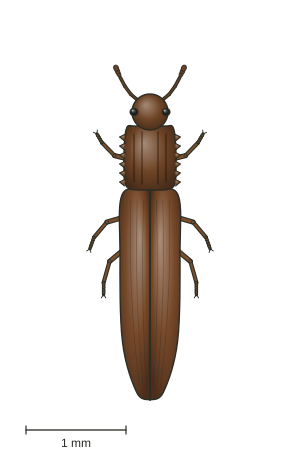
The sawtoothed grain beetle (Oryzaephilus surinamensis) is slender, flat and brown, about 2.5 mm (1/10 inch) long. Under a magnifier you can see six sawlike teeth along each side of the thorax, the section just behind the head.
It eats almost any dry food of plant origin, especially cereal and grain products, and also dried fruit, candy, pet food, bird seed and rodent bait. Adults usually live 6 to 10 months, and some live up to 3 years, which is one reason they keep turning up after cleanup.
Merchant grain beetle
The merchant grain beetle (Oryzaephilus mercator) is a close relative of the sawtoothed grain beetle with the same saw-toothed thorax. Its eyes are larger. Its biology and management are nearly identical, so University of California IPM notes there is no need to tell the two apart before cleaning up.
Red and confused flour beetles
The red flour beetle (Tribolium castaneum) and confused flour beetle (Tribolium confusum) are shiny, reddish brown, flattened and oval, about 3 to 5 mm (1/8 to 3/16 inch) long. Unlike drugstore and cigarette beetles, their heads are visible from above.
Separating them takes a magnifier: the red flour beetle’s antennae end in an abrupt three-segment club, while the confused flour beetle’s widen gradually.
They infest flour, cereal, mixes, damaged grain, shelled nuts, dried fruit and chocolate. Their eggs are sticky and cling to flour and container walls. Heavily infested flour may smell and taste unpleasant, according to Texas A&M AgriLife Extension. Adults average about a year of life.
Rice weevil
Weevils are beetles with a long snout, and the larvae of grain weevils develop inside whole kernels. That is why weevils show up in rice, whole grains and popcorn rather than in flour.
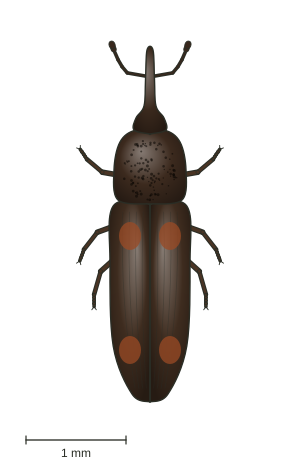
The rice weevil (Sitophilus oryzae) is small, about 2.5 to 4 mm, dark reddish brown to nearly black, and usually has four reddish or yellowish spots on the wing covers. It has working wings and can fly, though it mostly walks. Adults can be drawn to lights.
Granary weevil
The granary weevil (Sitophilus granarius) is similar in shape but has no spots on its wing covers, and it cannot fly. Because it walks rather than flies, it reaches homes in already infested food. Adults can live 7 to 13 months.
Maize weevil
The maize weevil (Sitophilus zeamais) is slightly larger than the rice weevil, about 3 to 5 mm (1/8 to 3/16 inch), and usually darker. Color varies within all three grain weevils, so color alone is not reliable. The maize weevil is a stronger flier than the rice weevil. Oklahoma State University Extension notes that separating rice and maize weevils with certainty takes a look at the pattern of pits on the thorax under magnification. For a homeowner the cleanup is the same.
Bean weevils (seed beetles)
Bean weevils are not true weevils. They lack a snout and belong to the seed beetles, a group within the leaf beetle family. The common bean weevil (Acanthoscelides obtectus) is about 3 to 4 mm long, rounded and grayish brown, and its wing covers do not reach the tip of the abdomen.
Larvae develop inside stored beans, lentils and chickpeas, so the main sign is beans with neat round exit holes. A related species, the cowpea weevil, infests cowpeas (black-eyed peas) and other dried legumes. Bean weevil adults live only about two weeks.
Warehouse beetle and other dermestids
The warehouse beetle (Trogoderma variabile) is a dermestid, the same family as carpet beetles. Adults are oval, about 3 mm (1/8 inch) long, with a brown and yellowish pattern. Its relatives in the genus Trogoderma, sometimes called cabinet beetles, behave similarly. The larvae are the stage you will notice: hairy, brown, up to about 6 mm (1/4 inch), with a tail of long hairs.
Warehouse beetle larvae eat an unusually wide range of foods: cereals, pet food, cocoa, cookies, dried beans, pasta, nuts, spices and dead insects. University of California IPM notes that their shed hairs can irritate the mouth and digestive tract, so infested food should be thrown out rather than sifted. Carpet beetle larvae also turn up in pantries for the same reasons.
How to inspect your pantry
Pantry pests are almost always closer to their food than people expect, but not always in the obvious package. Work through every dry food in the house:
- Start where you saw insects. Note whether they were beetles or moths, and the shelves nearest the sighting.
- Open every package of dry food, including spices, pet food, bird seed, bread crumbs, pasta, dried fruit, nuts, chocolate and baking mixes. Pour questionable products onto a white plate or tray to look for larvae, webbing, beetles or clumping.
- Check sealed packages too. Look for tiny holes and webbing along folds and seams.
- Check outside the kitchen. Look at stored food in the garage or basement, decorative dried items, and anywhere pets are fed.
Pheromone traps can help confirm what you have and show whether the problem is ending. Indian meal moth traps do not attract beetles, so match the trap to the insect. Use traps for monitoring rather than control.
If you are still unsure what the insects are, our bugs in the kitchen guide, tiny brown bugs guide and tiny black bugs guide help narrow it down.
Cleanup steps
- Throw out infested food. Seal it in a bag and put it in an outdoor trash can. Discard any package that shows even slight signs of infestation.
- Consider salvaging lightly infested food with cold or heat. University of Illinois Extension suggests freezing at 27°F (about -3°C) or colder for at least 3 to 7 days (colder and longer is better), or heating in an oven at 140°F (60°C) for one hour. Heat and freezing also work well on bird seed and dried decorations.
- Empty the shelves and vacuum corners, cracks and shelf supports with a crevice tool. Empty the vacuum or discard the bag right away.
- Wash shelves with soap and water and let them dry before putting food back.
- Keep watching for a few weeks. University of California IPM notes that pantry pests can survive many weeks without food, so a few stragglers are normal. A new burst of insects means an infested package was missed.
Storage that prevents pantry pests
- Store dry foods in glass, metal or heavy plastic containers with tight lids. Plastic bags and the original boxes are not enough.
- Buy dry foods in amounts you will use fairly quickly, and use older products first.
- Do not mix old and new food in the same container. Clean containers before refilling them.
- Check packages for damage before buying.
- Keep pet food and bird seed in sealed bins, not open bags.
- Keep storage areas clean and dry, and wipe up spilled flour and crumbs.
- Store rarely used flours, grains, nuts and spices in the freezer or refrigerator, especially for a few months after an infestation.
Why pesticides are rarely needed in kitchens
Extension services agree that spraying is not the answer to pantry pests. University of California IPM does not recommend insecticides for any pantry pest and warns that spraying on or near food can do more harm than the insects themselves. University of Illinois Extension points out that insecticides do not reach insects inside packages, so their effect is temporary unless the infested food is found and removed. Texas A&M AgriLife Extension describes chemical treatment as needed only on rare occasions.
Removing infested food and cleaning thoroughly works even for large infestations. If you do use a product in a food storage area, it must be labeled for that use. Remove all food, dishes and utensils first, read and follow the label, and throw away any food that comes into contact with the spray.
Look-alikes outside the pantry
Not every small beetle in a kitchen is a pantry pest. It may be a carpet beetle, a powderpost beetle emerging from wood, or a tiny foreign grain beetle, which feeds on mold. Our beetles in the house page and the Coleoptera reference cover the wider beetle family tree.
References
- Pantry Pests. University of California Statewide IPM Program.
- Pantry Pests. University of Illinois Extension.
- Pantry and Fabric Pests in the Home (L-2046). Texas A&M AgriLife Extension.
- Stored Product Pests in the Pantry (ENTFACT-612). University of Kentucky Entomology.
- Stored Grain Insect Pests that Feed Inside Kernels and Seeds (EPP-7101). Oklahoma State University Extension.
- Bean weevil (Acanthoscelides obtectus). Canadian Grain Commission.
See also
This page was last updated on October 7, 2026. We research our guides from university extension services, government agencies, museums and peer-reviewed literature. Read the editorial policy or report an error.