Carpet Beetles: Identification, Larvae and Infestation Signs
Small, rounded beetles whose bristly larvae chew wool, fur, feathers and silk in dark, undisturbed corners.
Quick answer
Carpet beetles are tiny, rounded beetles in the family Dermestidae. The adults are harmless pollen feeders, but their fuzzy brown larvae eat animal-based materials such as wool, fur, feathers and silk. Shed larval skins, irregular holes in natural fabrics and small beetles at sunny windows in spring are the usual signs.
Carpet beetles are small, rounded beetles whose larvae feed on animal-based materials: wool, fur, feathers, silk, leather and the pet hair and lint that collect in corners. If you are finding tiny patterned beetles on windowsills, fuzzy brown larvae near baseboards, or holes in a wool sweater, carpet beetles are a likely cause.
A few carpet beetles are common even in clean homes, so finding one adult is not a reason to panic. The goal is to find where the larvae are feeding before they work through something you value.
What carpet beetles are
Carpet beetles belong to the Dermestidae, a beetle family of scavengers that feed on dried animal matter. Indoors, the three species most often found in US homes are the varied carpet beetle (Anthrenus verbasci), the black carpet beetle (Attagenus unicolor) and the furniture carpet beetle (Anthrenus flavipes). They are beetles in the order Coleoptera; see our guide to beetles for how they fit among their relatives.
The adults and larvae live very different lives. Adults fly, feed on pollen and nectar outdoors (spirea is a favorite) and do not eat fabric. Larvae stay hidden indoors and do all the damage.
How to identify carpet beetles
All three species are much smaller than a lady beetle, though they share its rounded or oval shape. Adults often turn up near windows because they are trying to get back outside.
Varied carpet beetle
The varied carpet beetle is the species many people find at windows in spring. Adults are about 2 to 3 mm (1/16 to 1/8 inch) long, dome-shaped, and covered in a mottled pattern of white, brown and dark yellow scales. Older adults lose scales and can look plain brown or black.
The larva is slightly longer than the adult, wider at the rear, and banded in light and dark brown. It carries dense tufts of hair that it can fan out into a round plume when disturbed.
Black carpet beetle
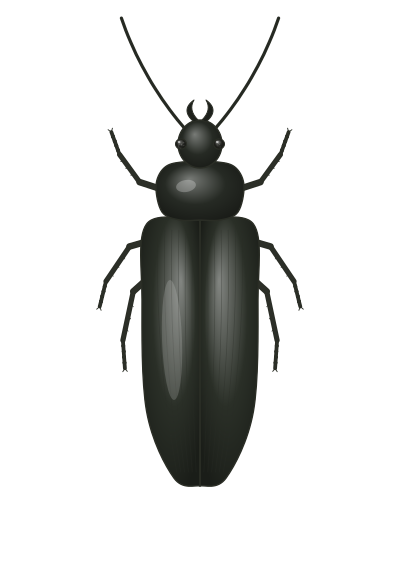
Black carpet beetle adults are larger, about 3 to 5 mm (1/8 to 3/16 inch), oval, and shiny black to dark brown with brownish legs and short, sparse hairs.
The larva looks quite different from the other two: up to about 8 mm (5/16 inch), smooth, hard and shiny, light brown to nearly black, with short stiff hairs and a tuft of long hairs at the tail end.
Furniture carpet beetle
Furniture carpet beetles are a little larger and rounder than varied carpet beetles. Their scales form a mottled pattern of black spots among white and yellow to orange patches, and the underside is white. The larvae start out white and darken to reddish or chestnut brown, and are broader at the front than the rear.

Larvae do the damage
Carpet beetle larvae feed on dead animal matter and products made from it, including the tough protein (keratin) in hair, wool and feathers. In a home that means:
- Wool clothing, blankets, rugs and wool felt
- Fur, feathers, down, silk and leather
- Natural-bristle brushes, piano felts and hammers
- Pet hair, lint, dead insects and old nests in attics or wall voids
- Mounted animals, insect collections and other natural-history items
They do not eat synthetic fibers. Cotton and linen blends are at risk mostly when they are soiled with food or perspiration, or mixed with animal fibers.
Some larvae also feed on stored foods, including spices, grains, cereals and dry pet food. That puts carpet beetles in the same family as the warehouse beetles covered on our pantry pests page, and a carpet beetle larva in the pantry is not unusual.
Life cycle
Carpet beetles go through complete metamorphosis: egg, larva, pupa and adult. The larval stage is long and varies by species, which is why infestations build slowly and can go unnoticed for months.
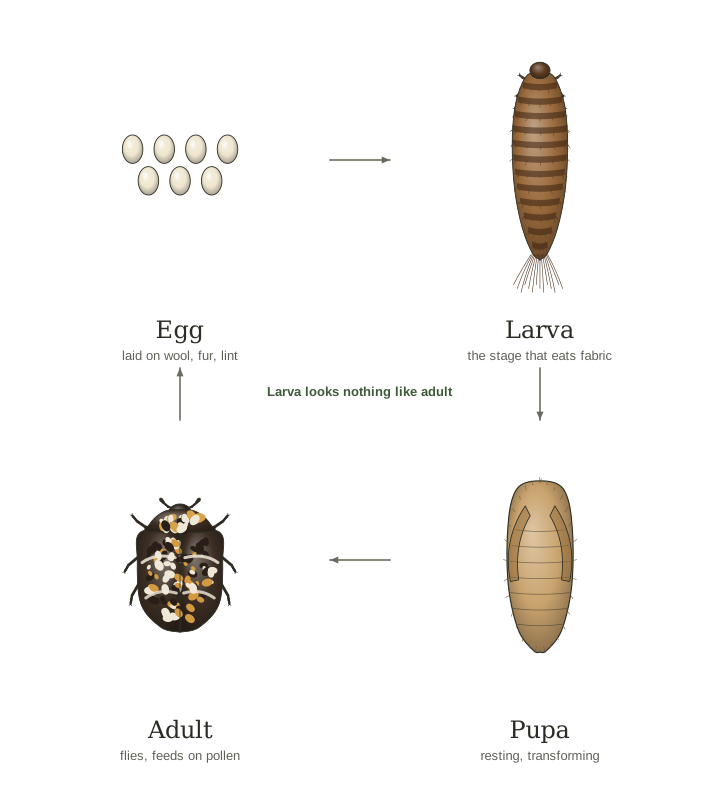
Approximate timings at indoor room temperature, from University of California IPM:
| Species | Eggs per female | Larval stage | Adult life |
|---|---|---|---|
| Varied carpet beetle | About 40 | 220–630 days | 2 to 6 weeks |
| Furniture carpet beetle | About 60 | 70–94 days | 4 to 8 weeks |
| Black carpet beetle | About 90 | 166–330 days | 4 to 8 weeks |
Eggs usually hatch in about two weeks. Varied carpet beetle adults tend to appear in spring and early summer, which is when people start seeing them on windowsills.
Signs of a carpet beetle infestation
Look in dark, undisturbed places first: closet floors, under heavy furniture, beneath the edges of rugs, along baseboards, inside storage boxes, and around heating vents where lint collects.
Common signs include:
- Shed larval skins. Light brown, bristly, hollow shells that look like tiny larvae. Many cast skins in one spot point to a current or past infestation.
- Live larvae crawling near baseboards, under rugs, or on bathroom floors.
- Holes or bare patches in wool, fur, felt or feathers. Carpet beetles tend to damage one larger area of a garment or rug.
- Fecal pellets about the size of a grain of salt near damaged items.
- Adults at windows, especially in spring, as newly emerged beetles head for the light.
Clothes moths cause similar damage, and the two are often confused. Clothes moth larvae leave silk webbing or carry silk cases, and their damage is more often scattered small holes. Carpet beetle larvae leave no webbing.
People also mistake carpet beetles for bed bugs, especially when they are found in or near a bed. Our carpet beetle vs bed bug comparison shows the differences side by side.
Carpet beetles and skin irritation
Carpet beetles do not bite. But the larvae are covered in specialized hairs, including barbed and spear-tipped ones, and in some people contact with those hairs causes an itchy rash known as carpet beetle dermatitis.
Penn State Extension describes reports going back to 1948 in which biopsies linked rashes to the larval hairs of carpet beetles and related dermestids. The reaction appears to be an acquired allergy, and it seems to develop mostly in people with long-term exposure. A 2021 report in the CDC journal Emerging Infectious Diseases described a cluster of patients in France with itchy red bumps, mostly on skin covered by clothing, traced to Anthrenus larvae in their homes. The authors noted that the condition is often mistaken for bed bug or flea bites.
Nebraska Extension adds that sensitive people may get hay fever-like symptoms, hives or itchy skin, but most people have no reaction, and symptoms usually ease once larvae, cast skins and debris are cleaned up. If you have an unexplained rash, see a doctor, and confirm the insect before treating your home for bed bugs.
Why carpet beetles are in your house
Adults fly in through open windows and doors, and they ride in on cut flowers. Larvae and eggs arrive in secondhand rugs, furniture, wool clothing and stored items.
Once inside, they need a food source. The most common are:
- Lint, pet hair and dead insects along baseboards, in vents and under furniture
- Wool or fur items stored for a long time without cleaning
- Bird, rodent, bee or wasp nests in attics, chimneys and wall voids
- Dead insects in light fixtures, wall voids and window tracks
- Spilled dry pet food or forgotten pantry items
A source outside the living space, like an old bird nest under the eaves, can keep sending beetles indoors even after you clean every closet.
How serious is a carpet beetle problem?
For most homes, carpet beetles are a nuisance that can be managed with cleaning. University of California IPM notes that a few adults indoors are not cause for alarm, and that action is needed when larvae are found developing.
The risk rises with what you own. A closet of wool suits, a family quilt, a fur coat, an heirloom rug or a collection of mounted birds can be badly damaged by larvae feeding quietly for a season or more.
Prevention
Most prevention comes down to removing what larvae eat and giving them nowhere undisturbed to feed:
- Vacuum often, including rug edges, under furniture, closet floors, upholstered furniture, drapes and heating vents. Empty or discard the vacuum contents promptly.
- Clean before storing. Launder or dry clean wool and other natural-fiber items before putting them away. Food and perspiration stains attract larvae.
- Store in airtight containers. Sealed bins or bags protect clean woolens and furs. Most closets are not airtight.
- Air and brush woolens and furs that stay in use.
- Remove old nests and dead insects from attics, chimneys, light fixtures and window tracks.
- Check cut flowers for adults before bringing them indoors.
- Repair screens on windows, doors and vents.
- Inspect secondhand items, especially rugs, upholstered furniture and wool clothing.
Cedar chests are of debatable value. The oil in cedar fades over time, and a tightly built chest matters more than the wood.
Monitoring helps too. Sticky traps placed along baseboards and near windows, checked once or twice a week, show where beetles are concentrated. Pheromone traps are species-specific.
Control
Carpet beetle control starts with finding the source. Without that, any treatment will only buy time.
- Find where the larvae are feeding. Check stored wool and fur, under rugs and furniture, closets, pet areas, attics and pantries.
- Clean or discard infested items. Hot-water laundering or dry cleaning kills all stages. Throw away items that are badly damaged.
- Use heat or cold for items you cannot wash. University of California IPM suggests heat of 120°F (49°C) or higher for at least 30 minutes, or freezing items sealed in a bag below 18°F (about -8°C) for two weeks. Consider whether the item can tolerate it.
- Vacuum thoroughly and keep doing so for several weeks.
- Use insecticides only where cleaning cannot reach. Products labeled for carpet beetles can be applied as spot treatments to cracks, floor edges and closet floors. Do not spray clothing or bedding, and read and follow the label.
For persistent problems, a source you cannot find, or irreplaceable collections, a licensed pest professional can inspect and treat. Our carpet beetle control guide covers each method in more detail, including when professional help makes sense.
References
- Carpet Beetles (Pest Notes). University of California Statewide IPM Program.
- Carpet Beetles: Pull the Rug Out From Under Them. Nebraska Extension in Lancaster County.
- Carpet Beetle Dermatitis. Penn State Extension.
- Anthrenus sp. and an Uncommon Cluster of Dermatitis. CDC, Emerging Infectious Diseases.
- Clothes Moths (ENTFACT-609). University of Kentucky Entomology.
- Pantry and Fabric Pests in the Home (L-2046). Texas A&M AgriLife Extension.
See also
- Carpet beetle control
- Carpet beetle vs bed bug
- Pantry pests
- Complete metamorphosis
- Beetles in the house
- Coleoptera: beetles
This page was last updated on October 7, 2026. We research our guides from university extension services, government agencies, museums and peer-reviewed literature. Read the editorial policy or report an error.