Tiny Black Bugs in the House: What They Are and What to Do
A short list of the small dark insects (and a few non-insects) most often found indoors, with the clues that separate them.
Tiny black bugs found indoors are most often adult carpet beetles, small ants, fungus gnats or springtails. Fleas, spider beetles and a few pantry beetles round out the list. Where the bug was, how it moves and its rough shape will narrow things quickly, but a description alone cannot confirm a species, so treat this page as a shortlist to check against.
Narrow it down
Answer these five questions first. Most people can cut the list to two or three suspects in under a minute.
- Where was it? A sunny windowsill in spring points toward carpet beetles. A line of bugs on the counter means ants. Bugs drifting around houseplants or windows suggest fungus gnats. Damp basements, bathrooms and soggy plant pots favor springtails. Carpet and furniture where pets rest point to fleas. Pantry shelves mean a beetle living in stored food.
- How big? Most candidates here are 1 to 5 mm (about 1/32 to 3/16 inch). Lay a ruler beside the bug or photograph it next to a coin.
- What shape? A round or oval hard shell suggests a beetle. A pinched waist and bent antennae mean an ant. A body squeezed flat from side to side, with big hind legs, is typical of a flea. A slender body with long legs and wings is a gnat.
- How does it move? Jumping points to springtails or fleas. Weak, fluttery flight suggests fungus gnats. Marching in a trail is ant behavior.
- What color, up close? Many “black” bugs are really very dark brown or dark red. A smear of red when crushed is a clover mite, which is not an insect.
Quick comparison table
| Insect | Size | Look for | Where | Concern |
|---|---|---|---|---|
| Black carpet beetle | 3–5 mm | Shiny black to dark brown oval | Windowsills, closets, rug edges | Larvae eat wool, fur, feathers |
| Varied carpet beetle | about 2.5 mm | Round, mottled scales; worn ones look black | Windowsills, cut flowers | Larvae eat animal-based fabrics |
| Small ants | 1.5–5 mm | Pinched waist, elbowed antennae, trails | Counters, sinks, floor edges | Nuisance in food |
| Fungus gnat | about 3 mm | Slender fly, long legs, weak flight | Houseplants, windows | Nuisance; larvae nibble roots |
| Springtail | 1–3 mm | Soft body, jumps when disturbed | Damp rooms, plant pots | Harmless nuisance |
| Spider beetle | 2–4 mm | Round body, long legs, spider-like | Pantry, old food | Food contaminant |
| Drugstore or cigarette beetle | about 2.5 mm | Humped, head tucked under | Spices, flour, pet food | Pantry pest |
| Flea | about 3 mm | Flat side to side, big jump | Pets, pet beds, carpet | Bites people and pets |
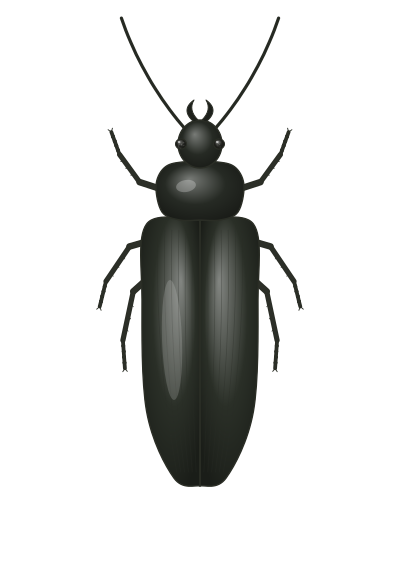
| Black flour beetle | 3.5–5 mm | Elongated, black | Flour and grain products | Pantry pest (uncommon in homes) |
| Booklouse (pale) | under 1.5 mm | Soft, pale, wingless | Damp books and papers | Nuisance; signals humidity |
| Clover mite (not an insect) | pinhead | Red, eight legs, red smear | Sunny windows, fall and spring | Harmless; can stain |
The likely candidates
The sections below run roughly from most to least common for a tiny dark bug found indoors.
Carpet beetles
Carpet beetle adults are among the most common tiny dark beetles found indoors, and they are the most likely answer for a small black beetle on a windowsill.
Black carpet beetle (Attagenus unicolor): an oval, shiny black to dark brown beetle about 3 to 5 mm (1/8 to 3/16 inch) long, with brownish legs. Like other carpet beetle adults, they are drawn to sunlight, which is why they so often turn up on windowsills.
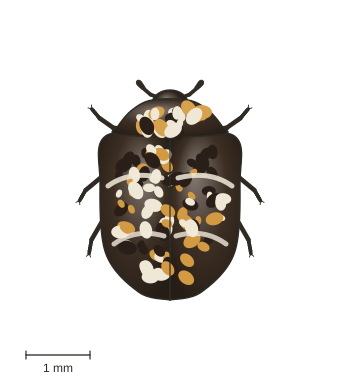
Varied carpet beetle (Anthrenus verbasci): rounder and smaller, about 2.5 mm (1/10 inch), with a patchwork of white, brown and yellow scales (the beetle in the illustration at the top of this page). As the scales wear off, older adults can look plain brown or black.
What it means: the adults feed on pollen and do not eat fabric. The larvae are the problem. They feed on wool, silk, fur, feathers, pet hair, dead insects and some stored foods, usually in dark, undisturbed spots. A few adults in spring may have flown in or arrived on cut flowers, but a steady stream of adults on the same sills over several weeks makes an indoor source more likely. Check under heavy furniture, along carpet edges, in closets and in lint, and look for the larvae’s bristly brown cast skins.
See the carpet beetle guide for life cycle and damage, and carpet beetle control for cleanup steps.
Small black ants
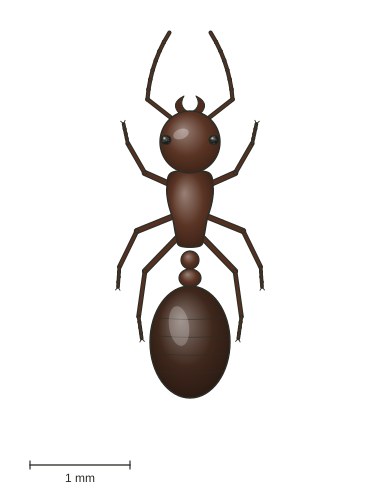
Ants are easy to sort from other tiny black bugs: look for antennae bent at an elbow and a narrow, pinched waist. They also tend to travel in trails. Three small dark species are common in homes:
- Odorous house ant: about 2.5 to 3 mm (1/10 to 1/8 inch), dark brown to shiny black. Crush one and it gives off a strong odor. Often nests in wall voids near moisture or heat.
- Little black ant: about 1.5 mm (1/16 inch), shiny black, all workers the same size. Forms obvious foraging trails and can reach food cupboards.
- Pavement ant: about 3 to 5 mm (1/8 to 3/16 inch), dark brown to black, with two bumps (nodes) in the waist. Nests under slabs, sidewalks and stones and enters through cracks.
What it means: a nuisance that gets into food rather than a danger. Slow-acting baits that workers carry back to the nest usually work better than indoor sprays, which give only short-term relief. Any winged ant indoors is worth checking against a termite swarmer.
Read more in the ants guide and ant control. For winged ones, see termite vs flying ant.
Fungus gnats
If the tiny black bugs fly, and you have houseplants, fungus gnats are a strong suspect. Adults are about 3 mm (1/8 inch) long, with delicate black bodies, long legs and long antennae. They are weak fliers that move in short, erratic bursts and often collect at windows.
What it means: the adults are harmless and do not bite. Their larvae live in the top few inches of moist potting mix, feeding mostly on fungi and decaying matter, and occasionally on plant roots. The fix is mostly about watering: let the top 2.5 to 5 cm (1 to 2 inches) of mix dry out between waterings, and use yellow sticky cards to catch adults and confirm the source. The small flying bugs guide covers other look-alikes.
Springtails
Springtails are tiny, soft, wingless creatures about 1 to 3 mm long that jump when disturbed, using a forked, tail-like lever folded under the body. Color varies widely (gray, lavender, orange, mottled and more), and against a white tub or sill they often read as dark specks. They have six legs, but they are not insects in the strict modern sense: some scientists still class them as insects, while others treat them as a separate group of insect-like six-legged arthropods (hexapods).
What it means: springtails do not bite, spread disease or damage furnishings. They are a sign of moisture. Expect them in basements, bathrooms, around leaks and in overwatered plant pots, often after hot, dry spells push them indoors. Drying the area out is the real cure. See bugs in the bathroom for moisture fixes.
Spider beetles
Spider beetles are small beetles, about 2 to 4 mm (roughly 1/8 inch) long, with rounded, often hairy bodies and long legs that make them look like tiny spiders. Some kinds are reddish brown with white patches, while others, such as the bag beetle (Gibbium psylloides), are dark brown.
What it means: a pantry pest. Spider beetles scavenge stored foods, and some can bore through paper and cardboard packaging. Finding them usually points to an old, forgotten bag or box rather than fresh groceries. The pantry pests guide explains how to find the source.
Drugstore and cigarette beetles
These two pantry beetles are about 2.5 mm (1/10 inch) long and reddish brown, but against a white counter they can read as tiny dark specks. From the side they look humped because the head is tucked down under the body. Both can fly, and adults often end up at windows and doors.
What it means: a stored-product pest feeding in spices, flour, dry pet food, dried flowers and similar goods. Killing adults at the window does not solve it; the infested package has to go. The tiny brown bugs guide covers how to tell the two apart.
Fleas
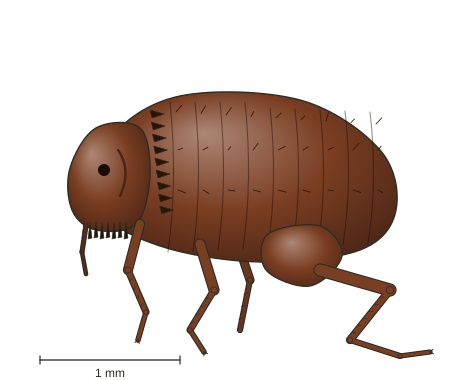
Adult fleas are about 3 mm (1/8 inch) long, wingless, hard-bodied and dark reddish brown, which looks black to most people. The body is flattened from side to side so they can slip through fur, and they can jump many times their own length.
What it means: a biting pest. On pets, look at the neck, shoulder blades and base of the tail. In the house, fleas and their larvae collect where pets rest. Bites on people tend to be on the ankles and lower legs. Treat pets with products a veterinarian recommends, vacuum resting areas often, and wash pet bedding. The flea guide and flea vs bed bug go further.
Black flour beetles
Most flour beetles found in kitchens are the reddish brown red and confused flour beetles. True black flour beetles (Tribolium madens and T. audax) are black and slightly larger, about 3.5 to 5 mm long. Most reports come from granaries, flour mills and warehouses rather than home kitchens.
What it means: a pantry pest. Treat it like any stored-food infestation: find and discard the infested product, vacuum shelves, and move dry goods into sealed containers.
Booklice (pale, for contrast)
If your “tiny black bug” looks pale or almost see-through under a light, consider booklice. Indoor species are usually under 1.5 mm (1/16 inch), soft-bodied, wingless and translucent white, gray or light brown. They feed largely on mold and do best in damp air. They are a nuisance rather than a health risk, and lowering indoor humidity below about 50 percent usually controls them.
Clover mites (red, not insects)
Clover mites are smaller than a pinhead and reddish to reddish brown, with eight legs, so they are mites, not insects. In fall and spring they gather on the sunny side of a house and crawl in around windows. Crushed, they leave a rusty red smear that can stain curtains and sills. They do not bite and do not damage the house. Avoid crushing them on walls or fabric, and seal gaps around windows.
Still not sure?
Try the insect identification tool, which walks through the same clues step by step.
For a firm answer, collect a specimen. Press the bug onto clear tape and stick it to an index card, or seal it in a small bag or vial. Soft-bodied bugs keep their shape better in a vial of rubbing alcohol. Write down where and when you found it and how many you have seen, then take it to your county or state extension office, where staff can examine it under magnification. A sharp, close photo next to a ruler helps too, but a physical specimen is far more reliable for something this small.
References
- Carpet Beetles (Pest Notes). UC Statewide IPM Program.
- Ants (Pest Notes). UC Statewide IPM Program.
- Little Black Ant. Texas A&M AgriLife Urban Entomology.
- Fungus Gnats as Houseplant and Indoor Pests. Colorado State University Extension.
- Springtails (ENT-52). Ohio State University Extension.
- Fleas (HYG-2081). Ohio State University Extension.
- Booklice (Psocids). University of Florida IFAS Extension.
- Drugstore Beetle and Cigarette Beetle. Oklahoma State University Extension.
- Insects and Arachnids of Tropical Stored Products: Tenebrionidae and Ptinidae. Food and Agriculture Organization of the United Nations.
- Clover Mites. University of Minnesota Extension.
See also
- Tiny brown bugs in the house
- Carpet beetles
- Ants in the house
- Small flying bugs in the house
- Beetles in the house
This page was last updated on October 7, 2026. We research our guides from university extension services, government agencies, museums and peer-reviewed literature. Read the editorial policy or report an error.