Tiny Brown Bugs in the House: An Identification Guide
Pantry beetles, cockroach nymphs, bed bugs and the other small brown suspects, and the quickest clues for telling them apart.

Quick answer
Tiny brown bugs in a house are most often pantry beetles (drugstore, cigarette, sawtoothed grain or flour beetles), German cockroach nymphs, bed bugs or carpet beetle larvae. Where you found them is the fastest clue: kitchen shelves point to pantry pests, cracks near the sink to cockroaches, and mattress seams to bed bugs.
Tiny brown bugs found indoors are often pantry beetles, German cockroach nymphs, bed bugs or carpet beetle larvae. Where you found the bug is one of the quickest ways to narrow the identification, followed by its shape and whether it has wings. No description can make an identification certain, so use this page to build a shortlist, then confirm with a specimen if the answer matters.
Narrow it down
- Where was it? Bugs on pantry shelves, in flour, cereal, spices or pet food are almost always stored-product beetles or weevils. Fast runners in cracks near the sink, stove or dishwasher suggest cockroach nymphs. Flat, oval bugs in mattress seams or bed frames raise the possibility of bed bugs. Fuzzy, slow-moving larvae under furniture or in closets point to carpet beetles. Bugs on pets or where pets sleep suggest fleas.
- How big? Most of these are 1.5 to 6 mm (1/16 to 1/4 inch). A photo next to a ruler or coin is far more useful than a guess.
- What shape? Hard shell and a line down the back means a beetle. A long snout means a weevil. Flat, broad and wingless with no shell suggests a bed bug or cockroach nymph. Long antennae and two short “tails” at the rear are cockroach features. Hairy and worm-like means a larva.
- Does it fly? Drugstore and cigarette beetles can fly and collect at windows. Sawtoothed grain beetles, bed bugs, fleas and cockroach nymphs do not fly.
- How many, and how often? A single bug can be a stray. Several a day in the same place usually means they are breeding nearby.
Quick comparison table
| Insect | Size | Look for | Where | Concern |
|---|---|---|---|---|
| Drugstore or cigarette beetle | about 2.5 mm | Oval, humped, head tucked under | Spices, flour, pet food; windows | Pantry pest |
| Sawtoothed grain beetle | about 2.5 mm | Very flat, six teeth on each side of thorax | Cereals, dried fruit, pet food | Pantry pest |
| Flour beetles | 3–4 mm | Flat, elongated, reddish brown | Flour, mixes, cereals | Pantry pest |
| Rice or granary weevil | about 3 mm | Long snout, pitted body | Whole grains, popcorn, seeds | Pantry pest |
| German cockroach nymph | under 13 mm | Wingless, dark with pale center stripe | Cracks near sink, stove, appliances | Health pest; sign of breeding |
| Bed bug | 1–7 mm | Flat, oval, wingless, apple-seed shape | Mattress seams, bed frames | Bites; hard to eliminate |
| Carpet beetle larva | 3–8 mm | Hairy, slow, banded or carrot-shaped | Rug edges, closets, under furniture | Damages wool, fur, feathers |
| Booklouse | under 1.5 mm | Soft, pale tan, wingless | Damp books, papers, shelves | Nuisance; signals humidity |
| Flea | about 3 mm | Flat side to side, jumps | Pets, pet beds, carpet | Bites |
| Pharaoh ant | about 1.5 mm | Pale yellow to reddish, tiny trails | Kitchens, bathrooms, wall voids | Hard to control |
The likely candidates
Drugstore and cigarette beetles
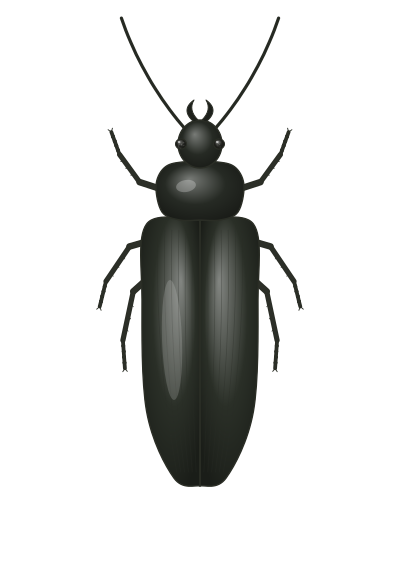
These two look-alikes are about 2.5 mm (1/10 inch) long, oval and reddish brown. The head bends down under the body, so from the side they look humped (the illustration at the top of this page shows a drugstore beetle). Both can fly and often end up at windows and doors.
To tell them apart with a hand lens: the drugstore beetle has fine lengthwise grooves on its wing covers and antennae ending in three enlarged segments. The cigarette beetle has smooth wing covers, saw-toothed antennae and a more pronounced hump.
What it means: a pantry pest. They feed in spices, flour, cereals, dry pet food, dried flowers, and even books and some furniture fillings. Killing the beetles at the window does not help much. Find and discard the infested product.
Sawtoothed grain beetles
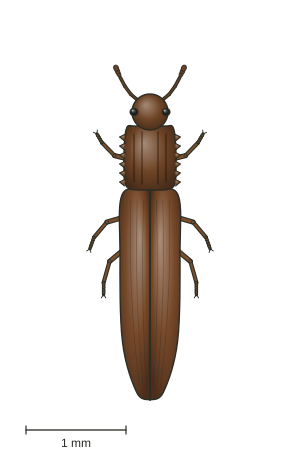
A slender, very flat, dark brown beetle about 2.5 mm (1/10 inch) long. The tell is six saw-like teeth along each side of the thorax, visible with a magnifier. It is flat enough to slip into sealed-looking packages, and it is not known to fly.
What it means: one of the most common pantry beetles. It feeds on processed and damaged grain products, dried fruit, nuts, cereals, pasta, chocolate and pet food, but cannot attack sound whole kernels.
Flour beetles
Red and confused flour beetles are flat, elongated and reddish brown, just over 3 mm (1/8 inch) long. Telling the two apart requires looking at the antennae and eyes under magnification. Their larvae are slender, cream-colored and up to about 6 mm.
What it means: a pantry pest in flour, baking mixes, cereals and other milled products. Infested flour cannot be salvaged, so discard it.
Rice and granary weevils
Weevils are beetles with a long snout. Rice and granary weevils are about 3 mm (1/8 inch) long and reddish brown to dark brown with a pitted surface. The rice weevil has four pale or orange spots on its wing covers and can fly. The granary weevil is evenly colored and cannot fly.
What it means: a pantry pest of whole grains and seeds. The larvae develop hidden inside individual kernels, so you often see nothing until adults chew their way out. Check popcorn, rice, dried beans, birdseed and decorative corn.
For cleanup steps that apply to all of these pantry pests, see the pantry pests guide.
German cockroach nymphs
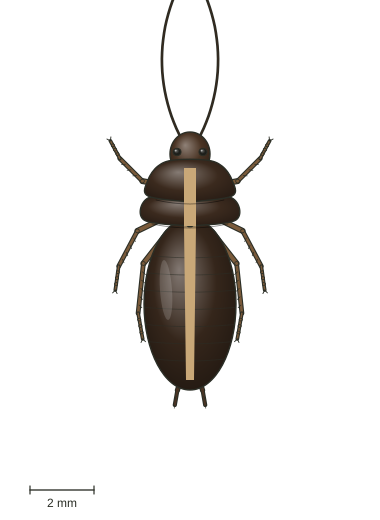
Young German cockroaches are wingless, fast-running and darker than the adults, with a pale tan stripe running down the middle of the back. Look for long, thread-like antennae and a pair of short appendages (cerci) at the tip of the abdomen. They hide in cracks near warmth, food and moisture: under sinks, behind stoves and refrigerators, and in cabinet hinges.
What it means: a serious household pest. Cockroaches contaminate food, and their droppings and shed skins can trigger allergies and asthma. Because nymphs cannot fly in from outside, finding them usually means cockroaches are breeding in the home. The cockroach nymph guide shows how to tell species apart, and cockroach control covers baits and sanitation.
Bed bugs
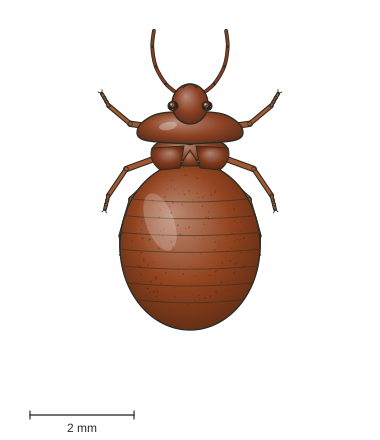
Adult bed bugs are flat, oval, wingless and reddish brown, about 5 to 7 mm (1/4 inch) long, close to the size and shape of an apple seed. Young bed bugs (nymphs) look similar but are smaller and paler, more yellowish brown. Other signs include shed skins, rusty or dark spots on mattress seams, and a sweet, musty odor in heavy infestations.
What it means: a biting pest that spreads by hitchhiking in luggage, furniture and clothing. Bed bugs are not known to spread disease, but they cause itching and lost sleep, and they are hard to get rid of. Do not rely on bites to confirm them. See signs of bed bugs and bed bug treatment.
Carpet beetle larvae
Carpet beetle larvae are small, slow, brownish and hairy, mostly 3 to 8 mm (1/8 to 5/16 inch) long. Varied carpet beetle larvae have light and dark brown bands and tufts of hair at the rear that flare when disturbed. Black carpet beetle larvae grow up to 8 mm (5/16 inch), are shiny, smooth and carrot-shaped, with a long tail tuft.
What it means: a fabric and stored-product pest. Larvae eat wool, silk, fur, feathers, pet hair and dead insects in dark, undisturbed places. Their bristly cast skins are often found before the larvae are. See carpet beetle vs bed bug if you found them near a bed.
Booklice
Booklice are soft, wingless and tiny, usually under 1.5 mm (1/16 inch), and translucent white to light brown. Despite the name, they are not parasites and do not feed on people. They eat mainly mold and do best in warm, damp air, so they show up on stored books and papers, along damp shelves and in food packages kept in humid spots.
What it means: a nuisance and a humidity warning. Bringing indoor humidity below about 50 percent usually ends the problem without any pesticide.
Fleas
Adult fleas are about 3 mm (1/8 inch) long, dark reddish brown, wingless and flattened from side to side, with large hind legs for jumping. If the tiny brown bug jumps and you have pets, fleas move to the top of the list. Read the flea guide and flea vs bed bug.
Pharaoh ants
Pharaoh ants are among the smallest house ants, about 1.5 mm (1/16 inch), and pale yellow to reddish orange, which can look light brown. Look for elbowed antennae and a narrow waist with two nodes. They nest in wall and cabinet voids, often near warmth and moisture, and trail to food and water in kitchens and bathrooms.
What it means: a persistent indoor pest. Baits are the usual approach, and indoor sprays give only short-term relief. Large or long-running pharaoh ant problems are a reasonable time to call a professional. See the ants guide.
Still not sure?
The insect identification tool walks through these same clues one question at a time.
For a reliable answer, catch one. Press it onto clear tape and stick it to a card, or seal it in a zip bag or small vial (rubbing alcohol keeps soft-bodied insects like bed bugs in good shape). Note where you found it and how many you have seen, and take it to your county or state extension office. If you suspect bed bugs or cockroaches, confirm the identification before buying any treatment, since control methods differ a great deal between these pests.
References
- Insect and Mite Pests in the Kitchen and Pantry (EC3049). Nebraska Extension.
- Drugstore Beetle and Cigarette Beetle. Oklahoma State University Extension.
- Sawtoothed Grain Beetle (E-228). Purdue University Extension Entomology.
- Rice Weevil and Granary Weevil. Iowa State University Extension and Outreach.
- Cockroach Elimination in Homes and Apartments (ENTFACT-614). University of Kentucky Entomology.
- About Bed Bugs. Centers for Disease Control and Prevention.
- Carpet Beetles (Pest Notes). UC Statewide IPM Program.
- Booklice (Psocids). University of Florida IFAS Extension.
- Ants (Pest Notes). UC Statewide IPM Program.
See also
- Tiny black bugs in the house
- Pantry pests
- Cockroach nymph identification
- Carpet beetle vs bed bug
- Bugs in the kitchen
This page was last updated on October 7, 2026. We research our guides from university extension services, government agencies, museums and peer-reviewed literature. Read the editorial policy or report an error.