House Flies, Fruit Flies and Other Indoor Flies
Every indoor fly problem has a breeding source. Identify the fly and you know where to look.
Quick answer
Most flies found indoors are house flies, blow flies, cluster flies, fruit flies, drain flies, fungus gnats or phorid flies. Each breeds in a different place: garbage, dead animals, lawns, overripe fruit, drain slime, houseplant soil or decaying matter in drains. Sprays and traps only kill adults. Finding and removing the breeding source is what ends the problem.
Flies indoors almost always come from a breeding site, either inside the house or close by outside. Large, buzzing flies usually mean garbage, pet waste or a dead animal. Tiny flies usually mean overripe produce, a slimy drain or wet houseplant soil. Cluster flies are the exception: they breed outdoors in lawns and come inside only to spend the winter.
That is why sprays and traps alone rarely fix a fly problem. They kill adults, but more keep emerging until you find and remove the source. Identifying the fly tells you where to look.
Which fly is it?
All true flies belong to the order Diptera, meaning “two wings.” Flies have one pair of working wings; the hind pair is reduced to small knobs used for balance. Our Diptera page covers the order in more depth, and the flying insects guide helps if you are not sure your insect is a fly at all.
| Fly | Size | Look | Breeds in |
|---|---|---|---|
| House fly | Medium | Gray, dark stripes on thorax | Garbage, manure, pet waste |
| Blow fly | 6–11 mm | Shiny metallic blue, green or black | Dead animals, garbage, pet waste |
| Cluster fly | Medium | Dark gray, golden hairs on thorax | Outdoors; larvae parasitize earthworms |
| Fruit fly | 2–4 mm | Tan, usually red eyes | Overripe fruit, fermenting liquids |
| Drain fly | 2–5 mm | Fuzzy, moth-like, wings held roof-like | Slime film in drains |
| Fungus gnat | 1.5–3 mm | Slender, dark, long legs, mosquito-like | Wet potting soil, drain film |
| Phorid fly | 2–4 mm | Humpbacked, runs in short bursts | Decaying matter in drains, garbage, sewage leaks |
Large flies
House fly
The house fly (Musca domestica) is a medium-sized gray fly with broad dark stripes on the thorax and usually some yellow along the sides.
Breeding source: House flies lay eggs in moist decaying organic matter, especially garbage, animal manure, pet waste, compost and spilled animal feed. They rarely breed inside a home. Most come in through open doors and torn screens from a source nearby, such as uncovered trash cans, dog waste in a yard, compost, livestock or a poorly kept dumpster.
How to find and remove it: Look outdoors first. Keep garbage in containers with tight lids, clean the cans, and remove trash often. Colorado State University Extension notes that in summer this may need to happen every 4 to 5 days to break the life cycle. Pick up pet waste regularly. Repair window and door screens and keep doors closed. Indoors, fly swatters and sticky fly paper handle the few that get in.
In warm weather the house fly can go from egg to adult in about a week, so a neglected garbage can produces flies quickly.
Blow flies
Blow flies are about 6 to 11 mm (1/4 to 7/16 inch) long, with a shiny metallic blue, green, gray or black body. Bluebottles are blow flies.
Breeding source: Dead animals, garbage, pet waste and rotting meat. When many blow flies suddenly appear indoors, especially at windows, the usual cause is a dead mouse, squirrel or other animal in a wall, attic, crawl space or chimney. You may also see creamy-white maggots crawling away from the spot.
How to find and remove it: Follow odor and fly activity to the carcass and remove it if you can reach it. Texas A&M AgriLife Extension notes that adults appear one to two weeks after maggots are seen and that emergence continues for one to three weeks, after which the flies should stop. Then figure out how the animal got in. Seal openings, cap chimneys and screen roof vents so it does not happen again. Outdoors, keep garbage tightly sealed and clean up pet waste.
Cluster flies
Cluster flies (Pollenia species) are moderate-sized, dark gray flies with golden hairs on parts of the thorax. They show up indoors in fall and on warm winter days, often in numbers at windows on upper floors.
Breeding source: Cluster flies are not filth flies. Their larvae are parasites of earthworms and develop in lawns and fields. Adults come indoors in late summer and fall to spend the winter in attics, wall voids and upper floors, often on the south and west sides of buildings. They do not breed indoors.
How to find and remove it: There is no indoor source to remove. The fix is exclusion: caulk and seal gaps around windows, siding, soffits, utility openings and vents before they move in. Colorado State University Extension recommends finishing this by the end of August. Vacuum up flies that appear inside. Flies that emerge into living spaces usually die within a couple of weeks.
Small flies
Fruit flies
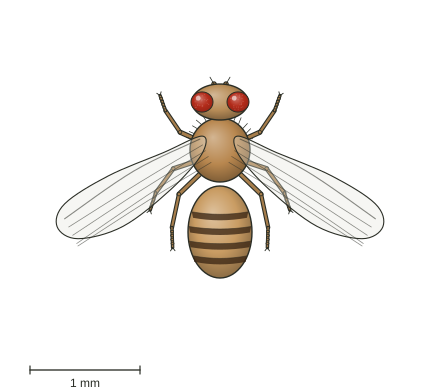
Fruit flies (Drosophila species), also called vinegar flies, are about 2 to 4 mm (1/8 inch) long, tan to light brown, and usually have bright red eyes. They hover around fruit bowls, trash cans and sinks.
Breeding source: Larvae feed on yeasts in fermenting material. Common sources:
- Overripe or damaged fruit, especially bananas, and rotting potatoes or onions
- Recycling bins with unrinsed bottles and cans
- Spilled juice, soda, wine or beer, including under appliances
- Wet residue in the bottom of trash cans
- Damp mops, rags and sponges
- Floor drains and garbage disposals with food buildup
How to find and remove it: Throw out overripe produce or move it to the refrigerator. Rinse containers before recycling, clean the trash can, and check under the refrigerator and in pantry corners for forgotten produce. Keep susceptible fruit refrigerated or covered for at least a week until the adults die out. A trap made of a jar with a little cider vinegar can catch adults and show you whether the source is gone. Under ideal conditions fruit flies can complete their life cycle in about 8 days, so a single forgotten potato can keep them going.
Drain flies (moth flies)
Drain flies, also called moth flies or sewer flies (family Psychodidae), are about 2 to 5 mm long, fuzzy and gray to dark, with broad hairy wings held roof-like over the body. They look like tiny moths, rest on bathroom walls, and make short, weak hops of flight.
Breeding source: Larvae live in the gelatinous film of bacteria and organic matter that builds up inside drains and pipes. Indoors that means sink, tub, shower and floor drains, plus condensate pans under refrigerators and air conditioners, overflow drains, and any spot with standing water and slime. Large numbers can point to a broken or leaking drain line under a floor or behind a wall.
How to find and remove it: To find which drain is the source, tape a piece of clear packing tape loosely over each drain overnight and check which one catches flies. Then scrub the inside of the drain and trap with a long, stiff brush to remove the slime layer. Texas A&M AgriLife Extension notes that bleach and ordinary drain cleaners are largely ineffective; mechanical scrubbing is what works, and enzyme or bacterial drain products need repeat applications over several weeks. Fix leaks and let wet areas dry out. Drain flies are a common sight in bathrooms; our bugs in the bathroom guide covers other species you might find there.
Fungus gnats
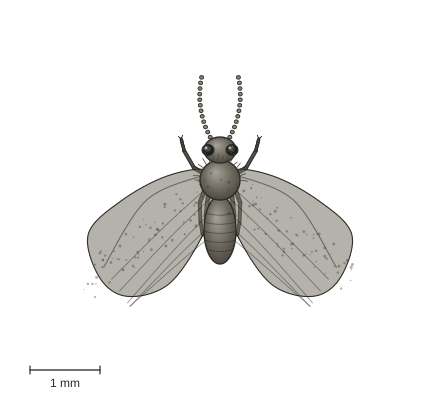
Fungus gnats are slender, dark, delicate flies about 1.5 to 3 mm long, with long legs. They have bead-like antennae and look like tiny mosquitoes, but they do not bite. They hover around houseplants and are drawn to windows and screens.
Breeding source: Larvae live in moist potting soil, where they feed on fungi, organic matter and sometimes roots. Some species also breed in drain film. Overwatering and potting mixes rich in organic matter favor them. Adults are often noticed around windows in fall and winter.
How to find and remove it: Check the soil surface of each houseplant for adults running across it. Let the soil dry out thoroughly between waterings, since larvae cannot survive in dry soil. Remove decaying leaves and plant debris. Products containing the bacterium Bacillus thuringiensis israelensis (Bti), labeled for fungus gnats, can be used to treat larvae in the soil, and repotting into fresh mix is an option for heavily infested plants. Follow the label.
Phorid flies
Phorid flies (family Phoridae), also called humpbacked or scuttle flies, are about 2 to 4 mm long, tan to dark brown or black, with a distinctly arched, humpbacked thorax. They tend to run in quick, jerky bursts across surfaces rather than fly, which helps tell them apart from fruit flies.
Breeding source: Larvae develop in a very wide range of moist, decaying material: food waste trapped in drains and garbage disposals, garbage, dead animals, wet potting soil, flower vase water, and soil contaminated by sewer leaks under slabs. Indoors, food residue in drains is the most common source.
How to find and remove it: Check drains and disposals for lodged food and scrub them clean. Look for plumbing leaks or wet spots. When phorid flies keep appearing in large numbers despite clean drains, a broken sewer line under the floor is a possibility. Texas A&M AgriLife Extension notes that contaminated soil may have to be dug out. That is a job for a plumber, not a pesticide.
Health concerns
Not every fly carries the same risk. Flies that breed in garbage, manure and carcasses, such as house flies and blow flies, can carry germs from those materials to food and surfaces. House flies also regurgitate onto food and leave feces as they feed, which is how they can mechanically spread disease organisms. Colorado State University Extension notes that flies developing in these materials can carry disease-causing bacteria, including those associated with food poisoning. Texas A&M AgriLife Extension describes house flies as capable of carrying a large number of disease organisms, which is why health departments treat flies as unsanitary in food businesses.
Small flies are mostly a nuisance at home. Fruit flies, phorid flies and drain flies can contaminate food and surfaces, and large numbers of phorid flies signal a sanitation problem. Fungus gnats and cluster flies are nuisances rather than health concerns.
At home, the practical steps are the same either way: keep flies off food, cover dishes outdoors, and remove breeding sources quickly.
General fly prevention
- Keep window and door screens in good repair, and keep doors closed.
- Use trash cans with tight lids, line them, and clean them regularly.
- Take garbage out often, especially in hot weather.
- Pick up pet waste promptly.
- Store produce in the refrigerator once it ripens, and rinse recycling.
- Keep drains clean and fix leaks.
- Water houseplants only when the top of the soil is dry.
- Seal gaps around windows, siding and utility lines before late summer to keep out cluster flies.
References
- Flies in the Home. Colorado State University Extension.
- Indoor Flies and Their Control. Texas A&M AgriLife Extension.
See also
- Flying insects in the house
- Bugs in the bathroom
- Diptera: true flies
- Mosquitoes around the home
- Bugs in the kitchen
This page was last updated on October 7, 2026. We research our guides from university extension services, government agencies, museums and peer-reviewed literature. Read the editorial policy or report an error.