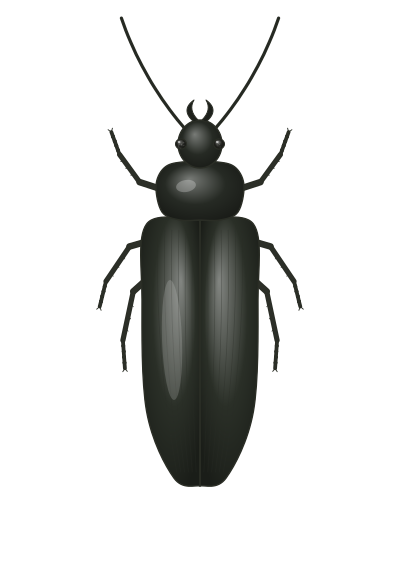
The Orders of Insects: Identification, Characteristics & Examples
A field-by-field reference to the insect orders: how each one is defined, how to spot it, how it grows, and where it touches daily life.
An insect order is a major branch of the insect family tree: a group of related families that share a body plan, such as the beetles (Coleoptera), the true flies (Diptera) or the butterflies and moths (Lepidoptera). Current references accept roughly 27 to 30 living insect orders. The count shifts a little from one authority to the next because specialists still debate whether a few small groups deserve an order of their own.
Four traits separate most orders at a glance:
- Wings: how many pairs, and whether the front pair is hardened, leathery, scaled, fringed or reduced.
- Mouthparts: chewing jaws, a piercing beak, a coiled sipping tube or a sponge-like pad (see insect mouthparts). Order names often end in -ptera, Greek for “wings,” because wings are such a clear dividing line.
- Metamorphosis: none at all; simple metamorphosis, where wingless nymphs gradually become adults; or complete metamorphosis, with a larva and a resting pupa. Orders with complete metamorphosis hold more than four-fifths of known insect species.
- Body form: a pinched waist, pincers at the tail, a flattened body, jumping legs or long tail filaments.
Below, each major order gets its own section, followed by the smaller orders and the older names (Homoptera, Isoptera, Thysanura, Anoplura, Mallophaga) still found in textbooks. To name one insect in front of you, the insect identification tool is faster. Body parts named here are explained in external anatomy of insects.
What an order is and how many there are
Biologists sort living things into nested ranks: kingdom, phylum, class, order, family, genus and species. All insects belong to the class Insecta, and the order is the rank at which a beetle, a fly and a wasp are told apart.
No single official list exists. A teaching outline from North Carolina State University places 29 insect orders into five broad groups, while noting that its own course keeps termites separate from cockroaches for convenience. Texas A&M’s insect field guide says the class is usually studied under a system of about 30 orders and points out that taxonomists still disagree on the number and the names. Three questions account for most of the spread:
- Termites: once the order Isoptera, now placed inside Blattodea with the cockroaches.
- Older splits: lists that still keep Homoptera, the lice orders or Thysanura separate count more orders than lists that have merged them.
- Fleas: a 2020 study found fleas nested inside the scorpionflies and proposed treating them as part of Mecoptera. Most references still list Siphonaptera as its own order.
So “about 28 living insect orders” and “about 30” are both defensible, depending on the source.
Springtails (Collembola), proturans (Protura) and diplurans (Diplura) are six-legged relatives that older books often listed as insect orders. Current classifications place them outside the class Insecta.
The insect orders at a glance
| Order | Name means | Wings | Mouthparts | Metamorphosis | Familiar members |
|---|---|---|---|---|---|
| Coleoptera | Sheath wings | Hard front wings (elytra) over folded hind wings | Chewing | Complete | Lady beetles, weevils, carpet beetles |
| Hemiptera | Half wings | Half-leathery front wings, or uniform; some wingless | Piercing-sucking beak | Simple | Stink bugs, bed bugs, cicadas, aphids |
| Hymenoptera | Membrane wings | Two pairs, membranous, hooked together; worker ants wingless | Chewing, or chewing-lapping in bees | Complete | Ants, bees, wasps, sawflies |
| Diptera | Two wings | One pair; hind pair reduced to halteres | Sponging or piercing-sucking | Complete | House flies, mosquitoes, fruit flies |
| Lepidoptera | Scale wings | Two pairs covered in scales | Coiled sipping tube (adults); chewing (caterpillars) | Complete | Butterflies, moths |
| Blattodea | Cockroach | Leathery front wings, or none; termite swarmers have two equal pairs | Chewing | Simple | Cockroaches, termites |
| Orthoptera | Straight wings | Leathery front wings over fan-folded hind wings | Chewing | Simple | Grasshoppers, crickets, katydids |
| Odonata | Tooth (strong jaws) | Two long, net-veined pairs | Chewing | Simple, aquatic young | Dragonflies, damselflies |
| Siphonaptera | Tube, wingless | None | Piercing-sucking (adults) | Complete | Cat flea, dog flea |
| Zygentoma | Yoke or bridge, insect | None | Chewing | None (ametabolous) | Silverfish, firebrats |
| Ephemeroptera | Short-lived wings | Triangular front wings, small hind wings | Chewing (young); none in adults | Simple, aquatic young | Mayflies |
| Plecoptera | Folded wings | Two pairs held flat over the back | Chewing | Simple, aquatic young | Stoneflies |
| Dermaptera | Skin wings | Short leathery front wings, or none | Chewing | Simple | Earwigs |
| Mantodea | Mantis (Greek name for these insects) | Leathery front wings over broad hind wings | Chewing | Simple | Praying mantids |
| Phasmida | Phantom | Often reduced or absent | Chewing | Simple | Walkingsticks, leaf insects |
| Psocodea | Gnawed | Barklice may be winged; lice wingless | Chewing; sucking in sucking lice | Simple | Booklice, head lice, bird lice |
| Thysanoptera | Fringe wings | Narrow wings edged with long hairs | Piercing-sucking, lopsided | Simple | Thrips |
| Neuroptera | Sinew wings | Two similar pairs with many veins | Chewing (adults); sucking jaws (larvae) | Complete | Lacewings, antlions |
| Trichoptera | Hair wings | Hairy wings held tent-like | Reduced (adults); chewing (larvae) | Complete | Caddisflies |
| Mecoptera | Long wings | Two similar, often mottled pairs | Chewing, at the tip of a beak | Complete | Scorpionflies, hangingflies |
Coleoptera: beetles
Coleoptera (“sheath wings”) is the largest insect order. University estimates run from about 280,000 to more than 400,000 described species worldwide, about 25,000 of them in North America.
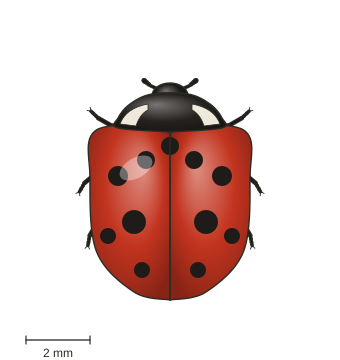
How to spot a beetle. The front wings are thickened into hard covers called elytra. They meet in a straight line down the middle of the back and hide the membranous hind wings, which fold underneath when the beetle is at rest. Adults have chewing mouthparts. In weevils, the jaws sit at the tip of a long snout, which can make a weevil look as if it has a sucking beak. Antenna shape (thread-like, clubbed, elbowed or plate-like) is one of the best clues to a beetle’s family.
Life cycle. Beetles go through complete metamorphosis. The larvae have a distinct head with chewing mouthparts and usually three pairs of legs on the thorax, but no fleshy prolegs on the abdomen. That last point helps separate a beetle grub from a caterpillar. Larval body shapes include slender, active crawlers (lady beetle larvae), C-shaped white grubs (June beetles) and hard, slim wireworms (click beetles).
Ecology. Beetles eat living plants, wood, fungi, dung, carrion, stored grain and other insects. Lady beetles feed on aphids, mealybugs and scale insects, and scavenging and wood-boring beetles recycle dead matter.
Where beetles matter to people. Many crop, forest and household pests are beetles. Carpet beetles have larvae that feed on wool, fur, feathers and other animal-based materials. Grain and flour beetles are among the usual pantry pests. Powderpost beetles have larvae that tunnel through seasoned wood and leave fine powder behind. For families, identification features and more examples, see the full Coleoptera page.
Hemiptera: true bugs, cicadas, aphids and relatives
To an entomologist, a “bug” is a member of Hemiptera, an order of more than 90,000 described species united by piercing-sucking mouthparts formed into a jointed beak.
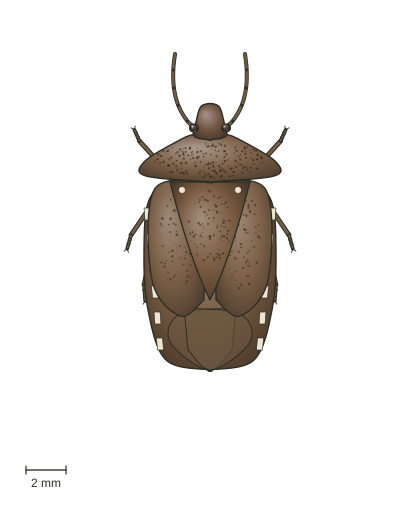
How to spot a hemipteran. Look for the beak, a slender tube that holds needle-like stylets and folds back under the body when not in use. Hemiptera falls into three main groups:
- True bugs (Heteroptera): stink bugs, bed bugs, assassin bugs, squash bugs and water striders. The beak starts at the front of the head. The front wings, called hemelytra, are leathery at the base and membranous at the tip, and they cross flat over the back to form an X. A triangular plate, the scutellum, sits between the wing bases.
- Hoppers and cicadas (Auchenorrhyncha): cicadas, leafhoppers, treehoppers, spittlebugs and planthoppers. The beak starts at the back of the head, the antennae are short and bristle-like, and the wings are held roof-like over the body.
- Plant lice and their relatives (Sternorrhyncha): aphids, scale insects, mealybugs, whiteflies and psyllids. Many are soft-bodied, slow or fixed in place, and wingless in some stages.
Life cycle. Most hemipterans go through simple metamorphosis: egg, several nymphal stages, adult. Nymphs look like small, wingless adults.
Ecology. Most hemipterans feed on plant sap, and many sap feeders excrete the excess as sticky honeydew, which ants collect in exchange for guarding them. Others are predators of insects, and a few feed on blood.
Where they matter. Aphids, leafhoppers and whiteflies damage crops directly and also carry plant viruses. Aphids are the most important carriers of viral plant diseases. The brown marmorated stink bug feeds on fruit and vegetables and gathers on houses each fall. Bed bugs feed on human blood. They cause itchy bites but are not known to regularly spread disease. Conenose or kissing bugs (Triatoma) can transmit Chagas disease. The Hemiptera page covers the order in more depth.
Hymenoptera: ants, bees, wasps and sawflies
Hymenoptera is the third-largest insect order, with about 153,000 described species worldwide. The name means “membrane wings.”
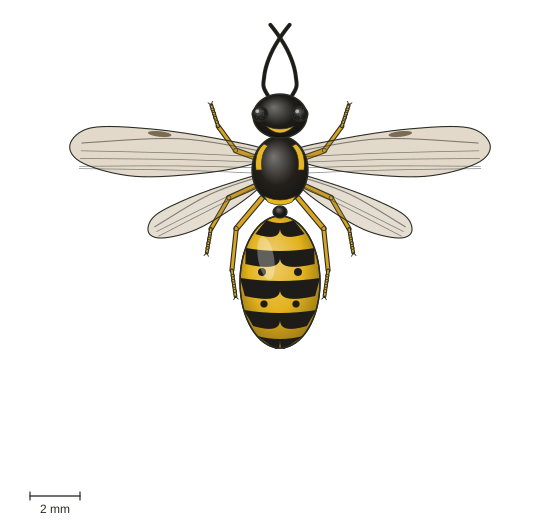
How to spot a hymenopteran. Most adults have two pairs of clear, membranous wings. The hind wings are smaller, and a row of tiny hooks (hamuli) on their front edge locks them to the front wings in flight. Worker ants have no wings. Ants, bees and wasps have a narrow, pinched waist between the thorax and abdomen. Sawflies and horntails, the more ancestral members, have a broad waist instead. Mouthparts are built for chewing, and bees add a tongue-like tube for lapping nectar.
The sting. A stinger is a modified egg-laying tube (ovipositor), so only females can sting. Stinging species belong to one branch of the order: the stinging wasps, bees and ants. Sawflies, horntails and parasitic wasps use the ovipositor to lay eggs, not to sting.
Life cycle. Hymenopterans go through complete metamorphosis. Bee and wasp larvae are legless grubs. Sawfly larvae look like caterpillars, with fleshy prolegs on the abdomen. Females control the sex of their offspring: fertilized eggs become females and unfertilized eggs become males.
Ecology. Ant colonies, honey bee hives and yellowjacket nests each center on a queen served by many female workers; most yellowjacket colonies last one season, and only mated queens survive the winter. Bees are major pollinators, and parasitic wasps keep many plant-feeding insects in check.
Where they matter. Ants are among the most common insects inside homes. Yellowjackets and other wasps can sting; a yellowjacket’s stinger has no barbs, so it can sting more than once, and late-summer workers scavenge for sugar around food and trash. A few sawflies, gall wasps and ants damage plants or wood. To tell the two most-confused groups apart, see bee vs wasp. The Hymenoptera order page goes further.
Diptera: true flies
Diptera (“two wings”) includes house flies, mosquitoes, gnats, midges, horse flies and fruit flies, with about 153,000 described species worldwide.
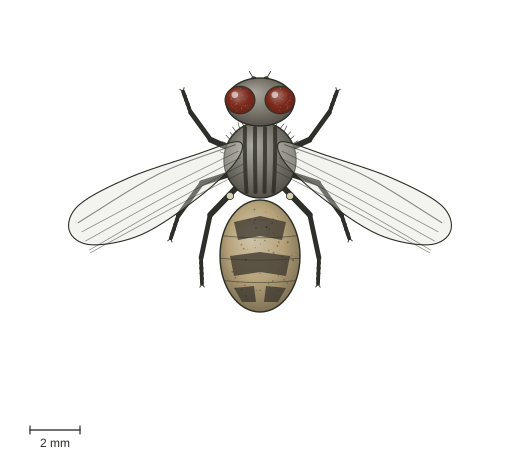
How to spot a fly. True flies have one pair of functional wings. The hind wings are reduced to tiny, club-shaped halteres that vibrate in flight and work like gyroscopes to keep the fly balanced. Dragonflies, butterflies, mayflies and sawflies belong to other orders.
Adult mouthparts take in liquid. House flies and blow flies have a sponge-like pad (labellum) that soaks up fluids, and they spit digestive juices onto solid food to soften it first. Mosquitoes, horse flies and black flies have piercing mouthparts for drawing blood.
Life cycle. Flies go through complete metamorphosis. The larvae are legless. In the more advanced flies they are maggots with no distinct head, and many live in moist places: water, wet soil, manure, rotting plants or carrion. In summer a house fly can go from egg to adult in about a week.
Ecology. Flies pollinate plants and recycle dead matter, and tachinid flies parasitize caterpillars and other pests.
Where they matter. Flies are the most important insects in human health. Female mosquitoes take blood to produce eggs and can transmit malaria, yellow fever, encephalitis viruses and filarial worms. House flies breed in garbage and manure and carry germs on their feet and mouthparts. See house and filth flies, mosquitoes and the Diptera order page.
Lepidoptera: butterflies and moths
Lepidoptera (“scale wings”) includes more than 180,000 described species of butterflies and moths.
How to spot a lepidopteran. The wings are covered in tiny overlapping scales that rub off like dust and create the colors and patterns. Most adults have a long sipping tube (proboscis) that stays coiled under the head and unrolls to drink nectar and other liquids. A few ancestral moth families still have chewing jaws.
As a rule of thumb, butterflies fly by day, have clubbed or hooked antennae and often rest with wings upright. Most moths fly at night, have thread-like, feathery or comb-like antennae, and rest with wings flat or folded.
Life cycle. Lepidoptera go through complete metamorphosis. The larva is a caterpillar: a chewing head, three pairs of true legs on the thorax and fleshy prolegs on the abdomen. Butterfly pupae are called chrysalises, and many moths spin a silk cocoon around the pupa.
Ecology. Most caterpillars feed on plants, chewing leaves, burrowing into stems or roots, or mining inside leaves. Adults of most species drink nectar and other liquids.
Where they matter. Caterpillars are among the most damaging insects to crops and forest trees. Indoors, the Indianmeal moth is a common moth in stored food, and its larvae spin silk webbing through grain and other dry goods. A few caterpillars have stinging spines. To name a caterpillar, use our caterpillar identification guide or download the printable Caterpillar Identification Guide (PDF).
Blattodea: cockroaches and termites
Blattodea, from a classical name for the cockroach, now includes both cockroaches (about 4,600 species) and termites (about 3,000 species).
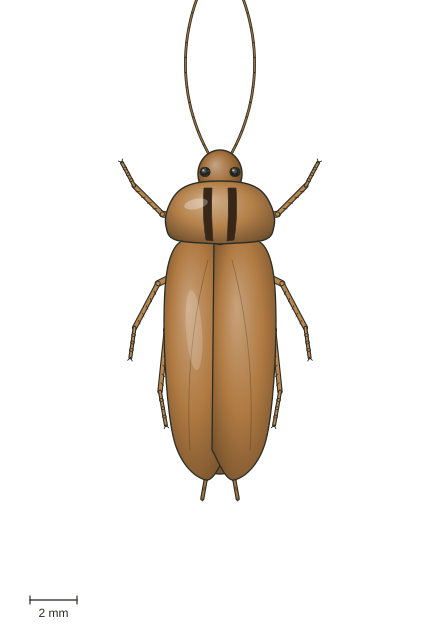
How to spot a cockroach. Cockroaches are oval and flattened. A broad, shield-like plate (the pronotum) covers much of the head when seen from above. The antennae are long and thread-like, the legs are spiny and built for running, and a pair of short cerci sticks out from the tip of the abdomen. The front wings are thickened and leathery (tegmina) and cover the membranous hind wings. Some species have short wings or none.
How to spot a termite. Termite workers are soft, pale and wingless, with straight, bead-like antennae and no pinched waist. Soldiers have larger, darker heads with big jaws. The winged swarmers (alates) have two pairs of wings of equal length, which they shed after their mating flight. These features separate termites from ants, which have elbowed antennae, a narrow waist and front wings longer than the hind wings. See termite vs flying ant.
Life cycle. Both groups go through simple metamorphosis. Female cockroaches enclose their eggs in a purse-shaped capsule called an ootheca. Mantids also make an ootheca, one sign that the two groups are close relatives. Termite nymphs develop into the colony’s castes: most stay workers, some molt into soldiers, and some become winged reproductives.
Ecology. Both groups feed on dead plant material. Termites digest wood with help from gut microbes and recycle up to a third of the dead wood produced each year in warm regions. Of the several thousand cockroach species, only about a dozen are considered pests.
Where they matter. Pest cockroaches contaminate food, and their droppings and decomposing remains release allergens that can cause respiratory allergies. Subterranean and drywood termites damage wooden structures. The Blattodea order page has more.
Orthoptera: grasshoppers, crickets and katydids
Orthoptera (“straight wings”) includes more than 23,000 species of grasshoppers, locusts, crickets, katydids and mole crickets.
How to spot an orthopteran. Most have long hind legs with an enlarged, muscular femur for jumping. The front wings are narrow, leathery tegmina with parallel sides, and they cover broad hind wings that fold like a fan. Mouthparts are chewing.
Two main groups are easy to tell apart. Grasshoppers and locusts have short antennae, and their hearing organs sit on the sides of the first abdominal segment. Crickets and katydids have antennae as long as the body or longer, and their hearing organs sit on the front legs, just below the knee. Many species sing by rubbing one body part against another (stridulation).
Life cycle. Orthopterans go through simple metamorphosis. Most grasshoppers lay eggs in pods in the soil, the eggs survive the winter, and the nymphs pass through five stages before reaching adulthood. Wing pads grow larger with each molt.
Ecology and importance. Grasshopper and locust swarms can destroy crops over large areas of Africa, Asia and North America. Mole crickets dig with enlarged, shovel-like front legs and damage lawns and turf in the southern United States. Some field crickets are raised commercially as fish bait.
Odonata: dragonflies and damselflies
Odonata includes about 6,350 species. The name refers to the toothed jaws of the adults.
How to spot an odonate. Adults have very large compound eyes, short bristle-like antennae, a long slender abdomen and two pairs of long, net-veined wings that cannot fold back flat over the body. Their legs form a basket for catching small insects in flight.
- Dragonflies: sturdy bodies, eyes that touch or nearly touch, hind wings broader at the base than the front wings, and wings held out flat to the sides at rest.
- Damselflies: slender bodies, eyes set wide apart, both wing pairs similar in shape, and wings usually held together over the back at rest.
Life cycle. Odonates go through simple metamorphosis with aquatic young, called naiads or nymphs. A naiad catches prey with a hinged lower lip (labium) that shoots forward like an arm. Damselfly naiads breathe through three leaf-like gills at the tail. Dragonfly naiads breathe through gills inside the rectum and can push water out to jet forward.
Ecology and importance. Both adults and naiads are predators that eat mosquitoes, gnats and other small insects. They have no sting and pose no threat to people.
Siphonaptera: fleas
Siphonaptera (“tube, wingless”) includes about 2,500 species of fleas.
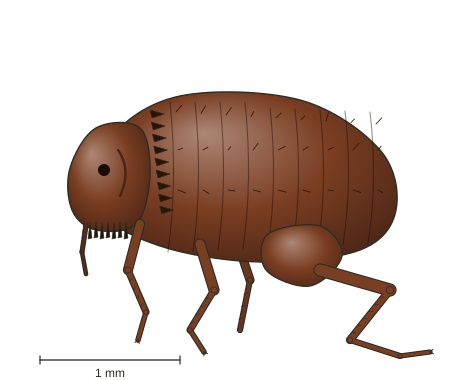
How to spot a flea. Adult fleas are small, wingless and dark, with bodies flattened from side to side so they can slip between hairs or feathers. The hind legs are long and powerful for jumping. Many species have rows of stiff spines (combs) on the head or thorax. Adults have piercing-sucking mouthparts.
Life cycle. Fleas go through complete metamorphosis, and only adults feed on blood. The larvae are tiny, legless and worm-like. They live in the host’s nest or bedding and eat organic debris, including the droppings of adult fleas, which contain dried blood. Larvae spin a silk cocoon before pupating.
Where they matter. The cat flea (Ctenocephalides felis) feeds on cats, dogs and other animals. It can spread murine typhus and the bacterium behind cat scratch disease, and it carries a tapeworm that infects pets and occasionally children. Other fleas transmit plague, which in the United States is spread mostly by ground squirrel fleas in rural western areas. For life cycle and control, see fleas.
Zygentoma: silverfish and firebrats
Zygentoma includes about 370 species. Most older references call this order Thysanura (see the history section below).
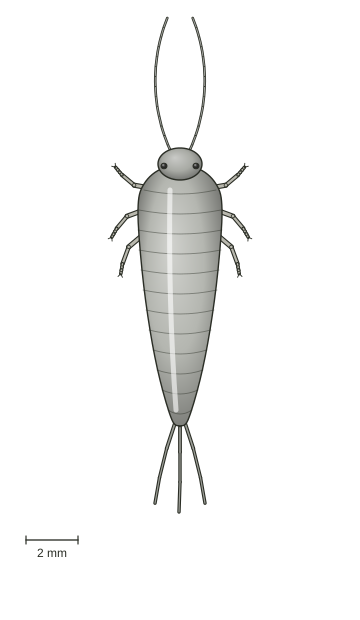
How to spot a silverfish. Silverfish and firebrats are flattened, carrot-shaped and wingless, with long antennae and three long tail filaments of about equal length. Adults are covered in fine scales. Silverfish are silvery gray, and firebrats are mottled gray or brown. Adults reach about 13 mm (1/2 inch), and silverfish can reach about 19 mm (3/4 inch).
Life cycle. Zygentoma show almost no metamorphosis, a pattern called ametabolous. A hatchling looks like a small, scaleless adult. Unlike most insects, silverfish keep molting after they mature, passing through roughly 45 to 60 molts and living two to three years or more. Their ancestors never had wings, so they are called primitively wingless.
Where they matter. Indoors, silverfish favor damp, warm rooms, while firebrats choose very hot spots near furnaces, ovens and hot water pipes. Both feed on starch: book bindings, wallpaper paste, paper sizing, cereals and starched fabric. Their jaws scrape rather than bite, leaving irregular feeding marks on paper.
Smaller orders worth knowing
Ephemeroptera: mayflies
Mayflies have triangular front wings, much smaller hind wings and two or three long tail filaments. Their naiads live in streams and lakes and breathe through leaf-like gills along the abdomen. Mayflies are the only living insects that molt again after they have working wings: a dull, cloudy-winged subimago molts into the adult. Adults have no working mouthparts and cannot feed, and in some species they live only a day. Because the naiads need clean water, they are used to monitor stream health.
Plecoptera: stoneflies
Stoneflies hold their wings flat over the back and have long antennae and long tail cerci. Their naiads live under stones in cold, fast, well-oxygenated streams and are very sensitive to pollution, which makes them a good sign of clean water. Trout and bass feed heavily on them.
Dermaptera: earwigs
Earwigs are slender and flattened, with short leathery front wings and a pair of pincers (forceps) at the tail. They use the forceps for defense, courtship and folding their wings. Females guard their eggs and young nymphs in the nest. The old belief that earwigs crawl into human ears has no basis.
Mantodea: praying mantids
Mantids have a long prothorax, a triangular head that turns from side to side, and spiny front legs built for seizing prey. Females lay eggs in a foamy case (ootheca) that hardens on twigs, fences and walls, where it passes the winter. Mantids eat any insect they can catch, beneficial ones included, so their value as pest control is limited.
Phasmida: walkingsticks and leaf insects
Also listed as Phasmatodea, this order includes stick insects that look like twigs and leaf insects that look like foliage. Many have reduced wings or none. Females drop seed-like eggs to the ground one at a time, and several species can reproduce without males. In North America they rarely become abundant enough to harm plants.
Psocodea: booklice, barklice and parasitic lice
This order now combines the free-living booklice and barklice (formerly Psocoptera) with the parasitic lice (formerly Phthiraptera). Booklice are pale, wingless and under 2 mm (about 1/16 inch). They feed on fungi and starchy material in homes, warehouses and stored goods. Parasitic lice are wingless and flattened, with claws for gripping hair or feathers. The three human lice are the head louse, the body louse and the pubic (crab) louse. Of these, only the body louse spreads disease, including epidemic typhus and trench fever.
Thysanoptera: thrips
Thrips are tiny, usually under 3 mm (1/8 inch), and slender. When wings are present, they are narrow rods edged with long hair fringes. Their mouthparts are lopsided: the right jaw disappears during development, leaving the left jaw and two stylets to pierce and suck plant cells. Many scar and deform fruit, flowers and leaves, and some spread plant diseases. Their development falls between the two main types: there is no true pupa, but many species pass through a quiet, non-feeding stage before the adult.
Neuroptera: lacewings and antlions
Adults have two pairs of similar wings with a dense net of veins and long antennae, and most are weak fliers. Larvae have long, sickle-shaped jaws with grooves that suck out the body fluids of prey. Green lacewing larvae eat aphids, whiteflies and scale insects, and some are raised and sold for biological control. Antlion larvae dig pitfall traps in loose soil.
Trichoptera: caddisflies
Adults look like small, dull moths, but their wings are covered in hairs instead of scales and are held tent-like over the body. The larvae live in water, and most build portable cases from silk plus sand, pebbles or plant bits. Case design is so consistent that it often identifies the genus. Larvae are an important food for fish, and anglers use them as trout bait.
Mecoptera: scorpionflies and hangingflies
Scorpionflies have a long beak-like face with small chewing jaws at the tip. Males of the common scorpionflies carry enlarged genitalia curled over the back like a scorpion’s tail, but they are harmless. Hangingflies hang from vegetation and prey on small flying insects. None are pests.
Old order names and where they went
Classification changes as new evidence, especially DNA evidence, shows how groups are related. Several names in older textbooks and websites are no longer used as orders.
Homoptera (now part of Hemiptera)
Older books split the sucking bugs into two orders: Hemiptera for the true bugs, and Homoptera for cicadas, leafhoppers, treehoppers, spittlebugs, aphids, scale insects and whiteflies. Homoptera means “uniform wings,” because their front wings are the same texture throughout rather than half leathery.
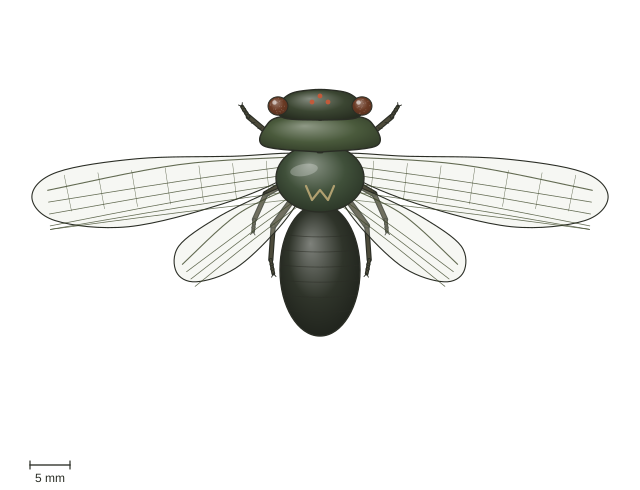
Studies of anatomy and DNA showed that the “homopterans” do not form one natural group, since they leave out the true bugs that share their ancestry. Entomologist P.J. Gullan summed up the evidence in 1999: the group is paraphyletic, so the name should be dropped. Today all of these insects sit inside Hemiptera, divided among Auchenorrhyncha (cicadas and hoppers), Sternorrhyncha (aphids, scales, whiteflies, psyllids) and Heteroptera (true bugs). You will still see “Homoptera” used informally, and some teaching collections keep it as a sorting label.
Isoptera (now part of Blattodea)
Termites were long placed in their own order, Isoptera, named for the two pairs of same-sized wings on the swarmers. A 2007 DNA study by Inward, Beccaloni and Eggleton, titled “Death of an order,” found that termites branch from inside the cockroach family tree, closest to Cryptocercus, a wood-eating cockroach of the Appalachian Mountains that lives in an almost termite-like way. In short, termites are social cockroaches. The Entomological Society of America updated its list of insect common names in 2018 to place termites within Blattodea. Many pest-management references still say “Isoptera,” and some authors give termites a group name of their own (such as Termitoidae) inside Blattodea.
Thysanura (now Zygentoma plus Archaeognatha)
Thysanura once held all the wingless insects with long tail filaments. It is now split into two orders:
- Zygentoma: silverfish and firebrats. Flattened bodies, small eyes, and jaws hinged at two points that move side to side.
- Archaeognatha (also called Microcoryphia): jumping bristletails. A rounded body with a humped thorax, large eyes that often meet on top of the head, and jaws hinged at a single point. Some can leap by snapping the abdomen against the ground. They live outdoors in leaf litter and similar places, not in houses.
Some writers still use “Thysanura” as a direct synonym for Zygentoma, so check which meaning a source intends.
Anoplura and Mallophaga (now part of Psocodea)
Older classifications split lice into sucking lice (Anoplura) and chewing or biting lice (Mallophaga), sometimes as two orders and sometimes as suborders of Phthiraptera. Booklice and barklice sat in yet another order, Psocoptera. Later work placed the parasitic lice among the booklice and barklice rather than beside them; one current scheme puts parasitic lice and booklice together in the same suborder. All of these insects now belong to one order, Psocodea, the name used by university teaching collections and the Kansas 4-H taxonomy since its 2016 revision.
- Sucking lice (old Anoplura): narrow, cone-shaped heads and blood-sucking mouthparts. Human head and body lice and the pubic louse belong here.
- Chewing lice (old Mallophaga): broad heads at least as wide as the thorax and chewing jaws. They live on birds and mammals; none of the human lice belong to this group.
Other names you may meet
| Older name | Current placement |
|---|---|
| Homoptera | Hemiptera (Auchenorrhyncha and Sternorrhyncha) |
| Hemiptera, in older books | The true bugs only; now suborder Heteroptera within a larger Hemiptera |
| Isoptera | Blattodea |
| Thysanura | Zygentoma (silverfish) and Archaeognatha (bristletails) |
| Microcoryphia | Archaeognatha |
| Anoplura | Psocodea (sucking lice) |
| Mallophaga | Psocodea (chewing lice) |
| Phthiraptera | Psocodea (all parasitic lice) |
| Psocoptera | Psocodea (booklice and barklice) |
| Phasmatodea | Same order as Phasmida |
| Dictyoptera | A broader grouping of cockroaches, termites and mantids, used as an order in some books |
A full list of living insect orders
This list follows the five broad groups in North Carolina State University’s teaching outline, with termites placed in Blattodea. Orders without a section above are small, rarely seen or limited to certain regions.
| Group | Orders |
|---|---|
| Primitively wingless | Archaeognatha (jumping bristletails), Zygentoma (silverfish) |
| Ancient winged (wings cannot fold back flat) | Ephemeroptera (mayflies), Odonata (dragonflies and damselflies) |
| Polyneoptera | Plecoptera (stoneflies), Dermaptera (earwigs), Orthoptera (grasshoppers, crickets), Phasmida (walkingsticks), Mantodea (mantids), Blattodea (cockroaches, termites), Embioptera (webspinners), Zoraptera (angel insects), Grylloblattodea (rock crawlers), Mantophasmatodea (heelwalkers) |
| Paraneoptera | Psocodea (booklice, lice), Thysanoptera (thrips), Hemiptera (bugs, cicadas, aphids) |
| Holometabola (complete metamorphosis) | Coleoptera (beetles), Strepsiptera (twisted-wing parasites), Neuroptera (lacewings), Megaloptera (dobsonflies, alderflies), Raphidioptera (snakeflies), Hymenoptera (ants, bees, wasps), Trichoptera (caddisflies), Lepidoptera (butterflies, moths), Diptera (true flies), Mecoptera (scorpionflies), Siphonaptera (fleas) |
That makes 28 orders. Keep termites separate as Isoptera, as North Carolina State’s course does, and the count rises to 29. Fold fleas into Mecoptera, as the 2020 study proposed, and it falls to 27.
Using orders to identify an insect
Placing an insect in its order is the first step toward a name. Count the wings (one pair plus halteres means a true fly; hard covers meeting in a line mean a beetle). Check for a beak folded under the body (Hemiptera) or a coiled tube (butterflies and moths). Look at the waist and antennae: a pinched waist and elbowed antennae mean an ant or wasp, while a thick waist and straight, beaded antennae mean a termite. Pincers at the tail mean an earwig, and three long filaments mean a silverfish or bristletail. A wingless young insect that resembles the adult is a nymph; a grub, maggot or caterpillar comes from an order with complete metamorphosis.
From there, the identification hub walks through common household finds by location and appearance.
References
- Phylogenetic outline of insect orders (ENT 425 General Entomology). North Carolina State University.
- Insect Orders. Texas A&M AgriLife Extension, Field Guide to Common Texas Insects.
- Insect Orders Taxonomy (Insects in Kansas, 2016 revised taxonomy). Kansas State University 4-H.
- Why the taxon Homoptera does not exist (P.J. Gullan, Entomologica 33). Entomologica, University of Bari.
- It's official: Termites are just cockroaches with a fancy social life. Science News.
- Order Psocodea: barklice, booklice and parasitic lice. North Carolina State University.
- Apterygota: primitively wingless insects. North Carolina State University.
- Fleas are parasitic scorpionflies (Tihelka et al., Palaeoentomology 2020). University of Bristol.
- Order Hemiptera, suborder Homoptera. North Carolina State University.
- Holometabola. North Carolina State University.
- Orders of Insects: Blattodea (includes Isoptera). University of Queensland, Insect Science.
- Yellowjackets and Other Social Wasps (Pest Notes). University of California IPM.
- About Fleas. Centers for Disease Control and Prevention.
- Silverfish and Firebrats (Pest Notes). University of California IPM.
See also
- External anatomy of insects
- Simple and incomplete metamorphosis
- Complete metamorphosis
- Coleoptera: beetles
- Hemiptera: true bugs
- Identify an insect
This page was last updated on October 7, 2026. We research our guides from university extension services, government agencies, museums and peer-reviewed literature. Read the editorial policy or report an error.