Beetles in the House: Identifying Common Indoor Beetles
Some indoor beetles are breeding in your food, fabrics or wood. Others just wandered in. Here is how to tell which is which.
Beetles found in a house are usually carpet beetles, pantry beetles, weevils, or lady beetles that moved in for the winter. Ground beetles and click beetles also wander in from outside, but they do not breed indoors. The main question is whether the beetle is breeding inside (in food, fabric or wood) or is a stray. Size, shape and location will usually answer that, but treat any identification from a description as provisional until a specimen is checked.
Is it a beetle?
Adult beetles have hard front wings (elytra) that cover the body like a shell and meet in a straight line down the middle of the back. Most have chewing mouthparts. Weevils are beetles too, with the jaws at the tip of a long snout. Beetle larvae look nothing like the adults: they are grubs or hairy, worm-like larvae, because beetles go through complete metamorphosis.
If your “beetle” has long, thread-like antennae, two short tails at the rear and no straight seam down the back, it may be a cockroach nymph; see cockroach nymph identification. For a fuller picture of beetle anatomy and families, our reference page on Coleoptera: beetles covers the order in depth.
Narrow it down
- In stored food (flour, cereal, spices, pet food, grains): pantry beetles or weevils.
- On sunny windowsills in spring, small and round: carpet beetles.
- Around wool, feathers, fur, or under furniture (larvae): carpet beetles.
- Near wooden furniture, flooring or trim, with tiny round holes and fine powder: powderpost beetles.
- Clustering on sunny walls and windows in fall and winter, orange to red: multicolored Asian lady beetles.
- Near pet food, meats, or in spring around a basement or attic, about 8 mm, with a pale band across the back: larder beetles.
- Single, larger dark beetles on the floor, often near doors, after warm nights: ground beetles or click beetles from outside.
Quick comparison table
| Insect | Size | Look for | Where | Concern |
|---|---|---|---|---|
| Carpet beetles | 2.5–5 mm | Round, mottled or shiny black | Windowsills; larvae under furniture | Larvae damage wool, fur, feathers |
| Drugstore or cigarette beetle | about 2.5 mm | Oval, humped, head tucked | Spices, flour, pet food | Pantry pest |
| Sawtoothed grain beetle | about 2.5 mm | Flat, toothed thorax edges | Cereals, dried fruit | Pantry pest |
| Flour beetles | 3–4 mm | Flat, elongated, reddish brown | Flour, mixes | Pantry pest |
| Rice or granary weevil | about 3 mm | Snout, pitted body | Whole grains, popcorn, beans | Pantry pest |
| Spider beetles | about 3 mm | Round, long legs, spider-like | Old stored food | Pantry pest |
| Powderpost beetle | 2.5–6 mm | Slender, dark brown; tiny round holes | Hardwood furniture, floors | Damages wood slowly |
| Asian lady beetle | about 7 mm | Orange to red, W mark behind head | Sunny walls, windows, fall | Odor, stains, can nip |
| Larder beetle | about 8 mm | Dark, pale yellow band with dark spots | Pet food, meats, attics | Food pest; larvae bore |
| Ground beetle | 3–25 mm | Dark or metallic, fast runner | Floors near doors | Harmless stray |
| Click beetle | 6–19 mm | Long, flat, flips with a click | Near lights, windows | Harmless stray |
Beetles that breed indoors
Carpet beetles
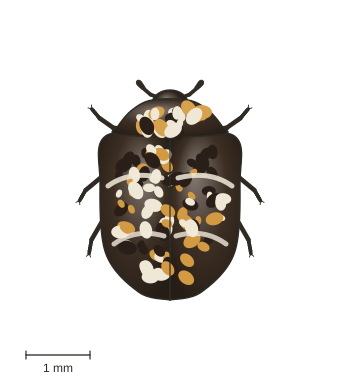
Adults are small and rounded. The varied carpet beetle is about 2.5 mm (1/10 inch) with a mottled pattern of white, brown and yellow scales. The black carpet beetle is oval, shiny black to dark brown and about 3 to 5 mm. Adults feed on pollen and are drawn to sunlight, so they show up on windowsills. Larvae are slow, hairy and brownish.
What it means: the larvae feed on wool, silk, fur, feathers, pet hair, dead insects and some stored foods in dark, undisturbed places. See the carpet beetle guide.
Pantry beetles
The common stored-food beetles are all small and reddish brown to dark brown:
- Drugstore and cigarette beetles: about 2.5 mm, oval, humped, with the head tucked under. Both can fly. Common in spices, flour and dry pet food.
- Sawtoothed grain beetle: about 2.5 mm, very flat, with six saw-like teeth along each side of the thorax.
- Red and confused flour beetles: just over 3 mm, flat and elongated, in flour and baking mixes.
- Spider beetles: about 3 mm, round-bodied with long legs and antennae, so they look like small spiders. They scavenge old, neglected food.
What it means: these contaminate food rather than harm people. Find the infested package, discard it, vacuum shelves and store dry goods in sealed containers. See the pantry pests guide.
Weevils
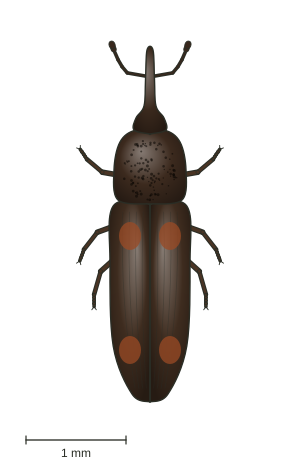
Rice and granary weevils are about 3 mm (1/8 inch) with a long snout. The rice weevil has four pale or orange spots and can fly; the granary weevil is evenly dark brown and cannot fly. Larvae develop inside whole kernels.
What it means: a pantry pest of whole grains, popcorn, rice, dried beans, birdseed and decorative corn. Freezing infested grain or discarding it, then cleaning shelves, is the usual fix.
Powderpost beetles

Lyctid powderpost beetles are slender, cylindrical and dark brown, about 2.5 to 6 mm (3/32 to 1/4 inch) long. You are more likely to see their evidence than the beetles: small round exit holes about 1/32 to 1/16 inch (roughly 1 to 1.5 mm) across, in hardwood such as oak, ash, walnut or hickory, with very fine, flour-like powder below.
What it means: a slow wood-boring pest of hardwood furniture, flooring, trim and baskets. Home infestations almost always come from wood that was infested before it was installed, and the life cycle indoors can take two to five years. Check whether the powder is fresh before acting. See powderpost beetles.
Larder beetles
Larder beetles are about 8 mm (1/3 inch), dark brown, with a band of pale yellow hairs across the front half of the wing covers, usually marked with six dark spots. Larvae are brown and hairy, up to about 13 mm, with two curved spines at the tail end.
What it means: the larvae feed on pet food, cured meats, cheese, dead insects and dead animals in walls or attics. When ready to pupate they may bore into wood. Adults often show up in spring. Look for and remove the food source.
Beetles that move in for winter
Multicolored Asian lady beetles
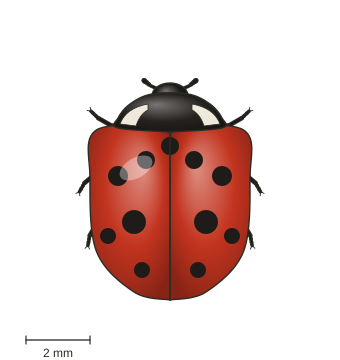
About 7 mm long, orange to red, with anywhere from no spots to 18 black spots. The white area behind the head has a black W-shaped mark. In early fall they gather on sunny south and southwest walls, crawl into attics and wall voids, and later move into living areas as the walls warm.
What it means: a nuisance, not a breeding infestation. They can release a foul-smelling yellow fluid that stains, and occasionally nip. Seal gaps around windows, siding and vents before fall and vacuum up beetles indoors.
Beetles that wander in from outdoors
Ground beetles
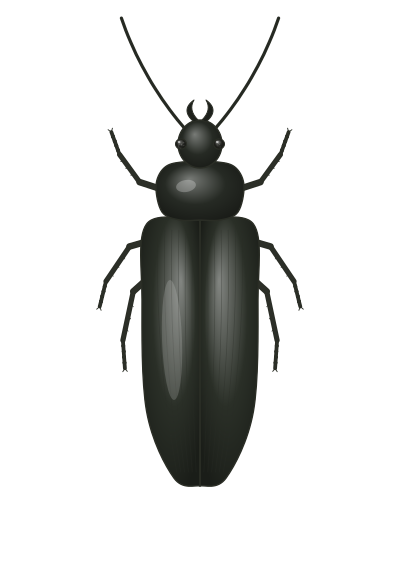
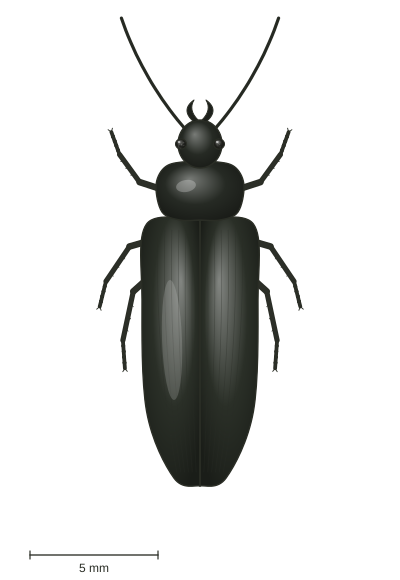
Ground beetles (shown at the top of this page) are usually 3 to 13 mm, though a few reach 25 mm (1 inch). Most are dark brown or black, some metallic. They hunt at night, are attracted to lights and run fast.
What it means: harmless strays. They do not damage food, clothing or the house and do not breed indoors. Pick them up and put them outside, and seal gaps under doors.
Click beetles
Click beetles are long and flattened, about 6 to 19 mm (1/4 to 3/4 inch), mostly brown to black. Turned on their backs, they snap a peg on the underside with an audible click and flip into the air.
What it means: harmless strays, drawn to outdoor lights in summer. They do not bite or sting. Reducing outdoor lighting and sealing gaps keeps them out.
Still not sure?
Try the insect identification tool, and browse Coleoptera: beetles for more beetle families.
The surest route is a specimen. Press the beetle onto clear tape on an index card, or seal it in a small bag or vial. Record where you found it and how many you have seen, and take it to your county or state extension office. For wood damage, a photo of the holes and a small sample of the powder are worth bringing too.
References
- Coleoptera. Texas A&M AgriLife Field Guide to Common Texas Insects.
- Carpet Beetles (Pest Notes). UC Statewide IPM Program.
- Insect and Mite Pests in the Kitchen and Pantry (EC3049). Nebraska Extension.
- Lyctid Powderpost Beetles: Suggestions for Control. Texas A&M AgriLife Extension.
- Multicolored Asian Lady Beetle. Penn State Extension.
- Larder Beetle. Penn State Extension.
- Ground Beetles (ENTO-249). Virginia Cooperative Extension.
- Click Beetles. Virginia Cooperative Extension.
See also
This page was last updated on October 7, 2026. We research our guides from university extension services, government agencies, museums and peer-reviewed literature. Read the editorial policy or report an error.