Diptera: Flies, Mosquitoes and Gnats
True flies have one pair of wings and a pair of tiny balancing knobs, and they include some of the most familiar insects in any home.
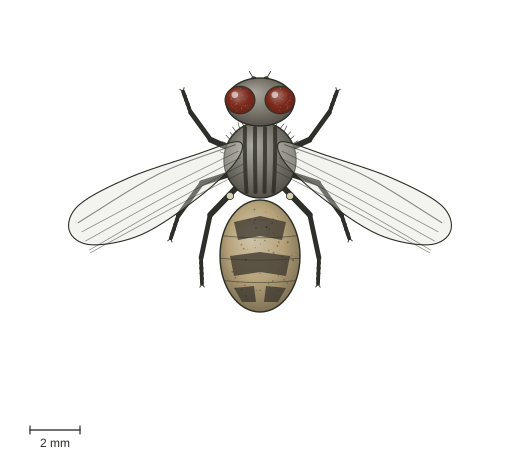
Diptera is the order of true flies: house flies, blow flies, fruit flies, mosquitoes, gnats, midges, crane flies and many more. The defining trait is in the name, which means “two wings.” Adult flies have a single pair of working wings, and the hind wings are reduced to a pair of small knobbed stalks called halteres that act as balance organs in flight.
It is one of the largest insect orders, with more than 150,000 described species in about 160 families worldwide and roughly 17,000 species in North America. Flies range from about 0.5 mm to 40 mm (up to about 1 1/2 inches) long. A small number are household nuisances or carry disease. Many more visit flowers, break down dead plant and animal matter, or prey on other insects.
How to spot a true fly
One pair of wings plus halteres
Look just behind the base of the wings. On a true fly you will find a pair of tiny clubs, the halteres, where a second pair of wings would be. They act as balance organs in flight.
Wing count alone can mislead. Some other insects, such as the males of certain mayflies and scale insects, have only front wings, and a few tiny parasitic wasps have hind wings so small they are hard to see. Bees and wasps have four wings that hook together and can look like two. When in doubt, look for halteres, and see the Hymenoptera page for the four-winged groups. A few flies are wingless altogether.
Mouthparts for liquids
Adult flies cannot chew. Their mouthparts are built for taking in liquids, and the type varies by group. The insect mouthparts page shows the main designs.
- Sponging: House flies and blow flies have sponge-like mouthparts. They wet food with saliva to liquefy it, then take it up. They cannot bite.
- Piercing-sucking: Female mosquitoes have a long, needle-like proboscis that pierces skin to draw blood. Stable flies, horse flies and some others also bite.
- Lapping and sucking: Many flies drink flower nectar or the liquids of decaying matter.
Only female mosquitoes bite; they need a blood meal to produce eggs. Males feed on nectar and fruit juices.
Antennae
Antennae are a useful clue to the major groups: long and threadlike in mosquitoes, midges and fungus gnats, short in house flies and their relatives.
Complete metamorphosis: maggots and puparia
Flies develop through egg, larva, pupa and adult, as described on the complete metamorphosis page.
Fly larvae have no true legs. They wriggle, crawl on fleshy pads, or swim. Mosquito larvae (“wigglers”) and pupae live in water. Fungus gnat larvae have a shiny black head and live in moist soil. In house flies, blow flies and their relatives, the larva is the familiar cream-colored maggot, tapered toward the head end, with mouthparts reduced to small hooks.
When a house fly or blow fly maggot finishes feeding, it forms a hardened shell called a puparium. The pupa develops inside, and the adult later emerges from it. Finding puparia or maggots in a garbage can or pet area means flies have been breeding there.
Development is fast in warm weather. Under ideal summer conditions, house flies and blow flies can go from egg to adult in about 7 days, and a female lays batches of more than 100 eggs at a time. Fruit flies complete the cycle in about a week. Some Aedes mosquitoes need 7 to 10 days.
Nematocera vs Brachycera
Fly classification is still being revised, but the order is traditionally split into two broad groups.
| Group | Body and antennae | Examples |
|---|---|---|
| Nematocera (“thread horns”) | Usually slender and delicate, with long, many-segmented antennae | Mosquitoes, crane flies, midges, moth flies, fungus gnats |
| Brachycera (“short horns”) | Usually sturdier, with short antennae | House flies, blow flies, fruit flies, horse flies, robber flies, hover flies |
Nematocera is an old grouping that does not reflect a single line of descent, so entomologists treat it as a convenient label rather than a natural group. House flies, blow flies and fruit flies all belong to Brachycera.
Major fly families
Culicidae: mosquitoes
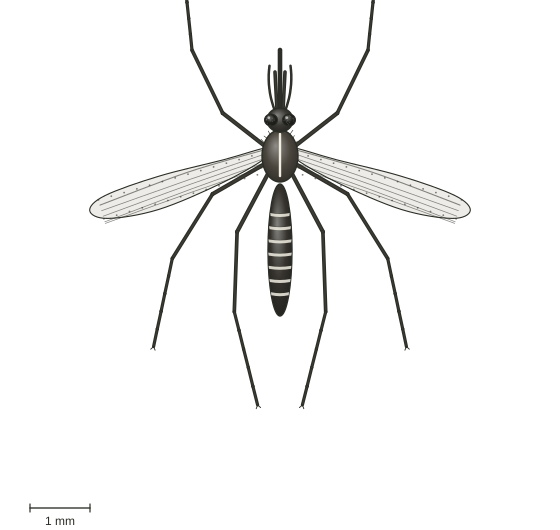
Slender, long-legged flies with a long proboscis. Eggs are laid on or near water, and larvae and pupae develop in standing water. Aedes mosquitoes lay eggs on the inside walls of containers just above the waterline; the eggs can survive drying for up to eight months and hatch when rain or a sprinkler refills the container. CDC counts more than 3,700 kinds of mosquitoes worldwide.
Muscidae: house flies and relatives
The house fly has sponging mouthparts; its relative the stable fly has a bayonet-like proboscis and bites. House fly larvae develop in manure, garbage, grass clippings and rotting produce. Stable flies bite and develop in manure and moist, decaying plant material. The little house fly, a smaller relative, has brown, flattened larvae with fleshy spines and develops more slowly than the house fly.
Calliphoridae: blow flies
Blow flies have sponging mouthparts like house flies, and their maggots look much like house fly maggots. Around homes, the larvae develop mainly in human food waste and pet waste, and flies of this group also lay eggs on carrion.
Drosophilidae: vinegar flies, small fruit flies
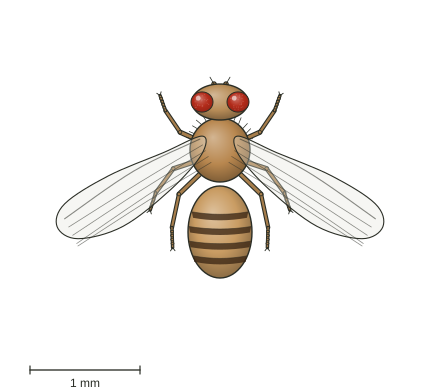
Tiny flies, about 3 mm (1/8 inch), with red eyes, a tan front and a darker rear. Females lay eggs on the surface of fermenting fruit and other moist organic matter, including drains, recycling bins, mops and overripe produce. Development from egg to adult takes about a week.
Psychodidae: moth flies and drain flies
Small, fuzzy, dark flies that hold their wings roof-like over the body, giving them a moth-like look. They are weak fliers that hop a few feet at a time. Larvae are gray, legless and wormlike, and live in the slimy film inside drains, sewage, and other shallow, polluted water or very moist organic matter.
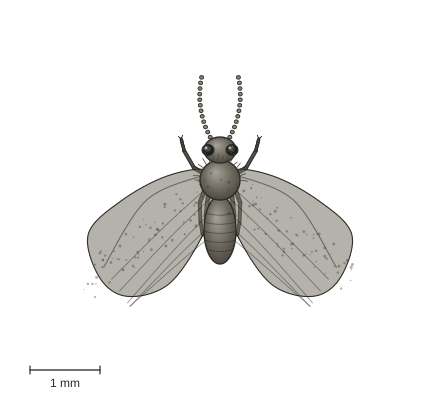
Sciaridae: dark-winged fungus gnats
Small, dark, delicate flies 1.5 to 3 mm (1/16 to 1/8 inch) long with long antennae, often seen around potted plants and windows. Larvae have a shiny black head and a whitish body and live in moist potting mix, feeding on fungi, organic matter and root hairs. A generation takes about 17 days at 24°C (75°F).
Tipulidae: crane flies
Large, very long-legged flies; the common name refers to the legs. They are often mistaken for giant mosquitoes, but many adults do not feed at all. The family holds roughly 4,400 species worldwide, and most larvae feed on plant material.
Flies that help
The flies people swat are a small slice of the order. Many others do useful work.
- Aphid predators. Hover fly (Syrphidae) larvae are legless predators that feed on aphids. Gardeners sometimes mistake them for small caterpillars and remove them by accident.
- Parasitic flies. Tachinid flies (Tachinidae) develop as parasites of other insects. Caterpillars are frequent hosts, which makes tachinids a quiet check on many leaf-feeding pests.
- Flower visitors. Male mosquitoes feed only on nectar and fruit juices, and many other adult flies visit flowers as well.
- Recyclers. The larvae of many flies feed in manure, carrion, decaying plants and fungi. Messy as that sounds, it speeds the breakdown of waste that would otherwise pile up.
Health relevance
A few flies matter for human health. The facts below on mosquito-borne disease come from the CDC.
Mosquitoes. Mosquitoes spread West Nile virus, dengue, malaria and other infections. West Nile virus is the leading mosquito-borne disease in the contiguous United States. Most people infected with it have no symptoms, but each year about 1,300 people develop severe illness affecting the nervous system and more than 130 die. There is no vaccine or specific medicine for West Nile virus, so preventing bites is the main protection. Dengue is spread by Aedes mosquitoes and occurs regularly in Puerto Rico, the US Virgin Islands and American Samoa, with limited local spread reported in some US states.
Filth flies. House flies pick up bacteria and viruses from feces and garbage and can carry them to food. They have been linked to diarrheal illness, food poisoning, dysentery and eye infections. Blow flies may spread disease agents the same way. Removing breeding material is the most effective defense.
Nuisance flies. Fruit flies, drain flies and fungus gnats do not bite and are mainly nuisances, though fruit flies can carry bacteria onto food.
Household relevance
Most fly problems indoors trace back to a breeding source nearby. UC IPM calls removing larval breeding sites the preferred way to suppress pest flies, with insecticides as a last resort. Here is where to look for each group.
- House flies and blow flies: bag and seal garbage, empty bins at least weekly, clean up pet waste, and keep screens in good repair. See flies in the house.
- Fruit flies: remove overripe produce and clean drains, recycling bins, mops and trash containers where fermenting residue builds up.
- Drain flies: scrub the slime layer from drains and traps with a stiff brush or snake. Never follow a caustic drain cleaner with bleach, because the mix can release toxic chlorine gas. The bugs in the bathroom guide helps separate drain flies from other small bathroom insects.
- Fungus gnats: let the top of houseplant soil dry between waterings, improve drainage, and empty standing water from saucers. Yellow sticky traps catch the adults and help you gauge numbers, but the larvae in the soil are the stage to target.
- Mosquitoes: dump, scrub or cover containers that hold water at least weekly, since Aedes eggs cling to container walls. See mosquitoes for more on bite prevention.
To tell small flying insects apart, including gnats, fruit flies, drain flies and flying ants, see identifying flying insects.
References
- Order Diptera. BugGuide, Iowa State University.
- Flies (Pest Notes). University of California IPM.
- Fungus Gnats (Pest Notes). University of California IPM.
- Drain Flies. NC State Extension.
- Fruit Flies (ENTFACT-621). University of Kentucky Entomology.
- Life Cycle of Aedes Mosquitoes. Centers for Disease Control and Prevention.
- About Mosquitoes. Centers for Disease Control and Prevention.
- About West Nile Virus. Centers for Disease Control and Prevention.
- Biological Control and Natural Enemies of Invertebrates (Pest Notes). University of California IPM.
See also
- Flies in the house
- Mosquitoes
- Identifying flying insects
- Bugs in the bathroom
- Complete metamorphosis
This page was last updated on October 7, 2026. We research our guides from university extension services, government agencies, museums and peer-reviewed literature. Read the editorial policy or report an error.