Cockroaches: Identifying Common House Roaches
Six or seven species account for nearly all cockroach problems in US homes, and telling them apart decides how you deal with them.
Most cockroaches found in US homes are one of a few species: the small German cockroach in kitchens and bathrooms, the large American cockroach in basements and drains, the dark Oriental cockroach in damp, cool spots, or the brown-banded cockroach in drier rooms away from the kitchen. Size, color, the markings on the shield behind the head, and where you found the roach are usually enough to tell them apart.
That distinction matters. A German cockroach infestation is an indoor breeding problem that needs steady attention, while a large roach that wandered in from a drain or the yard often points to an entry problem instead.
How to identify a cockroach
Cockroaches are flat, oval insects with long, thread-like antennae, spiny legs and a shield-like plate (the pronotum) that covers the top of the head. Adults of most pest species have wings that fold flat over the back, though not all of them fly. They run fast and hide in narrow cracks during the day; UC IPM notes that adult German cockroaches can fit into a crack about 1.5 mm (1/16 inch) wide.
Young cockroaches (nymphs) look like small, wingless adults and molt several times as they grow. That pattern is called simple metamorphosis; see simple and incomplete metamorphosis. Nymphs are usually the most common stage in an infestation, so learning them helps. Our cockroach nymph guide covers them.
Cockroaches belong to the order Blattodea along with termites. Our Blattodea overview explains the relationship.
| Species | Adult size | Color and markings | Usual location |
|---|---|---|---|
| German | About 13 mm (1/2 in) | Light brown, two dark stripes behind head | Kitchens, bathrooms |
| Brown-banded | About 13 mm (1/2 in) | Two light bands across wings or body | Bedrooms, furniture, upper walls |
| Oriental | About 25 to 32 mm (1 to 1 1/4 in) | Shiny black to very dark brown | Basements, drains, crawl spaces |
| American | About 38 to 50 mm (1 1/2 to 2 in) | Reddish brown, pale band around shield | Basements, sewers, drains |
| Smokybrown | About 38 mm (1 1/2 in) | Uniform dark brown to mahogany | Outdoors, attics, gutters, trees |
| Turkestan | Female about 25 mm (1 in) | Female with cream-edged wing pads; male tan-winged | Outdoors in the Southwest |
Common house cockroaches
German cockroach
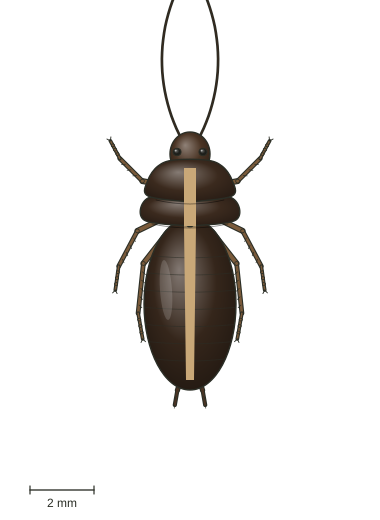
The German cockroach (Blattella germanica) is the most common indoor cockroach in the US and the one behind most persistent infestations. Adults are about 13 mm (1/2 inch) long, light tan to brown, with two dark parallel stripes on the shield behind the head. Both sexes have wings but rarely fly. Nymphs are darker, nearly black, with a pale stripe down the middle of the back.
German cockroaches live indoors, close to warmth, moisture and food: under sinks, behind refrigerators and stoves, inside cabinets, around dishwashers and in bathrooms. They do not establish outdoors. They usually arrive in grocery bags, cardboard boxes, used appliances or furniture, or travel between apartments along plumbing.
They also breed faster than any other common pest roach. The female carries her light tan egg case (ootheca) on the tip of her abdomen until it is about to hatch, and each case releases around 30 to 40 nymphs. UC IPM estimates that one female and her offspring can produce tens of thousands of roaches in a year under good conditions.
American cockroach
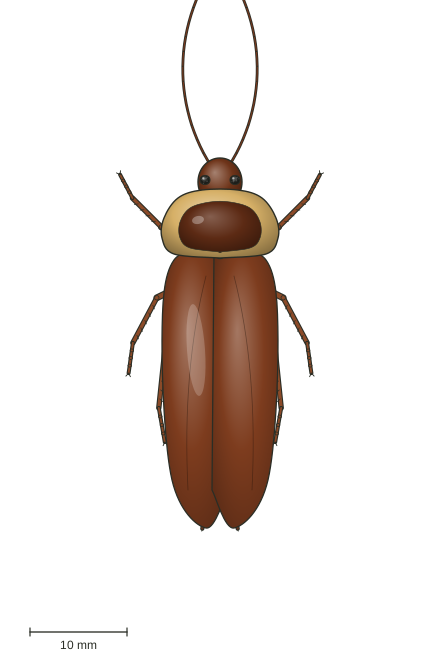
The American cockroach (Periplaneta americana) is the largest common house roach, about 38 to 50 mm (1 1/2 to 2 inches) long. It is reddish brown with a pale yellowish band around the edge of the shield behind the head. Adults have full wings but seldom fly.
American cockroaches prefer warm, humid places: sewers, storm drains, steam tunnels, basements, crawl spaces, floor drains and boiler rooms. Indoors in the North, they are usually found in basements and around plumbing. In warm months and warm climates, they also live outdoors around trash and other debris. Seeing one in a house often means it came up through a drain or in from outdoors rather than from a population breeding in the kitchen.
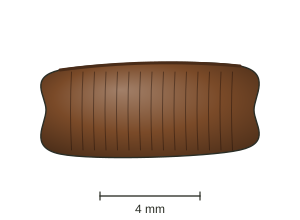
The female carries her egg case for several days, then cements it to a surface in a protected spot. Each case turns from brown to black and holds about 12 to 16 eggs.
Oriental cockroach
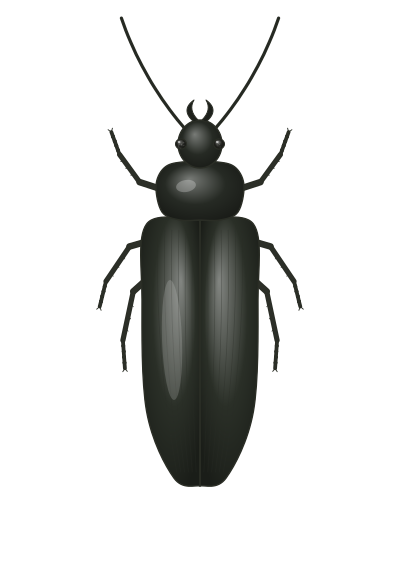
The Oriental cockroach (Blatta orientalis) is about 25 to 32 mm (1 to 1 1/4 inches) long and shiny black to very dark brown. Females have only small wing pads; males have wings that cover about half the abdomen. Neither sex flies. Oriental cockroaches cannot climb smooth surfaces well, so they sometimes end up stuck in sinks and bathtubs.
They favor cool, damp, dark places: basements, crawl spaces, floor drains, sump pits, water meter boxes, and outdoors under leaf litter, mulch, stones and woodpiles. They are sluggish and feed on garbage and decaying matter. In many areas they are the roach most often called a “water bug” or “black beetle.”
Brown-banded cockroach
The brown-banded cockroach (Supella longipalpa) is about the size of a German cockroach but lacks the two dark stripes. Instead it has two light, yellowish bands running across the wings or body. Males are golden tan and can fly when disturbed; females are darker brown and do not fly.
Unlike the German cockroach, the brown-banded cockroach does not need to stay near water. It prefers warm, drier spots, around 27 °C (80 °F): upper cabinets, closets, behind pictures, inside furniture, near electronics and appliance motors, and in ceilings. Females glue small egg cases to hidden surfaces such as the undersides of tables and drawers. Infestations often spread through a whole home, and baits tend to work less well against this species than against German cockroaches.
Smokybrown cockroach
The smokybrown cockroach (Periplaneta fuliginosa) is a close relative of the American cockroach, about 38 mm (1 1/2 inches) long and a uniform, shiny dark brown to mahogany with no pale band on the shield. Adults are strong fliers and are drawn to lights at night.
Smokybrown cockroaches are common across much of the Southeast. They live mainly outdoors in tree holes, leaf litter, woodpiles, gutters, planters and on roofs, and move into attics, garages, crawl spaces and the upper parts of buildings. The University of Georgia notes that they need warm temperatures and constant moisture and often enter homes looking for water.
Turkestan cockroach
The Turkestan cockroach (Shelfordella lateralis, also listed as Blatta lateralis) is an introduced species first reported in the US in California in 1978. It has since become widespread in California and the urban Southwest, and it has been reported in other southern states. Females are about 25 mm (1 inch) long, with short wing pads edged in cream. Males are smaller and slimmer, with full yellowish tan wings and cream stripes along the edges.
Turkestan cockroaches live mostly outdoors in water meter boxes, cracks between concrete blocks, compost, leaf litter and potted plants, and wander inside. In southwestern cities they are replacing the Oriental cockroach as the most common outdoor roach. They are also sold online as feeder insects for pet reptiles.
Wood cockroaches
Wood cockroaches (Parcoblatta species) are native outdoor roaches that live under loose bark, in logs, stumps and woodpiles. Males are about 25 mm (1 inch) long, brown, with pale edges on the front of the wings, and they fly well and come to porch lights. Females have short wings and can resemble Oriental cockroaches.
Wood cockroaches come inside on firewood or fly in through open doors during spring and summer. They do not survive or breed well indoors, so a few in a house near woods are a nuisance, not an infestation.
“Water bugs” and “palmetto bugs”
These are local nicknames, not species, and what they refer to depends on where you live.
- “Water bug” most often means the Oriental cockroach, because it shows up around drains, basements and damp areas. True water bugs (giant water bugs) are aquatic insects in a different order that sometimes fly to lights; they are not cockroaches.
- “Palmetto bug” is a Southeast term for several large, winged cockroaches. It most often means the smokybrown cockroach, and it is also used for the American and Oriental cockroaches and the Florida woods cockroach (Eurycotis floridana), a roach up to about 38 mm (1 1/2 inches) long that lives in palm trees and may be where the name started. The University of Georgia sums it up as a nicer way to say cockroach.
If you are not sure which species you have, compare it against the table above and note where you found it.
Health significance
Cockroaches matter for health mainly through allergens and contamination.
- Allergens and asthma. Cockroach droppings, saliva, shed skins and body parts contain proteins that trigger allergic reactions. The CDC lists cockroaches and other pests among common asthma triggers. UC IPM notes that cockroach allergens are linked to childhood asthma, especially in multi-unit housing with poor repair or sanitation. Symptoms can include congestion, sneezing and wheezing.
- Germs. Cockroaches move between drains, garbage and food. They can carry bacteria on their bodies and in their droppings, including those that cause food poisoning such as Salmonella, and can contaminate food and dishes.
Anyone with asthma symptoms that may be linked to a roach problem should talk with a doctor. The CDC also advises avoiding sprays and foggers in homes with asthma, because they can trigger attacks themselves.
Signs of a cockroach infestation
Because cockroaches hide during the day, evidence usually shows up before the insects do. Check under sinks, behind and under appliances, in cabinet hinges and corners, around water heaters and in bathroom vanities, using a flashlight.
- Droppings. Small, dark specks like ground pepper in corners, on hinges and along shelf edges, where roaches rest. These can look like bed bug spotting, so location matters.
- Smear marks. Dark, irregular streaks where roaches rest or travel, often along the top edges of cabinets, at wall-floor junctions and around cracks. These are good places for traps.
- Egg cases. Empty or full oothecae in cabinets, under furniture or in crevices. Brown-banded cases are glued to the undersides of furniture and shelves.
- Shed skins. Pale, papery cast skins from nymphs, often near hiding places.
- Odor and stains. An unpleasant smell in heavy infestations, especially from German cockroaches, which also leave stains on surfaces they contact.
- Daytime sightings. Cockroaches forage at night. Seeing German cockroaches out in daylight usually means hiding places are crowded and the population is large.
- Live or dead roaches, including nymphs. Small dark nymphs in a kitchen point to German cockroaches breeding indoors.
Sticky traps placed along walls, under sinks and behind appliances help confirm which species you have and where they are concentrated. Check them after a few days.
Why cockroaches come inside
Cockroaches need water, food and shelter, and a house supplies all three. German and brown-banded cockroaches are carried in, usually in boxes, bags, used appliances, electronics or furniture, and spread between apartments through shared walls and plumbing. American, Oriental, smokybrown and Turkestan cockroaches typically walk or fly in from sewers, drains, crawl spaces or the yard, often during hot, dry spells or after heavy rain.
Preventing cockroaches
Prevention works on the same three needs.
- Food. Clean up crumbs and spills promptly, do not leave dishes or pet food out overnight, store food in sealed containers and keep trash in lidded bins that you empty often.
- Water. Fix dripping faucets and leaky pipes, dry sinks and tubs at night, and reduce condensation under sinks and around appliances.
- Shelter. Cut clutter, especially stacks of cardboard, paper bags and newspapers. Seal cracks along baseboards and cabinets and gaps around pipes and wires.
- Entry points. Fit door sweeps and weather stripping, repair window screens, and keep floor drains covered or water-filled so traps stay sealed.
- Outdoors. Keep mulch, leaf litter and woodpiles away from the foundation and clean gutters, which helps with Oriental, smokybrown and Turkestan cockroaches.
- Inspect what you bring in. Check grocery boxes, secondhand appliances and furniture before they go into the kitchen.
Cockroach control
Cockroach control works best as integrated pest management: sanitation and sealing first, monitoring with sticky traps, then targeted treatments. Extension specialists agree on a few points:
- Baits are the main tool for German cockroaches. Gel baits placed in many small spots in cracks and hiding places, or bait stations, let roaches carry the active ingredient back to others. Results build over days to weeks.
- Dusts such as boric acid or desiccant dusts can work in wall voids and under appliances when kept dry and undisturbed, never on food surfaces.
- Sprays give only short-term knockdown, and many cockroach populations resist common sprays. Where sprays are used, they belong in hiding places, not across open countertops and baseboards.
- Foggers (“bug bombs”) are not recommended. They do not reach roaches deep in cracks, can scatter them, and pose fire and exposure risks.
- Outdoor species usually respond to sealing, moisture fixes and outdoor habitat changes more than indoor treatment.
Always read and follow the product label for any insecticide. Our cockroach control guide explains each method in more detail, and when a licensed professional is worth calling, especially for large infestations in apartments.
References
- Pest Notes: Cockroaches. University of California Statewide IPM Program.
- How to Eliminate Cockroaches in Homes and Apartments (ENTFACT-614). University of Kentucky Entomology.
- Cockroaches (FS1327). Rutgers New Jersey Agricultural Experiment Station.
- Cockroaches (E-23). Purdue University Extension Entomology.
- Smokybrown Cockroach. Oklahoma State University Extension.
- Is That a Roach or a Palmetto Bug?. University of Georgia CAES.
- The Invasive Turkestan Cockroach Is Displacing the Oriental Cockroach in the Southwestern U.S.. Entomological Society of America, Entomology Today.
- Common Asthma Triggers. Centers for Disease Control and Prevention.
See also
- Identifying cockroach nymphs
- Cockroach control
- Bugs in the kitchen
- Bugs in the bathroom
- Blattodea: cockroaches and termites
- Simple and incomplete metamorphosis
This page was last updated on October 7, 2026. We research our guides from university extension services, government agencies, museums and peer-reviewed literature. Read the editorial policy or report an error.