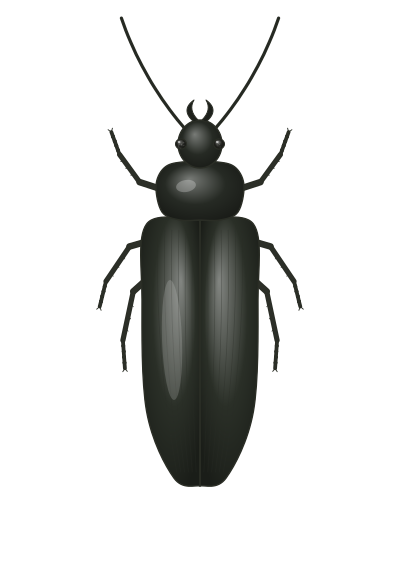
Blattodea: Cockroaches and Termites
Cockroaches and termites look nothing alike, but they belong to the same branch of the insect family tree.
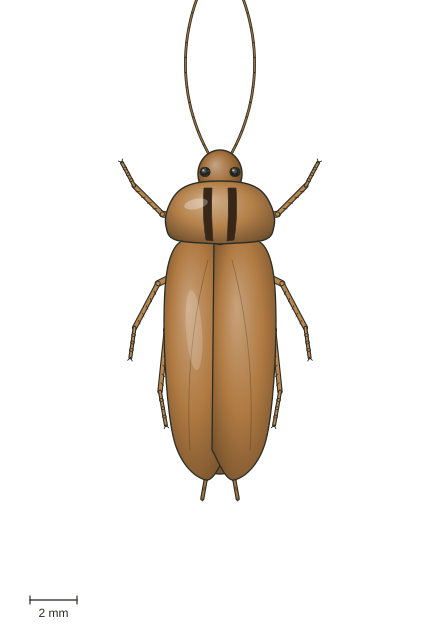
Blattodea is the insect order of cockroaches and termites. Cockroaches are flattened, fast-running insects with a shield over the head and long antennae. Termites are pale, soft-bodied, colony-living wood eaters. They look very different, but termites are now classified inside Blattodea because they evolved from cockroaches. Older books place termites in a separate order, Isoptera.
The order is mostly made up of harmless wild species. About 4,500 cockroach species have been described worldwide, and only around 25 are pests. Roughly 3,000 termite species are known worldwide, about 44 of them in North America, and only a handful damage buildings.
Why termites are now classified as cockroaches
For most of the 20th century, textbooks listed termites as the order Isoptera, separate from the cockroaches. That has changed. BugGuide and the Amateur Entomologists’ Society now treat termites as part of Blattodea, and many entomologists describe termites as social cockroaches. Here is the evidence, in plain terms.
What the DNA shows
Scientists build family trees of living things by comparing DNA. When researchers compared genes from termites, cockroaches and related insects, termites did not branch off beside the cockroaches as a separate group. They branched off from within the cockroaches.
Their closest living relatives are the wood-eating cockroaches of the genus Cryptocercus. A large 2015 study in Molecular Biology and Evolution analyzed the mitochondrial genomes of 66 termite species. It concluded that termites evolved from wood-feeding cockroaches and are the sister group of Cryptocercus, with the two lineages splitting roughly 170 million years ago. The termites and Cryptocercus also share a distinctive feature in a stretch of their mitochondrial DNA.
Why that forces a change in classification
Modern classification groups organisms by shared ancestry. If termites sit inside the cockroach family tree, then calling cockroaches one order and termites another leaves the “cockroach” order missing some of its own descendants. Folding termites into Blattodea fixes that. BugGuide places them in a group called Termitoidae within the order, alongside the cockroach families.
Clues you can see without DNA
The genetic result fits things you can observe:
- Wood eating. Cryptocercus cockroaches live in and eat rotting logs, just as many termites feed on wood.
- The same kind of growth. Both cockroaches and termites develop by simple metamorphosis: egg, nymph-like young and adult, with no pupal stage.
- A similar build. Termite workers are shaped much like pale, soft-bodied cockroach nymphs, with chewing mouthparts and threadlike antennae.
The common names stay the same. A termite is still a termite. Only its place in the order list has moved.
Cockroach features
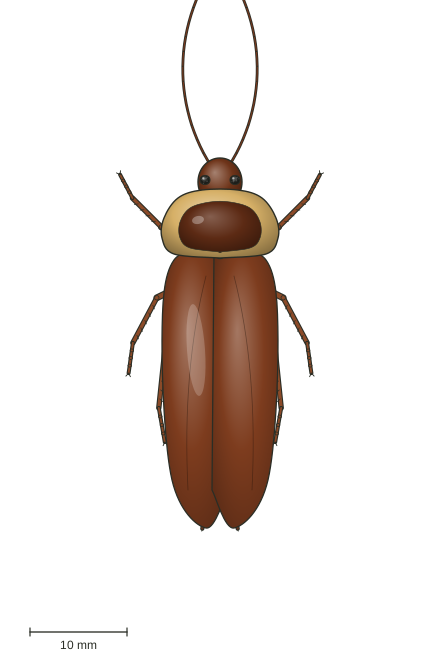
Cockroaches are among the oldest-looking insects, and their body plan has changed little. To spot one:
- Flattened, oval body that slips into narrow cracks.
- Pronotum: a broad, shield-like plate behind the head that often extends forward and covers the head from above.
- Long, threadlike antennae, often as long as the body or longer.
- Spiny legs built for running and climbing.
- Wings in many adults, though some species have short wings or none, and several winged species seldom fly.
- Chewing mouthparts.
Egg cases and nymphs
Female cockroaches lay their eggs in a hardened, bean-shaped capsule called an ootheca, which usually holds 10 to 50 eggs depending on species. The German cockroach carries her light beige egg case, about 6 mm (1/4 inch) long, until a day or two before it hatches, and each case produces up to about 40 nymphs. Other common species produce 15 to 20 per case.
Cockroaches develop by simple (incomplete) metamorphosis: egg, nymph and adult, with no pupal stage. Nymphs look like small, wingless adults and molt several times as they grow. The simple and incomplete metamorphosis page explains the pattern. Nymphs are often what people find first; the cockroach nymphs guide shows how to tell species apart at that stage.
Behavior
Cockroaches are mostly active at night and hide by day in warm, dark, moist places. They eat almost anything, including food scraps, glue, soap and grease. They do not build nests, but they gather where their droppings, which look like specks of pepper, draw others in.
Termite features and castes
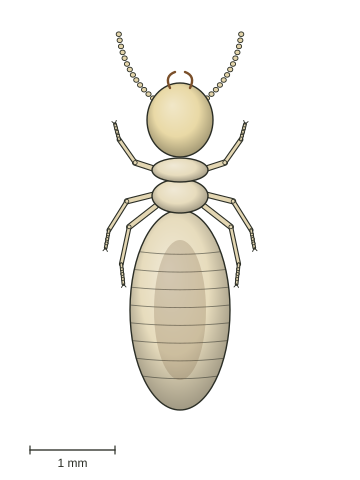
Termites are social insects that live in colonies with a division of labor, like ants, bees and some wasps, but they are not closely related to those insects. Unlike them, termites develop by simple metamorphosis, with no pupal stage.
To spot a termite:
- Pale, soft body in workers, usually creamy white to light caramel.
- Straight, bead-like antennae, not elbowed.
- Thick waist, with no pinch between thorax and abdomen.
- Four wings of equal length in winged reproductives (swarmers), which break off after the flight.
These traits separate termites from ants, which have elbowed antennae, a pinched waist and front wings longer than the hind wings. See termite vs flying ant for a side-by-side comparison.
Castes
- Workers make up most of the colony. They forage, feed nestmates, care for young, and build tunnels and shelter tubes. In subterranean species they are 3 to 4 mm long (about 1/8 inch).
- Soldiers have enlarged, darker heads and large jaws for defending the colony.
- Winged reproductives (alates or swarmers) leave the colony in mating flights, shed their wings, pair off, and try to start new colonies. Very few succeed.
- The founding king and queen dig a small chamber, seal themselves in, mate, and the queen begins laying eggs. The queen is the largest member of the colony and can lay thousands of eggs a day. The king stays with her.
- Replacement reproductives can take over egg-laying in some species if the king or queen dies.
How termites digest wood
Most termites rely on single-celled microbes in the gut to break down cellulose from wood into food. Colony members share gut contents and partly digested food, which passes these microbes on to young termites and feeds the king and queen.
Cockroach vs termite at a glance
| Trait | Cockroach | Termite |
|---|---|---|
| Body | Flattened, oval, usually brown to black | Soft, pale workers; darker swarmers |
| Head | Covered from above by a broad pronotum | Exposed; soldiers have large, dark heads |
| Antennae | Long and threadlike | Short, straight and bead-like |
| Social life | Gather in groups but form no colonies or castes | Colonies with workers, soldiers and reproductives |
| Diet indoors | Almost any food, plus glue, soap and grease | Wood and other cellulose |
| Seen indoors | Running from light at night; droppings like pepper specks | Rarely seen except swarmers, mud tubes or damaged wood |
| Eggs | In a hardened egg case (ootheca) | Laid singly by the queen inside the colony |
Signs that point to each pest
The insects themselves often stay hidden, so the evidence they leave is usually the first clue.
Cockroaches leave droppings that look like ground pepper or small dark smears along edges and in cabinet corners, empty brown egg cases, shed skins, and a musty odor in heavy infestations. Seeing nymphs means they are breeding indoors. German cockroaches cluster in kitchens and bathrooms; American and oriental cockroaches favor basements, drains and crawl spaces.
Subterranean termites build mud shelter tubes about the width of a pencil across foundations and other surfaces to travel between soil and wood. Breaking a tube open and finding live, creamy-white workers shows the infestation is active. Swarms of winged termites near windows and doors in spring, often after warm rain, are another common sign, as are piles of shed wings.
Drywood termites live entirely inside dry wood. Their small, hard fecal pellets, pushed out of the wood, are often the first evidence.
A few pests, many wild species
Most cockroaches and termites live outdoors in leaf litter, rotting logs and soil, where they help break down dead plant material. The brown-hooded cockroach of the Appalachians, a Cryptocercus species, lives in rotting logs and is not a house pest; BugGuide describes it as a recycler of nutrients in decaying wood. Britain’s three native cockroaches are never pests, and across North America only a handful of species are true indoor pests.
| Species | Group | Size | Notes |
|---|---|---|---|
| German cockroach (Blattella germanica) | Cockroach | About 13 mm (1/2 in) | Most common indoor species; two dark stripes behind the head; breeds fast indoors |
| American cockroach (Periplaneta americana) | Cockroach | 38 to 50 mm (1 1/2 to 2 in) | Largest common indoor species; basements, drains, crawl spaces |
| Oriental cockroach (Blatta orientalis) | Cockroach | 25 to 32 mm (1 to 1 1/4 in) | Shiny black or dark brown; cool, damp areas |
| Brownbanded cockroach (Supella longipalpa) | Cockroach | About 13 mm (1/2 in) | Two pale bands across the wings; hides away from kitchens |
| Wood cockroaches (Parcoblatta) | Cockroach | About 25 mm (1 in) | Mainly outdoors; come in on firewood or fly to lights |
| Subterranean termites (Reticulitermes), including the eastern subterranean termite | Termite | Workers 3 to 4 mm | Most commonly encountered structural termites; nest in soil and build mud tubes |
| Formosan subterranean termite (Coptotermes formosanus) | Termite | Workers 3 to 4 mm | Invasive; a problem in parts of the Gulf Coast and a few other warm areas |
| Drywood termites | Termite | Varies | Live entirely in dry wood with no soil contact; fecal pellets are often the first sign |
Pest cockroaches matter mainly for health. They can carry disease-causing bacteria such as Salmonella from filth to food, and allergens in their droppings and shed skins can trigger asthma, especially in children in crowded, heavily infested housing. Pest termites matter for property, because they feed on structural wood. See cockroaches and termites for identification, signs and control.
References
- Order Blattodea: Cockroaches and Termites. BugGuide, Iowa State University.
- Blattodea fact file. Amateur Entomologists' Society.
- The Evolutionary History of Termites as Inferred from 66 Mitochondrial Genomes. Molecular Biology and Evolution (Oxford Academic).
- Genus Cryptocercus. BugGuide, Iowa State University.
- Cockroach Control Manual (ENTFACT-614). University of Kentucky Entomology.
- Termites (Pest Notes). University of California IPM.
- Subterranean Termites (ENTFACT-604). University of Kentucky Entomology.
- Cockroaches (Pest Notes). University of California IPM.
See also
This page was last updated on October 7, 2026. We research our guides from university extension services, government agencies, museums and peer-reviewed literature. Read the editorial policy or report an error.