Bee vs Wasp: How to Tell Them Apart (and Why It Matters)
Hair, body shape and behavior at your picnic table sort out most bees and wasps. Knowing which one you have changes what you should do about a nest or a swarm.
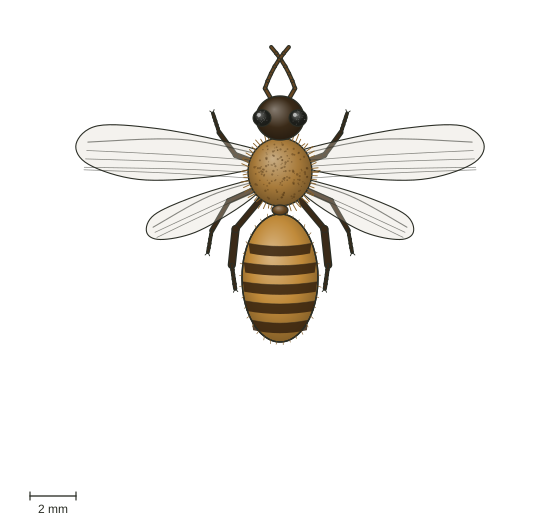
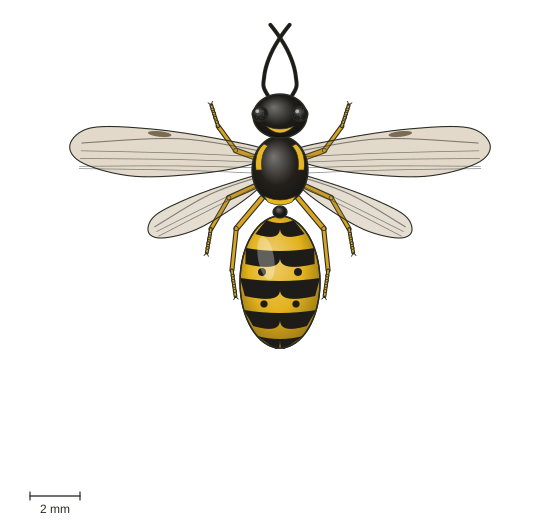
| Honey beeApis mellifera | YellowjacketVespula spp. |
|---|---|
 |  |
Quick answer
Honey bees are fuzzy, golden-brown to black, and thick-bodied, and they carry pollen on their hind legs. Yellowjackets are smooth and shiny with sharp yellow and black bands and a short, narrow waist. Honey bees rarely sting away from the hive, while yellowjackets defend their nests hard and can sting more than once.
| Feature | Honey bee | Yellowjacket |
|---|---|---|
| Size | About 12 to 16 mm (1/2 to 5/8 inch) | About 12 to 25 mm (1/2 to 1 inch) |
| Body shape | Stout, rounded | Compact, smooth, blunt abdomen |
| Color | Muted amber, brown and black | Bright, sharp yellow and black bands |
| Hair | Fuzzy, especially thorax and legs | Few hairs; looks shiny |
| Waist | Hidden under hair | Short and narrow |
| Legs | Hairy hind legs carry pollen loads | Smooth; often yellow |
| Diet | Nectar and pollen | Insects; sweets and meat late season |
| Nest | Wax comb in tree or wall cavities | Paper nest in ground, walls or trees |
| At your food | Usually ignores it | Scavenges sweets, meat and trash |
| Stinging | Barbed; stinger stays in skin | Smooth; can sting repeatedly |
| Concern | Valued pollinator; stings if trapped | Defends nest hard; most picnic stings |
Bottom line: Look for fuzz. A hairy insect with pollen on its legs, working flowers, is a bee; a smooth, shiny, brightly banded insect hovering over your soda is a yellowjacket.
Bees and wasps are close relatives in the order Hymenoptera, and both can sting, so people lump them together. The honey bee and the yellowjacket are the pair most often confused, and they behave very differently. One is a flower-visiting pollinator that rarely stings unless trapped. The other is a predator and scavenger that guards its nest and is behind many stings blamed on “bees.”
How to tell them apart
Hair: the most reliable clue
Bees are hairy. On a honey bee, the thorax and legs carry a dense coat of fine hair, which picks up pollen as the bee moves between flowers. Under strong magnification, bee hairs are branched like tiny feathers. Wasp hairs are simple and sparse, so a yellowjacket looks smooth, hard and glossy.
Phone tip: you rarely get a sharp photo of a flying insect, so wait until it lands on a flower or rim. Use the zoom from a safe distance instead of leaning in. Even a slightly blurry photo usually shows whether the body is fuzzy or shiny.
Color and pattern
Yellowjackets wear bright, crisp yellow and black bands, and some aerial-nesting relatives are black and white. Their faces are mostly yellow. Honey bees are muted amber, golden-brown and black, with softer bands that are partly hidden by hair. Color is helpful, but plenty of bees and flies mimic wasp colors, so pair it with the hair check.
Body shape and waist
Wasps generally have a visible narrow waist between the thorax and abdomen. On a yellowjacket the waist is short and the abdomen is blunt, so it looks compact rather than delicate. A honey bee’s waist is hidden under hair, and the whole body looks stouter and rounder.
Legs
A foraging honey bee often carries a lump of pollen packed onto each hind leg, which looks like a small yellow or orange ball. Wasps do not carry pollen loads. Leg posture in flight is a weaker clue: paper wasps, another common wasp around homes, fly with their long legs dangling, but yellowjackets have shorter legs, so this trick works poorly for them.
Diet and behavior
Bees feed on nectar and pollen. A honey bee at a picnic is usually just passing through to flowers and will ignore your food.
Yellowjackets hunt insects for most of the season, feeding the protein to their young. By late summer and early fall, colonies are large and natural prey is harder to find, so workers turn to sugary drinks, fruit, meat, garbage and compost. That is when they crowd outdoor meals.
Nests
Honey bees build wax comb inside protected cavities such as hollow trees or wall voids, and the colony survives the winter. A swarm is a temporary cluster of bees looking for a new home, not a nest.
Yellowjackets build paper nests from chewed wood fiber. Many nest underground, often in old rodent burrows, while others use wall voids, attics, crawlspaces or sheltered spots in trees and under eaves. Colonies start fresh each spring from a single queen and can grow to thousands of workers by late summer.
Stinging and safety
A honey bee’s stinger is barbed and stays in the skin, so a honey bee stings only once. Venom keeps pumping for a short time, so scrape the stinger out quickly with a fingernail or card edge; speed matters more than method.
A yellowjacket’s stinger is smooth, so it can sting repeatedly. Crushing a yellowjacket releases an alarm scent that can draw more workers. Most stings happen when someone disturbs a nest, such as by mowing over a ground entrance. Workers foraging away from the nest are less likely to sting unless swatted or trapped against skin.
If you are being stung, walk away quickly and calmly rather than swatting.
Why it matters which one you have
A honey bee swarm
Swarms usually appear in late spring and early summer. They look alarming, but swarming bees are generally gentle because they are not defending a nest. Most move on within a day or so.
Extension services give consistent advice: leave the swarm alone, keep people and pets back, and do not spray it. If it needs to go, contact your county extension office or a local beekeeping association to find a beekeeper who collects swarms. Not every beekeeper does, and some charge a fee. In areas where Africanized honey bees occur, some extension services advise reporting a swarm to the county extension office or the state department of agriculture rather than calling a beekeeper.
Honey bees in a wall
An established colony in a wall is a different job. Killing the bees leaves comb and honey behind, which can melt and stain walls. The usual advice is a specialist who removes the bees, comb and honey, then seals every entry point.
A yellowjacket nest
Yellowjacket nests near doors, play areas or paths are worth dealing with, especially late in the season. Do not seal the entrance of a nest in a wall, because trapped wasps may chew their way indoors. Ground nests well away from paths and play areas can often be left alone. For nests that need a ladder, sit in a wall or belong to hornets, a licensed professional is the safer call. If you do treat a nest yourself, use a product labeled for that use and follow the label directions exactly. Our wasps and yellowjackets guide covers prevention, traps and nest options.
What to do next
- Get a photo from a distance and check for fuzz, pollen on the legs and bright banding.
- Watch what it does. Working flowers points to a bee; hovering over food or trash points to a yellowjacket.
- For a swarm, leave it alone and call your extension office or a local beekeeping group.
- For a nest near people, decide whether it is safe to treat or needs a pro. See when to call a professional.
To learn how bees, wasps and ants fit together, see our Hymenoptera overview.
References
- Honey Bee. Utah State University Extension.
- Pest Notes: Yellowjackets and Other Social Wasps. University of California IPM.
- Pest Notes: Bee and Wasp Stings. University of California IPM.
- Yellowjackets. Cornell University, New York State IPM Program.
- Paper Wasps. Cornell University, New York State IPM Program.
- Insects That Look Like Bees (E1914). North Dakota State University Extension.
- Controlling Wasps, Hornets, and Yellowjackets (ENTFACT-620). University of Kentucky Entomology.
- Honey Bee Swarms and Bees in Walls. University of Georgia Honey Bee Program.
- What To Do If You Find a Honey Bee Swarm. Mississippi State University Extension.
See also
- Wasps and yellowjackets
- Hymenoptera: bees, wasps and ants
- Flying insects indoors
- Termite vs flying ant
- When to call a professional
This page was last updated on October 7, 2026. We research our guides from university extension services, government agencies, museums and peer-reviewed literature. Read the editorial policy or report an error.