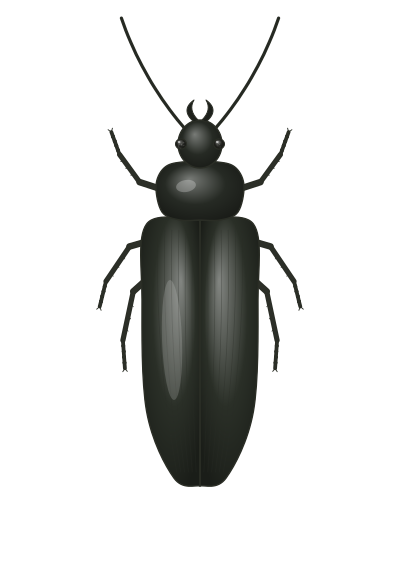
Palmetto Bug: Which Cockroach It Is and How to Keep It Out
The Southeast’s polite word for a big roach covers several species. Most live outdoors and wander in.
Quick answer
A palmetto bug is a cockroach. The name is used in the Southeast for several large species, most often the smokybrown cockroach and the American cockroach. They live mainly outdoors in trees, mulch, sewers and drains, and come inside looking for moisture. One indoors does not mean the house is infested the way German cockroaches would.
“Palmetto bug” is a regional name, and it does not belong to one species. In Georgia, Florida, the Carolinas and along the Gulf Coast, people use it for any large cockroach, especially one with wings. The University of Georgia describes it as a polite way of saying cockroach.
The name still tells you something useful. The roaches it covers live mostly outdoors, so the way you deal with them differs from the way you deal with the small German cockroach that breeds in kitchens.
Which cockroaches are called palmetto bugs
The University of Georgia lists the species the name is applied to.
| Species | Adult length | Color | Where it lives |
|---|---|---|---|
| Smokybrown cockroach | About 38 mm (1 1/2 inches) | Uniform dark brown to mahogany, nearly black behind the head | Tree holes, under shingles and siding, attics, woodpiles |
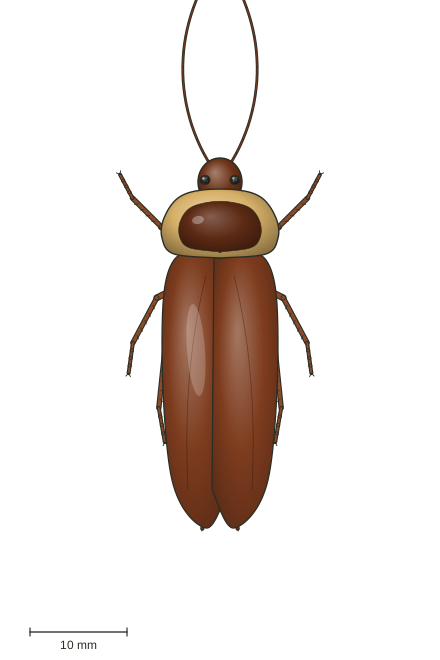
| American cockroach | About 38 to 50 mm (1 1/2 to 2 inches) | Reddish brown, pale edge on the shield behind the head | Sewers, storm drains, steam tunnels, water meter boxes |
| Oriental cockroach | About 25 to 32 mm (1 to 1 1/4 inches) | Shiny black or very dark brown | Cool, damp spots: basements, drains, ground cover |
Sizes come from the University of California and Purdue University, which give slightly different figures for the same species.
A fourth species, the Florida woods cockroach, grows to about 38 mm (1 1/2 inches) and lives in palm trees. The University of Georgia suggests it may be where the name came from.
Smokybrown cockroach
This is the species the Georgia entomologists focus on. It is believed to have come from Japan and is now very common across the Southeast. The whole insect is one even, dark brown with no pale markings.
It lives in mature hardwood trees, in knot holes and cavities, and comes out at night. That makes it a roach of older neighborhoods with big trees. Adults fly, mostly on warm, humid evenings, and a startled one may fly toward a person or a wall.
American cockroach
The largest of the common roaches. It is reddish brown with a yellowish band around the edge of the shield behind its head. It prefers warm, humid places and builds up in sewers and storm drains. From there it comes into ground floors through damaged pipes, dry drain traps and gaps without screens.
Palmetto bug vs German cockroach
This is the comparison that matters for what you do next.
| Palmetto bugs (large outdoor roaches) | German cockroach | |
|---|---|---|
| Size | 25 to 50 mm (1 to 2 inches) | About 13 mm (1/2 inch) |
| Color | Dark brown, reddish brown or black | Light brown with two dark stripes behind the head |
| Lives | Outdoors, in drains, trees and mulch | Indoors only, in kitchens and bathrooms |
| Breeds in the house | Seldom | Yes, quickly |
| Usual numbers | One or a few at a time | Dozens to thousands |
A single large roach in a bathroom or garage is usually a visitor from outside. Small, striped roaches in the kitchen, especially several sizes at once, are a breeding population. If that is what you have, go to cockroaches and cockroach nymphs.
Why they come indoors
Moisture is the main draw. The University of Georgia notes that smokybrown cockroaches enter homes looking for water, and that attics with roof leaks or poorly sealed vent pipes can hold enough moisture to attract them.
Other routes:
- Drains and sewer lines. American and Oriental cockroaches climb through damaged pipes and floor drains whose traps have dried out.
- Gaps at ground level. Door thresholds, garage doors, crawl space vents and utility openings.
- Shelter against the house. Woodpiles, dense ivy, thick mulch and planter boxes hold roaches right at the wall.
Are palmetto bugs harmful?
They do not come looking for people, and the Georgia entomologists stress that finding them is not a sign of a dirty house. They are still cockroaches. The University of California notes that American cockroaches can carry bacteria that cause food poisoning, including Salmonella and Shigella, after walking through sewage or pet waste, and that shed skins and droppings from cockroaches can trigger allergies. Keep them off food and food surfaces.
How to keep palmetto bugs out
Fix the water. Repair roof and plumbing leaks, check the attic after rain, and run water into seldom-used floor drains so the traps stay full.
Close the gaps. Fit door sweeps and weather stripping, screen vents and seal openings around pipes and wires. The University of Georgia is realistic that sealing every gap against a roach this mobile is nearly impossible, so treat sealing as a way to cut numbers.
Clear the foundation. The University of California suggests trimming shrubs, removing dense ivy and ground cover next to the house, moving firewood and lumber away, and considering a 6 to 12 inch band of gravel along the wall to keep it dry.
Use baits, not foggers. Both universities prefer bait granules or gel baits placed where roaches are seen and where they shelter outdoors, such as water meter boxes, woodpiles and planters. Expect a week or more before numbers drop. Sprays give a short knockdown, and the University of Georgia points out that they can also kill the small parasitic wasps that attack cockroach egg cases. Total-release foggers miss the places roaches hide. Read and follow the label on any product.
Monitor. Sticky traps near exterior doors, in the garage and under sinks show which species you have and where they are coming in.
Step-by-step methods are in cockroach control.
When to call a professional
Call one if you are seeing large roaches most nights despite the steps above, if they are coming up through drains in a building with shared plumbing, or if you cannot tell whether the small roaches you are seeing are nymphs of a large species or German cockroaches. Our guide on when to call a professional covers what to ask.
References
- Is That a Roach or a Palmetto Bug?. University of Georgia CAES.
- Pest Notes: Cockroaches. University of California Statewide IPM Program.
- Cockroaches (E-23). Purdue University Extension Entomology.
See also
- Cockroaches: identification
- Water bug vs cockroach
- Cockroach nymphs
- Cockroach control
- Bugs in the bathroom
This page was last updated on November 10, 2026. We research our guides from university extension services, government agencies, museums and peer-reviewed literature. Read the editorial policy or report an error.